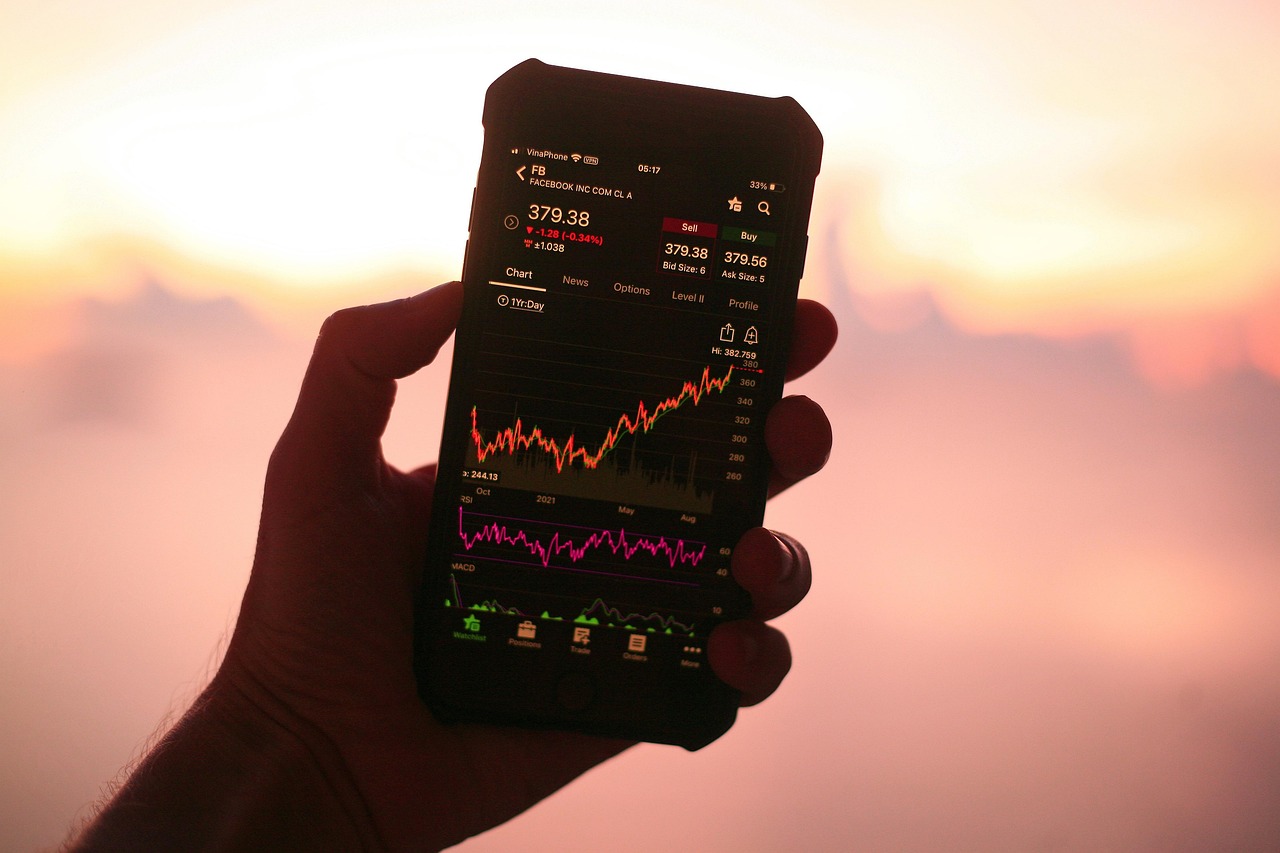
In the dynamic world of financial markets, understanding price action and volatility is paramount for any trader or investor. While countless technical indicators vie for attention, few offer the elegant simplicity and profound insight of Bollinger Bands. Developed by the legendary technical analyst John Bollinger, this powerful tool has become a staple in the arsenals of novice and seasoned traders alike, providing a unique visual representation of market volatility, potential price reversals, and trend strength. Dive in as we unravel the mechanics, interpretations, and practical applications of Bollinger Bands, equipping you with the knowledge to harness their potential in your trading journey.
Understanding Bollinger Bands: The Foundation
Bollinger Bands are a versatile technical analysis tool designed to measure market volatility and identify potential overbought or oversold conditions. They dynamically adapt to market conditions, widening during periods of high volatility and contracting during periods of low volatility.
What Are Bollinger Bands?
- Created by John Bollinger in the 1980s, Bollinger Bands consist of three lines plotted on a price chart.
- They are derived from statistical calculations, specifically a simple moving average and standard deviation.
- Their primary function is to provide a relative definition of high and low prices for a security.
The Three Components: Anatomy of the Bands
Each set of Bollinger Bands comprises three distinct lines, each playing a crucial role in interpretation:
- The Middle Band: This is typically a 20-period Simple Moving Average (SMA) of the closing prices. It represents the “normal” price level and often acts as a trend indicator.
- The Upper Band: Calculated by adding a multiple of the standard deviation (usually 2 standard deviations) to the Middle Band. It represents a statistically high price level relative to recent price action.
- The Lower Band: Calculated by subtracting the same multiple of the standard deviation (usually 2 standard deviations) from the Middle Band. It represents a statistically low price level relative to recent price action.
How They Are Calculated (Simplified)
- Calculate the Simple Moving Average (SMA): For example, a 20-period SMA of the closing prices. This forms your Middle Band.
- Calculate the Standard Deviation: For the same 20 periods, calculate the standard deviation of the closing prices. Standard deviation measures how dispersed the data (prices) are from the average.
- Calculate Upper and Lower Bands:
- Upper Band = 20-period SMA + (2 20-period Standard Deviation)
- Lower Band = 20-period SMA – (2 20-period Standard Deviation)
Actionable Takeaway: Recognize that the bands are dynamic, reflecting market volatility. Wider bands mean higher volatility, while narrower bands indicate lower volatility.
Interpreting Bollinger Band Signals
The true power of Bollinger Bands lies in their ability to signal potential market movements and conditions. Understanding these signals is key to effective trading.
The Bollinger Squeeze: Volatility Compression
The “Squeeze” occurs when the bands narrow significantly, indicating a period of low volatility. This often precedes a period of high volatility and a potential breakout in price.
- Interpretation: A tight squeeze suggests the market is consolidating, building energy for a significant move.
- Trading Implication: Traders often look for a breakout (price moving decisively above the Upper Band or below the Lower Band) following a squeeze as a potential entry signal.
- Example: Imagine a stock trading sideways for weeks, with its Bollinger Bands hugging tightly. This ‘calm before the storm’ could signal an imminent large price swing once the market decides on a direction.
Band Walks & Rides: Trend Confirmation
When price action consistently touches or rides along one of the bands, it can indicate a strong trend.
- Upper Band Ride: Price consistently touching or moving along the Upper Band suggests a strong uptrend.
- Lower Band Ride: Price consistently touching or moving along the Lower Band suggests a strong downtrend.
- Interpretation: These “band walks” are strong indicators of trend continuation.
- Trading Implication: In an uptrend, pullbacks to the Middle Band can be seen as buying opportunities, while in a downtrend, rallies to the Middle Band might be selling opportunities.
Breakouts and Reversals: Dynamic Support and Resistance
While the bands define relative high and low prices, price breaking out of the bands or interacting with them can signal important events.
- Price Exiting Bands: A strong move that pushes price outside the bands can signal the start or continuation of a significant trend. However, price tends to return within the bands eventually.
- W-Bottoms & M-Tops:
- W-Bottom: Price touches the Lower Band, bounces to the Middle Band, retests (often without touching) the Lower Band, and then breaks above the Middle Band. This is a powerful bullish reversal pattern.
- M-Top: Price touches the Upper Band, pulls back to the Middle Band, retests (often without touching) the Upper Band, and then breaks below the Middle Band. This is a bearish reversal pattern.
Actionable Takeaway: Don’t trade solely on a band touch. Look for confirmation from other indicators or price action patterns, especially for breakouts.
Bollinger Bands in Action: Practical Trading Strategies
Integrating Bollinger Bands into a cohesive trading strategy can significantly enhance your market analysis. Here are a few popular approaches:
1. Volatility Breakout Strategy
This strategy capitalizes on the “Bollinger Squeeze” phenomenon, looking for explosive moves after a period of low volatility.
- Setup: Identify a security whose Bollinger Bands have significantly narrowed (the Squeeze).
- Entry: Place a buy stop order just above the Upper Band and a sell stop order just below the Lower Band. The breakout direction determines your trade. Confirmation from increased volume is often sought.
- Stop Loss: A common stop-loss placement is on the opposite side of the breakout, or at the Middle Band.
- Example: A cryptocurrency, after a long period of tight consolidation (squeeze), suddenly breaks above its Upper Band on heavy volume. A trader enters a long position, anticipating a strong upward move.
2. Trend Following Strategy (Band Rides)
This strategy aims to profit from sustained trends, using the bands to identify strength and potential entry points.
- Setup: Identify a clear uptrend (price above Middle Band, Middle Band sloping up) or downtrend (price below Middle Band, Middle Band sloping down). Look for price consistently riding an outer band.
- Entry (Uptrend): Consider buying on pullbacks to the Middle Band or when price bounces off the Lower Band during a strong uptrend.
- Entry (Downtrend): Consider selling on rallies to the Middle Band or when price bounces off the Upper Band during a strong downtrend.
- Exit: Exit when price fails to return to the trend-following band or breaks decisively through the Middle Band in the opposite direction.
3. Mean Reversion Strategy
This strategy assumes that price will eventually return to its average (the Middle Band) after extending too far from it, making it ideal for range-bound or less volatile markets.
- Setup: Look for price touching or slightly exceeding the Upper or Lower Bands in a non-trending (range-bound) market.
- Entry (Sell): When price touches or goes slightly above the Upper Band in a range-bound market, consider a short entry, anticipating a move back to the Middle Band.
- Entry (Buy): When price touches or goes slightly below the Lower Band in a range-bound market, consider a long entry, anticipating a move back to the Middle Band.
- Stop Loss: Place a stop-loss just beyond the opposite outer band or a recent swing high/low.
- Example: A stock trading between $95 and $105. When it hits $105 and touches the Upper Band, a trader might short it, aiming for a move back towards the $100 Middle Band.
Actionable Takeaway: Always combine Bollinger Band signals with other forms of analysis to increase conviction and reduce false signals.
Optimizing Bollinger Bands: Tips and Best Practices
While powerful, Bollinger Bands are most effective when used intelligently and in conjunction with other tools. Here’s how to maximize their utility.
Timeframe Considerations
The standard settings (20-period SMA, 2 standard deviations) are a good starting point but can be adjusted.
- Shorter Timeframes (e.g., 5-minute chart): May require shorter SMA periods (e.g., 10 or 15) to be more responsive to rapid price changes.
- Longer Timeframes (e.g., Daily or Weekly chart): The standard 20-period SMA often works well, but some traders might use longer periods (e.g., 50) for broader trends.
- Standard Deviation Multiplier: While 2 is standard, 1.5 might be used for tighter bands (more signals, more false signals), and 2.5 or 3 for wider bands (fewer signals, potentially stronger ones).
Tip: Experiment with different settings for the specific asset and timeframe you are trading, but avoid over-optimization.
Combining with Other Indicators
Bollinger Bands perform best when validated by other technical indicators.
- Volume: Essential for confirming breakouts from a Squeeze. A breakout on low volume is often less reliable.
- RSI (Relative Strength Index) or Stochastic Oscillator: Use these momentum indicators to confirm overbought/oversold conditions when price touches the Upper/Lower Bands, especially in mean reversion strategies. For instance, price hitting the Upper Band and RSI being overbought strengthens a short signal.
- MACD (Moving Average Convergence Divergence): Can confirm trend direction and momentum, aligning with Bollinger Band trend-following signals.
- Candlestick Patterns: Look for bullish or bearish candlestick patterns (e.g., hammer, engulfing, doji) when price interacts with the bands for reversal confirmation.
Risk Management and Avoiding Pitfalls
No indicator is foolproof. Proper risk management is crucial.
- Stop-Loss Orders: Always use stop-loss orders. For breakouts, consider placing a stop on the opposite side of the Middle Band. For mean reversion, place it just beyond the outer band or a recent swing extreme.
- Position Sizing: Never risk more than a small percentage of your capital on a single trade.
- Avoid Trading Solely on Band Touches: Price touching an outer band is not a direct buy or sell signal on its own. It merely indicates a relatively high or low price. Always seek additional confirmation.
- Not for Every Market Condition: Bollinger Bands are excellent for identifying volatility and potential reversals, but they might give whipsaw signals in extremely choppy, untrending markets without clear squeezes or band rides.
Actionable Takeaway: Think of Bollinger Bands as a sophisticated thermometer for market temperature and pressure, not a crystal ball. Always use them in conjunction with other tools and robust risk management.
Conclusion
Bollinger Bands stand as a testament to the power of combining statistical analysis with practical market observation. By dynamically mapping price volatility, they offer traders a profound edge in identifying potential breakouts, confirming trends, and spotting reversal opportunities. From the tension of a Bollinger Squeeze signaling an impending explosion to the smooth flow of a band walk indicating robust trend strength, their utility is undeniable. However, like all powerful tools, their effectiveness is maximized when understood deeply, applied judiciously, and integrated with a comprehensive trading strategy that includes other indicators and, critically, sound risk management. Start incorporating Bollinger Bands into your technical analysis today, and unlock a new dimension in your understanding of market dynamics.