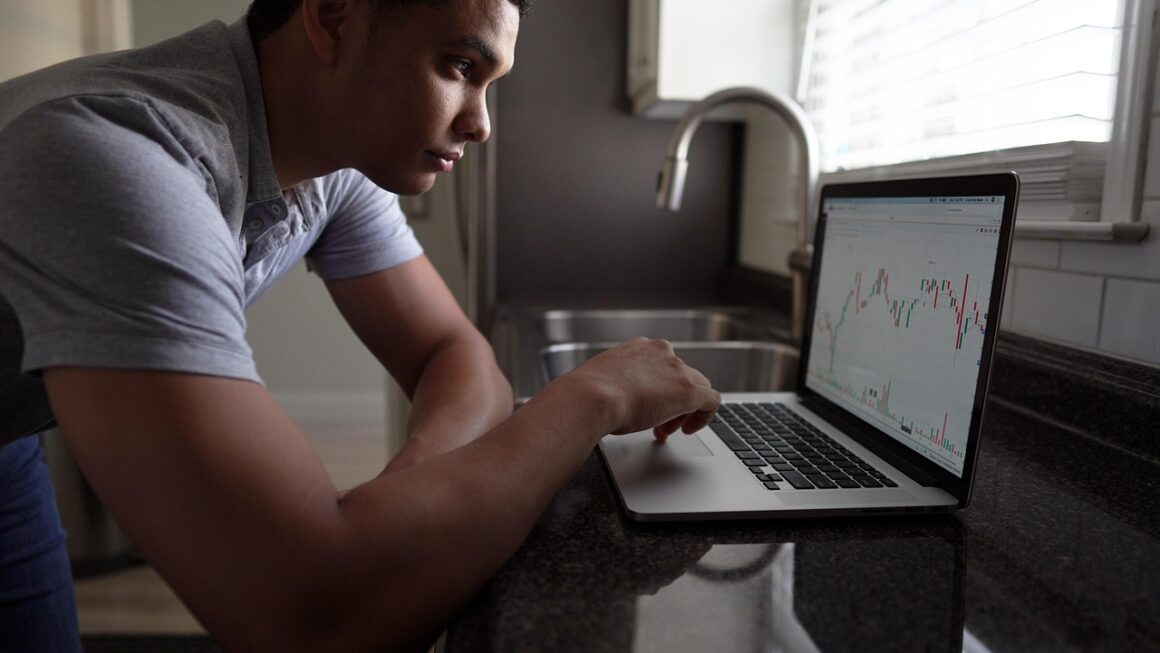
The allure of the stock market is undeniable – the thrill of potential gains, the promise of financial freedom. Yet, diving headfirst into the complex world of trading without preparation is akin to sailing into a storm without a compass. For aspiring traders, the stakes are incredibly high, and the learning curve can be steep, often accompanied by costly mistakes. This is where paper trading emerges as an indispensable tool, a risk-free simulator that allows you to hone your skills, test strategies, and build confidence before you ever commit a single real dollar. Imagine practicing your craft in a realistic environment, making all the mistakes you need to, and learning invaluable lessons without any financial repercussions. That’s the power of virtual trading, and it’s a critical first step on your journey to becoming a successful and disciplined trader.
What is Paper Trading? The Ultimate Risk-Free Learning Ground
In the dynamic realm of financial markets, understanding the mechanics and mastering strategies are paramount. Paper trading provides a crucial bridge between theoretical knowledge and practical application, offering a safe sandbox for experimentation.
Definition and Concept: Trading with Virtual Capital
Paper trading, also known as simulated trading or virtual trading, is the practice of buying and selling financial instruments using virtual money rather than actual capital. Traders execute mock trades within a simulated environment that closely mirrors real-time market conditions. This means you interact with live price data, observe market movements, and place orders just as you would with a live account, but without any real financial risk.
- Virtual Portfolio: You are typically allocated a fixed amount of virtual capital (e.g., $10,000, $100,000) to start your trading journey.
- Real-Time Data: Most reputable platforms provide market data that is either real-time or has a very slight delay (e.g., 15 minutes), ensuring a realistic experience.
- No Financial Risk: All profits and losses are purely hypothetical, allowing for aggressive experimentation without fear of capital loss.
Why It’s Called “Paper”: A Glimpse into History
The term “paper trading” originates from a time before sophisticated computer simulations. Aspiring traders would literally use pen and paper to track their hypothetical trades. They would note down their imagined buy and sell orders, along with the actual market prices at the time, and manually calculate their virtual profits and losses. While modern technology has replaced manual tracking, the essence remains: practicing on paper before playing with real money.
How It Works Today: Modern Platforms and Immersive Simulations
Today, paper trading is highly sophisticated. Most online brokers offer robust virtual trading platforms that are integrated directly into their live trading interfaces. These platforms provide:
- Advanced Charting Tools: Access to technical indicators, drawing tools, and various chart types for in-depth analysis.
- Diverse Asset Classes: Ability to trade stocks, options, futures, forex, commodities, and even cryptocurrencies, depending on the platform.
- Realistic Order Types: Practice with market orders, limit orders, stop-loss orders, and more complex conditional orders.
- Performance Tracking: Detailed reports on your virtual portfolio’s performance, trade history, and P&L (profit and loss) statements.
Practical Example: You identify a potential long trade on Company X’s stock. Instead of buying actual shares, you log into your paper trading account, navigate to Company X, and place a “buy” order for 100 shares at the current market price using your virtual capital. You then set a virtual stop-loss and take-profit order. The platform tracks this hypothetical trade, adjusting your virtual portfolio equity based on the stock’s real-time price movements.
The Undeniable Benefits of Paper Trading
Paper trading isn’t just a novelty; it’s a fundamental step that offers a multitude of advantages for both novice and experienced traders looking to refine their approach.
Develop and Test Trading Strategies Without Financial Risk
One of the primary benefits of paper trading is the freedom it provides to experiment. You can try out various trading strategies, from simple trend following to complex options spreads, without the looming fear of losing money. This allows for iterative refinement, identifying what works and what doesn’t for your personal trading style.
- Strategy Validation: Test indicators, entry/exit rules, and risk management parameters to see how they perform under different market conditions.
- Adapting to Volatility: Practice trading during periods of high or low market volatility to understand how your strategy reacts.
- Identifying Your Niche: Discover if you’re more suited for day trading, swing trading, or long-term investing without committing capital.
Example: A new trader might want to test a “moving average crossover” strategy. They can paper trade this strategy for weeks or months, observing if it consistently generates profits in the simulated environment before considering using it with real funds.
Master Trading Mechanics and Platform Navigation
Navigating a trading platform can be daunting at first. Paper trading provides a safe space to familiarize yourself with all the features and functionalities without the pressure of a live market. This mastery reduces the chances of costly execution errors when you eventually switch to live trading.
- Order Entry: Practice placing various order types (market, limit, stop-loss, stop-limit, trailing stop) and understanding their implications.
- Charting Tools: Learn to customize charts, apply technical indicators, and draw trend lines effectively.
- Account Management: Understand how to monitor your portfolio, review trade history, and interpret performance metrics.
Tip: Don’t just click “buy” and “sell.” Actively explore every feature of your chosen platform’s virtual trading environment.
Build Emotional Discipline and Mental Resilience
Trading is as much a psychological game as it is an analytical one. Emotions like greed, fear, impatience, and overconfidence can significantly impact decision-making and lead to poor outcomes. Paper trading allows you to experience the emotional rollercoaster of wins and losses without the pain of real monetary consequences.
- Managing Losses: Learn to accept small losses as part of the trading process without letting them spiral into larger ones.
- Controlling Greed: Practice sticking to your profit targets instead of holding onto winning trades for too long, only to see them reverse.
- Overcoming Fear of Missing Out (FOMO): Develop the discipline to wait for your setup rather than chasing every market move.
Statistic: Studies show that emotional control is a significant factor in trader success, with many professional traders emphasizing its importance over complex strategies. Paper trading is your gym for emotional fitness.
Understand Market Dynamics and News Impact
Markets are influenced by countless factors, from economic reports and company earnings to geopolitical events and social sentiment. Paper trading helps you observe how these real-world events translate into price movements.
- Reacting to News: See how stocks react to earnings announcements, analyst upgrades/downgrades, or sector-specific news.
- Observing Trends: Identify and follow broader market trends and understand how individual stocks correlate (or don’t) with the overall market.
- Sector Analysis: Explore how different sectors perform during various economic cycles or in response to specific news items.
Explore Different Asset Classes and Market Structures
The financial markets offer a vast array of instruments. Paper trading allows you to explore these diverse asset classes and understand their unique characteristics before specializing.
- Stocks: Understand equity market dynamics.
- Options: Learn about calls, puts, strikes, and expiration dates without the complexity and risk of options strategies.
- Forex: Practice currency pair trading and understand factors affecting exchange rates.
- Futures: Explore commodities and index futures.
This exploration can help you discover which markets align best with your interests, risk tolerance, and trading personality.
Choosing the Right Paper Trading Platform
The quality of your paper trading experience largely depends on the platform you choose. A good platform should be realistic, feature-rich, and user-friendly.
Key Features to Look For in a Virtual Trading Platform
When evaluating different paper trading platforms, consider these critical elements to ensure a comprehensive and effective learning experience:
- Real-time Market Data: Essential for accurate price action and decision-making. Avoid platforms with significant data delays if possible.
- Realistic Commission and Fee Structures: A platform that simulates commissions and other fees (e.g., bid-ask spread) provides a more accurate picture of actual profitability.
- Diverse Asset Class Availability: If you plan to explore beyond stocks, ensure the platform supports options, forex, futures, etc.
- User-Friendly Interface: An intuitive design reduces the learning curve for the platform itself, allowing you to focus on trading.
- Advanced Charting & Technical Tools: Access to a wide range of indicators and drawing tools is crucial for technical analysis.
- Customizable Virtual Capital: The ability to set your initial virtual capital to match your eventual real-money account can make the simulation more realistic.
- Educational Resources: Some platforms offer tutorials, webinars, and educational content that can enhance your learning.
- Mobile App Compatibility: For traders who need to monitor or execute trades on the go.
Popular Platforms and Brokers Offering Paper Trading
Many reputable brokers and dedicated virtual trading providers offer excellent paper trading environments. Here are a few prominent examples:
- Thinkorswim (Charles Schwab): Highly regarded for its robust charting, extensive features, and comprehensive options analysis tools. Excellent for active traders.
- Interactive Brokers (Trader Workstation – TWS): Offers a professional-grade platform with access to a vast array of global markets and instruments. Ideal for experienced traders and those planning to trade multiple asset classes.
- Fidelity (Active Trader Pro): Provides a solid paper trading experience with good research tools, though it might be less feature-rich than Thinkorswim for advanced active trading.
- TradeStation: Known for its powerful charting and strategy automation capabilities, making it a favorite among technical traders.
- Webull: Popular among newer traders, offering a user-friendly interface and zero-commission stock/ETF trading in their virtual environment.
- TradingView (Paper Trading Integration): While primarily a charting platform, TradingView integrates with several brokers for paper trading, offering excellent chart analysis capabilities.
Recommendation: Consider opening virtual accounts with 2-3 different platforms to compare their interfaces and features before committing to one.
Setting Up Your Virtual Account: A Practical Guide
Getting started with paper trading is typically straightforward:
- Choose a Platform: Select a broker or dedicated virtual trading provider.
- Register: Sign up for an account. Many brokers allow you to open a paper trading account without funding a live account immediately.
- Activate Paper Trading: Look for a “paper trading,” “simulated trading,” or “demo account” option.
- Allocate Virtual Capital: Most platforms automatically allocate a default amount (e.g., $50,000 or $100,000). Some allow you to adjust this to match your planned real trading capital.
- Explore the Interface: Spend time getting familiar with the layout, how to search for symbols, view charts, and place orders.
- Start Trading: Begin placing your hypothetical trades and tracking your performance.
Pro Tip: Set your virtual capital to what you realistically plan to trade with. Starting with $1 million in virtual money when you only plan to trade with $5,000 can create unrealistic expectations and risk tolerance.
How to Maximize Your Paper Trading Experience (Actionable Tips)
Simply making trades in a simulated environment isn’t enough. To truly benefit, you need to approach paper trading with discipline and purpose.
Treat It Like Real Money: Cultivate Realistic Psychology
The biggest challenge in paper trading is overcoming the psychological disconnect. Since there’s no real money at stake, it’s easy to become reckless or indifferent. To maximize your learning, you must actively try to simulate the emotional pressure of real trading.
- Emotional Awareness: Pay attention to your feelings after a winning trade (euphoria, overconfidence) and a losing trade (frustration, anger). How would these emotions impact your next decision with real money?
- Consequence Simulation: Mentally imagine the financial implications of each virtual trade. If you lose $500 virtually, acknowledge that it would be a real $500 loss in a live account.
- Discipline: Force yourself to follow your trading plan strictly, even when you feel the urge to deviate because “it’s just paper money.”
Actionable Takeaway: Before each trade, visualize that it’s your hard-earned capital on the line. After each trade, reflect on your emotional state and how it affected your decisions.
Set Clear, Measurable Goals for Your Paper Trading Journey
Don’t just randomly trade. Define what you want to achieve during your paper trading period. This provides direction and a benchmark for success.
- Profitability Target: Aim for a specific percentage gain over a defined period (e.g., “achieve a consistent 5% monthly return for three consecutive months”).
- Risk Management Adherence: Focus on sticking to your predetermined risk-per-trade (e.g., “never risk more than 1% of virtual capital on any single trade”).
- Strategy Mastery: Target specific strategies to master (e.g., “successfully execute 10 breakout trades with positive P&L”).
- Platform Competency: Set goals related to understanding specific features (e.g., “master complex options strategies within the simulator”).
Example: “My paper trading goal is to achieve a net profit of 10% of my virtual capital over two months, while ensuring no single trade loss exceeds 2% of my starting capital, and only trading stocks within the S&P 500.”
Keep a Detailed Trading Journal: Your Roadmap to Improvement
A trading journal is an invaluable tool for self-assessment and continuous improvement. It forces you to be accountable and provides data for analysis.
- Record Every Trade: Document entry and exit points, trade size, instrument, date, and time.
- Rationale and Plan: Crucially, note why you entered the trade, what your strategy was, and what your profit target and stop-loss were.
- Emotional State: Briefly describe your feelings before, during, and after the trade. Were you confident? Anxious? Impatient?
- Outcome and Lessons Learned: Record the actual profit/loss and, most importantly, what you learned from the trade, regardless of the outcome.
Actionable Takeaway: Regularly review your journal (weekly or monthly) to identify recurring mistakes, successful patterns, and areas for psychological improvement. This quantitative and qualitative data is gold.
Analyze Your Performance Regularly: Data-Driven Decision Making
Your paper trading platform will likely provide performance statistics, but actively analyzing them is key. Don’t just look at the bottom line; dig deeper.
- Win Rate: What percentage of your trades are profitable?
- Average Win vs. Average Loss: Are your winning trades significantly larger than your losing trades? (This is crucial for profitability).
- Maximum Drawdown: What was the largest percentage drop in your virtual portfolio?
- Performance by Strategy/Asset: Which strategies or asset classes are you performing best in?
Tip: If your win rate is high but your average loss is much larger than your average win, you have a risk management problem. If your win rate is low but your average win is significantly higher, you might be onto something but need to improve your entry timing.
Don’t Rush to Live Trading: Patience is a Virtue
Many eager traders cut their paper trading short, feeling confident after a few good weeks. This is a common mistake. Paper trading requires a significant period of consistent, disciplined practice across various market conditions. Rushing often leads to expensive lessons in the live market.
Actionable Takeaway: Aim for at least 3-6 months of consistent profitability and adherence to your trading plan in your paper trading account before even considering live trading. Ideally, experience different market phases (trending, consolidating, volatile).
Transitioning from Paper to Live Trading: When Are You Ready?
The moment of truth arrives when your paper trading results suggest you’re ready to put real capital on the line. This transition requires careful consideration and a measured approach.
Consistent Profitability and Robust Strategy Validation
The most important indicator of readiness is a verifiable track record of consistent profitability in your paper trading account over an extended period (e.g., 3-6 months). This profitability shouldn’t be due to luck or one large winning trade but rather the result of a clearly defined and consistently executed trading strategy.
- Positive Expectancy: Your strategy should demonstrate a positive mathematical expectancy (average win win rate – average loss loss rate > 0).
- Adaptability: Your strategy should perform well across different market conditions (bull, bear, sideways markets).
- Documented Plan: You should have a detailed written trading plan outlining your entry criteria, exit criteria, risk management rules, and preferred asset classes.
Actionable Takeaway: Don’t just look at your overall virtual P&L. Scrutinize your trading journal to ensure your success isn’t just a streak but a result of your repeatable process.
Demonstrated Emotional Readiness and Discipline
The switch to live trading will amplify emotions. You are ready when you can:
- Stick to Your Plan: Execute your strategy precisely, even when fear or greed tempt you to deviate.
- Accept Losses Gracefully: Take small losses without letting them affect your mental state or leading to revenge trading.
- Avoid Overtrading: Resist the urge to trade purely out of boredom or a desire for action.
- Manage Wins: Avoid becoming overconfident after a series of wins, which often leads to larger, riskier trades.
Tip: If you find yourself frequently violating your own rules in paper trading, you are definitely not ready for live trading.
Start Small: A Gradual Introduction to Real Capital
Once you decide to go live, do not fund your account with all your intended capital. Start with a very small amount, ideally the minimum required to trade your chosen instrument efficiently.
- Minimal Risk: Trading with a small amount minimizes the financial impact of inevitable early mistakes in the live environment.
- Psychological Adjustment: This “micro-live” phase helps you adjust to the psychological weight of real money without breaking your bank.
- Build Confidence: Slowly building a track record of profitable live trades, even small ones, reinforces good habits and builds confidence.
Example: If your ultimate goal is to trade with $10,000, start with $500 to $1,000 for your initial live trading. This allows you to experience the real market’s psychological pressure without catastrophic losses.
Continue Education and Adaptability
The journey of a trader is one of continuous learning. Even after transitioning to live trading, never stop educating yourself.
- Market Changes: Markets evolve, and what worked yesterday might not work tomorrow. Stay updated with economic news and market trends.
- Refine Strategies: Continuously analyze your live trades and adapt your strategies as needed.
- Learning Resources: Read books, attend webinars, follow experienced traders (critically), and join trading communities.
The transition from paper to live trading is a significant step. Approach it with patience, caution, and a commitment to continuous learning.
Conclusion
Paper trading is far more than just a game; it’s a foundational pillar for anyone serious about navigating the financial markets successfully. It offers an unparalleled, risk-free environment to develop and test trading strategies, master platform mechanics, and critically, cultivate the emotional discipline essential for long-term success. By treating your virtual portfolio with the same respect you would real money, meticulously journaling your trades, and rigorously analyzing your performance, you transform a simulation into a powerful educational tool.
Embrace paper trading not as a shortcut, but as a deliberate and indispensable first step. It equips you with the confidence, knowledge, and psychological fortitude necessary to make the eventual transition to live trading a measured and potentially profitable one. Before you put your hard-earned capital on the line, invest your time and effort in becoming proficient in the virtual world. Your future self, and your bank account, will thank you.