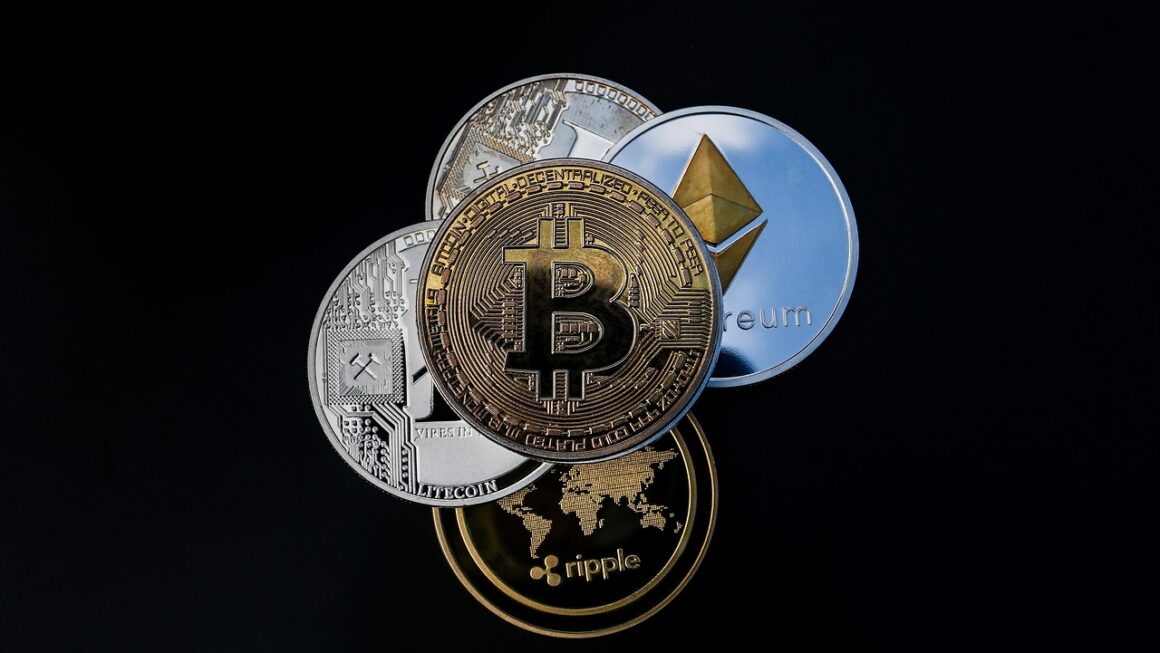
The financial world is undergoing a seismic shift, driven by a groundbreaking innovation that promises to redefine how we transact, invest, and even perceive ownership. This innovation is cryptocurrency – a digital revolution that has moved from the fringes of technology to the forefront of global finance. More than just digital money, cryptocurrencies, powered by blockchain technology, represent a fundamental challenge to traditional centralized systems, offering unprecedented transparency, security, and decentralization. Whether you’re a seasoned investor or a curious newcomer, understanding the intricacies of this burgeoning ecosystem is no longer optional but essential in navigating the future of finance.
What is Cryptocurrency? Unpacking the Digital Revolution
At its core, a cryptocurrency is a digital or virtual currency designed to work as a medium of exchange. It uses strong cryptography to secure financial transactions, verify the transfer of assets, and control the creation of new units. Unlike traditional currencies issued by central banks, most cryptocurrencies are decentralized, meaning they are not subject to government or financial institution interference.
How it Works: The Blockchain Backbone
The foundational technology underpinning virtually all cryptocurrencies is the blockchain. Imagine a distributed, immutable ledger that records every transaction across a network of computers. Each “block” contains a list of transactions, and once filled, it’s linked to the previous block, forming a “chain.”
- Decentralization: No single entity controls the network. Instead, it’s maintained by a peer-to-peer network.
- Immutability: Once a transaction is recorded on the blockchain, it cannot be altered or deleted, ensuring a transparent and verifiable history.
- Security: Cryptographic hashes link blocks together, making it incredibly difficult to tamper with previous transactions without being detected.
- Transparency: While identities are often pseudonymous, all transactions are publicly visible on the blockchain.
Actionable Takeaway: Understand that blockchain’s distributed and secure nature is what gives cryptocurrencies their inherent trustworthiness, eliminating the need for intermediaries.
Key Characteristics of Cryptocurrencies
Beyond the blockchain, cryptocurrencies share several defining features that set them apart:
- Decentralization: Transactions are validated by network participants (miners or validators) rather than a central authority.
- Cryptography: Advanced encryption techniques secure transactions and control the creation of new units.
- Limited Supply: Many cryptocurrencies, like Bitcoin, have a predetermined, finite supply, contributing to their value (e.g., Bitcoin’s cap is 21 million coins).
- Pseudonymity: While transactions are public, the identities of participants are typically represented by cryptographic addresses, not personal names.
- Global & Borderless: Transactions can occur across international borders without the need for intermediaries or traditional banking hours.
Practical Example: Sending Bitcoin from New York to Tokyo takes minutes and incurs minimal fees, unlike traditional bank transfers which can take days and incur significant charges.
Types of Cryptocurrencies: Beyond Bitcoin
While Bitcoin often dominates headlines, the crypto landscape is vast and diverse, offering a multitude of digital assets with different use cases and technological foundations.
Bitcoin (BTC): The Pioneer
Launched in 2009 by an anonymous entity known as Satoshi Nakamoto, Bitcoin was the first successful cryptocurrency and remains the largest by market capitalization. It was designed as “peer-to-peer electronic cash” and is often referred to as “digital gold” due to its scarcity and role as a store of value.
- Primary Use: Store of value, medium of exchange.
- Halving Events: Its supply issuance is cut in half approximately every four years, creating scarcity.
- Market Dominance: Historically holds a significant portion of the total crypto market cap.
Actionable Takeaway: Bitcoin is often considered the benchmark for the crypto market; its price movements can influence the broader market.
Altcoins: Innovation and Diversification
Any cryptocurrency other than Bitcoin is generally referred to as an “altcoin.” These projects often aim to improve upon Bitcoin’s original design or offer entirely new functionalities.
- Ethereum (ETH): The second-largest cryptocurrency, Ethereum introduced smart contracts – self-executing contracts with the terms of the agreement directly written into code. It powers a vast ecosystem of decentralized applications (DApps), DeFi protocols, and NFTs.
- Ripple (XRP): Focused on facilitating fast and low-cost international payments for financial institutions.
- Litecoin (LTC): Often called “digital silver,” it was designed for faster transaction confirmations and a larger supply than Bitcoin.
- Cardano (ADA) & Solana (SOL): Newer generations of blockchains designed for high scalability, efficiency, and smart contract capabilities, often competing with Ethereum.
Practical Example: If you want to lend or borrow crypto without banks, you’d use a DeFi protocol built on Ethereum, such as Aave or Compound, powered by ETH and other altcoins.
Stablecoins: Bridging Volatility
Stablecoins are a unique class of cryptocurrencies designed to minimize price volatility. They achieve this by pegging their value to more stable assets, typically fiat currencies like the US Dollar.
- Fiat-backed: Examples include Tether (USDT), USD Coin (USDC), and Binance USD (BUSD), which aim to maintain a 1:1 peg with the US Dollar.
- Algorithm-backed: Some stablecoins use complex algorithms and other cryptocurrencies to maintain their peg (e.g., MakerDAO’s DAI).
- Use Cases: Ideal for traders wanting to lock in profits without converting back to fiat, or for making day-to-day transactions without the risk of price swings.
Actionable Takeaway: Stablecoins provide a crucial bridge between the volatile crypto market and traditional finance, offering stability for trading and savings.
The Power of Blockchain: Beyond Currency
The underlying blockchain technology has applications far beyond just digital money, fostering innovation across numerous industries and paving the way for a decentralized future.
Decentralized Finance (DeFi): Reshaping Financial Services
DeFi refers to a growing ecosystem of financial applications built on blockchain, primarily Ethereum, that aim to recreate traditional financial services in a decentralized, transparent, and permissionless manner. This means no banks, no brokers, and no intermediaries.
- Lending & Borrowing: Platforms like Aave and Compound allow users to lend their crypto and earn interest, or borrow against their crypto assets.
- Decentralized Exchanges (DEXs): Uniswap and SushiSwap enable peer-to-peer crypto trading without a central authority holding funds.
- Yield Farming: Users deposit crypto into liquidity pools to earn fees and rewards, optimizing their returns.
Practical Example: Instead of getting a loan from a bank, you could use a DeFi lending platform to borrow stablecoins by collateralizing your Ethereum holdings, often with lower fees and faster processing.
Non-Fungible Tokens (NFTs): Digital Ownership
NFTs are unique digital assets stored on a blockchain, representing ownership of a specific item or piece of content. Unlike cryptocurrencies, which are fungible (each unit is interchangeable), NFTs are one-of-a-kind.
- Digital Art & Collectibles: CryptoPunks, Bored Ape Yacht Club are famous examples of high-value NFT collections.
- Gaming: NFTs can represent in-game items, characters, or virtual land, providing true ownership to players.
- Music & Media: Artists can tokenize their work, creating new monetization streams and direct fan engagement.
- Real Estate: Projects are exploring using NFTs to represent fractional ownership of physical properties.
Actionable Takeaway: NFTs are revolutionizing how we perceive and prove ownership of digital (and increasingly physical) assets, unlocking new creative and economic models.
Web3 and Decentralized Applications (DApps): The Next Internet Era
Web3 is the vision for a decentralized internet built on blockchain technology, where users have more control over their data and online experiences. DApps are applications that run on a decentralized network, contrasting with traditional apps hosted on centralized servers.
- Data Ownership: Users control their data, rather than corporations.
- Censorship Resistance: DApps are harder to shut down or censor by a single entity.
- Enhanced Privacy: User interactions can be more private by design.
Practical Example: Instead of storing your photos on Google Drive, a Web3 photo storage DApp would encrypt and distribute your files across a decentralized network, with you retaining full control and ownership.
How to Get Started with Cryptocurrency: A Practical Guide
Diving into the world of crypto investing can be exciting, but it requires careful preparation and an understanding of the necessary steps and security measures.
Choosing an Exchange
A cryptocurrency exchange is where you buy, sell, and trade digital assets. There are two main types:
- Centralized Exchanges (CEXs):
- Examples: Coinbase, Binance, Kraken.
- Pros: User-friendly interfaces, robust security (often), diverse asset offerings, fiat on-ramps (buy with USD/EUR).
- Cons: You don’t directly control your private keys; prone to regulatory scrutiny.
- Decentralized Exchanges (DEXs):
- Examples: Uniswap, SushiSwap, PancakeSwap.
- Pros: Non-custodial (you control your keys), greater privacy, wider range of new tokens.
- Cons: Can be more complex for beginners, higher transaction fees (gas fees), less liquid for some assets.
Actionable Takeaway: For beginners, a reputable CEX like Coinbase is often the easiest entry point to buy your first crypto with fiat currency.
Understanding Wallets
A crypto wallet is where you store your cryptocurrencies. It’s crucial to understand the difference between wallet types and the concept of private keys.
- Hot Wallets: Connected to the internet.
- Software Wallets: Mobile apps (e.g., Trust Wallet, MetaMask), desktop apps, browser extensions.
- Exchange Wallets: Funds held on a centralized exchange.
- Pros: Convenient for frequent transactions.
- Cons: More vulnerable to hacking.
- Cold Wallets: Not connected to the internet.
- Hardware Wallets: Physical devices (e.g., Ledger, Trezor) that store private keys offline.
- Paper Wallets: Private and public keys printed on paper (less common now).
- Pros: Most secure for long-term storage of significant amounts of crypto.
- Cons: Less convenient for frequent trading.
Practical Example: If you buy a small amount of Bitcoin, keeping it on a reputable exchange or a hot wallet like Exodus might be fine. For larger investments or long-term holding, transferring to a hardware wallet is strongly recommended for superior crypto security.
Buying Your First Crypto
The process usually involves:
- Account Creation: Sign up for a chosen exchange.
- KYC (Know Your Customer): Complete identity verification by providing ID documents, a legal requirement for most CEXs.
- Funding Your Account: Link a bank account, debit card, or credit card.
- Placing an Order: Navigate to the buying section, select the cryptocurrency (e.g., Bitcoin, Ethereum), and specify the amount.
Actionable Takeaway: Start small, invest only what you can afford to lose, and conduct thorough research on any crypto before buying.
Risks and Opportunities in the Crypto Market
The cryptocurrency market is replete with both immense potential and significant challenges. Understanding these facets is crucial for any potential crypto investor.
Market Volatility
One of the most prominent characteristics of the crypto market is its extreme price volatility. Prices can swing dramatically in short periods, influenced by news, regulations, technological developments, and market sentiment.
- Rapid Gains: Early investors in Bitcoin and Ethereum have seen astronomical returns.
- Significant Losses: Conversely, many cryptocurrencies have lost substantial value, leading to investor losses.
- Market Cycles: Crypto markets often experience boom and bust cycles.
Practical Example: Bitcoin’s price surged from under $10,000 in early 2020 to over $60,000 in 2021, then experienced a significant correction in 2022, demonstrating rapid fluctuations and the concept of market volatility.
Regulatory Landscape
The global regulatory framework for cryptocurrencies is still evolving. Different countries have adopted varied approaches, from outright bans to embracing crypto innovation.
- Uncertainty: Regulatory changes can significantly impact market sentiment and the viability of certain crypto projects.
- Compliance: Exchanges and companies dealing with crypto are increasingly subject to AML (Anti-Money Laundering) and KYC regulations.
- Potential for Mainstream Adoption: Clear and sensible regulation could pave the way for broader institutional and retail adoption.
Actionable Takeaway: Stay informed about regulatory developments in your region, as they can affect the legality and future prospects of your investments.
Security Risks
Despite the inherent security of blockchain, the crypto ecosystem faces various threats that users must be aware of.
- Hacking & Exploits: Centralized exchanges and DeFi protocols can be targets for hackers.
- Scams & Phishing: Fraudulent schemes designed to trick users into revealing private keys or sending crypto.
- Rug Pulls: Developers abandon a project and run away with investors’ funds, often in the DeFi space.
- User Error: Losing private keys, sending crypto to the wrong address, or falling for social engineering tactics.
Practical Tip: Always enable Two-Factor Authentication (2FA), use strong, unique passwords, and be extremely cautious of unsolicited messages or investment offers.
Long-Term Potential
Despite the risks, the long-term opportunities presented by cryptocurrency and blockchain technology are compelling.
- Financial Inclusion: Providing banking services to the unbanked globally.
- Technological Innovation: Continual development in areas like scalability, interoperability, and privacy-enhancing technologies.
- New Economic Models: Creation of decentralized autonomous organizations (DAOs), play-to-earn gaming, and the creator economy.
- Future of Finance: The ongoing shift towards a more transparent, efficient, and decentralized global financial system.
Actionable Takeaway: View cryptocurrency not just as an asset, but as a disruptive technology that is fundamentally changing the digital landscape and the future of finance.
Conclusion
Cryptocurrency is undeniably a transformative force, pushing the boundaries of technology and finance. From Bitcoin’s revolutionary introduction to Ethereum’s smart contract capabilities, the explosion of DeFi, and the emergence of NFTs, these digital assets are reshaping our understanding of value, ownership, and financial systems. While the journey into crypto involves navigating market volatility and crucial crypto security considerations, the underlying blockchain technology offers unprecedented opportunities for transparency, efficiency, and decentralization across countless industries. As this exciting field continues to evolve, continuous education, diligent research, and a strategic approach will be paramount for anyone looking to participate in or benefit from the digital revolution. The future of finance is here, and it’s increasingly decentralized.