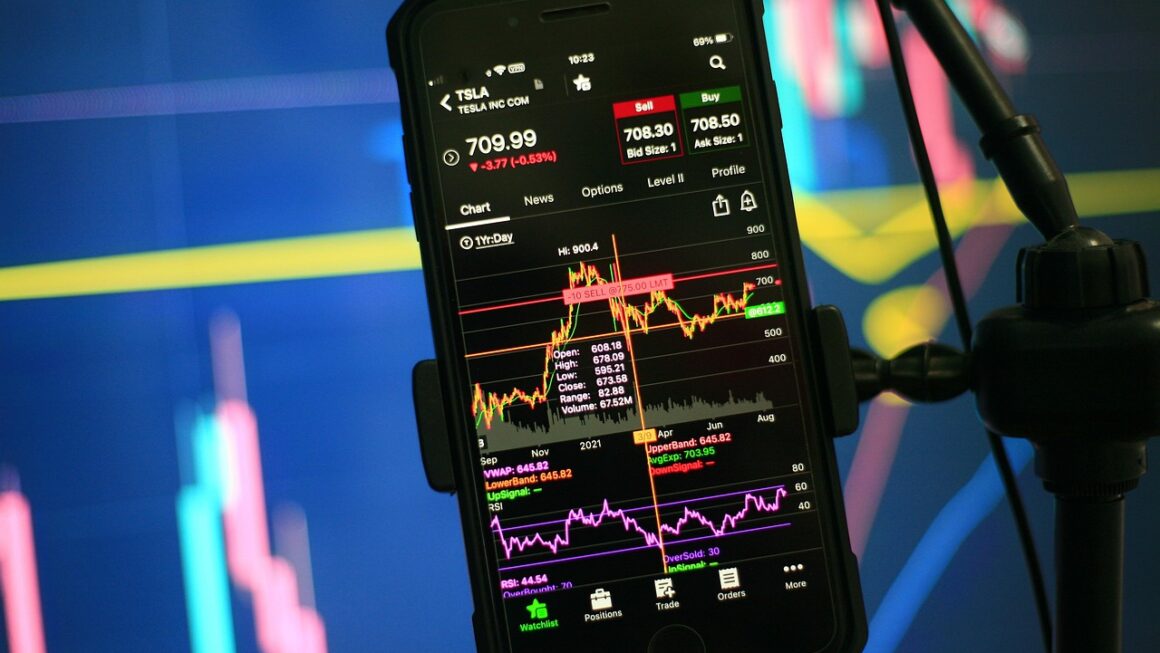
In the fast-paced world of financial markets, understanding the underlying mechanisms that drive price discovery is paramount for both novice and experienced traders. At the heart of this mechanism lies the order book – a real-time, dynamic record of all outstanding buy and sell orders for a particular security, cryptocurrency, or asset. It’s more than just a list; it’s a living snapshot of market sentiment, liquidity, and potential price movements, offering invaluable insights into the supply and demand dynamics that shape an asset’s value. Delving into the intricacies of an order book can equip you with a powerful analytical tool, transforming your approach to trading and investment.
What is an Order Book?
An order book is essentially a digital ledger that lists all current open orders for a specific asset on an exchange. It’s the central hub where buyers and sellers meet, showcasing their intentions and the prices at which they are willing to transact. Every time a new order is placed, it’s added to the book, and every time an order is executed, it’s removed. This continuous update provides a transparent view of market activity.
The Core Function
The primary function of an an order book is to facilitate efficient price discovery and transaction execution. By centralizing all buy and sell requests, it allows participants to see the exact supply and demand at various price levels, leading to a fair market price based on consensus. Without an order book, matching buyers and sellers would be a fragmented and inefficient process, making markets less liquid and more volatile.
Key Components
While an order book might seem complex at first glance, it’s built upon a few fundamental components:
- Bid Side (Buy Orders): This side lists all the outstanding orders from buyers indicating the maximum price they are willing to pay for an asset. These are typically arranged in descending order, with the highest bid price at the top.
- Ask Side (Sell Orders): Conversely, the ask side (also known as the offer side) lists all the outstanding orders from sellers indicating the minimum price they are willing to accept for an asset. These are typically arranged in ascending order, with the lowest ask price at the top.
- Market Depth: This refers to the total volume of buy and sell orders at different price levels. A deeper market (more orders at various price points) generally indicates higher liquidity, meaning larger trades can be executed without significantly impacting the price.
Actionable Takeaway: Familiarize yourself with these core components. Understanding which side represents buyers and which represents sellers, and how prices are ordered, is the first step to leveraging order book data.
Anatomy of an Order Book: Bids, Asks, and the Spread
To truly interpret an order book, it’s crucial to understand the distinct roles of the bid and ask sides and the critical gap between them – the spread.
The Bid Side: Buyer Intent
The bid side of the order book represents the collective demand for an asset. Each entry on this side is a limit buy order, specifying a quantity and a maximum price a buyer is willing to pay. The highest bid price, often called the “best bid,” is the price at which you can immediately sell an asset if you place a market sell order.
Practical Example: If the order book shows a bid for 100 shares of XYZ stock at $50.00, it means someone is willing to buy 100 shares at that price or lower. If you have 50 shares to sell immediately, you could sell them at $50.00.
The Ask Side: Seller Intent
Conversely, the ask side represents the collective supply of an asset. Each entry here is a limit sell order, specifying a quantity and a minimum price a seller is willing to accept. The lowest ask price, or “best ask,” is the price at which you can immediately buy an asset if you place a market buy order.
Practical Example: If the order book shows an ask for 50 shares of XYZ stock at $50.10, it means someone is willing to sell 50 shares at that price or higher. If you want to buy 30 shares immediately, you would pay $50.10 per share.
The Bid-Ask Spread: Cost of Trading
The difference between the best bid and the best ask is known as the bid-ask spread. This spread represents the transaction cost for immediate market orders. It’s also a key indicator of an asset’s liquidity:
- Narrow Spread: Indicates high liquidity and efficient markets, often seen in highly traded assets like major currency pairs or blue-chip stocks. It means there are many buyers and sellers close to each other in price.
- Wide Spread: Suggests lower liquidity and potentially higher transaction costs. This is common for less popular assets, penny stocks, or during periods of low trading volume.
Actionable Takeaway: Always check the bid-ask spread before executing a market order. A wide spread can significantly impact your entry or exit price, effectively reducing your potential profits or increasing your losses.
Market Depth: Beyond the Best Prices
Beyond just the best bid and ask, market depth provides a fuller picture of supply and demand across various price levels. Many exchanges offer a “depth chart” or “ladder,” which visually represents the cumulative volume of orders at each price point.
By analyzing market depth, traders can:
- Gauge overall liquidity: A deep order book with significant volume at various prices suggests a liquid market where large orders can be filled without causing drastic price swings.
- Identify potential support and resistance: Large clusters of buy orders (bids) at a specific price level can act as a temporary support, while large clusters of sell orders (asks) can act as resistance.
- Anticipate price movement: A significant imbalance, such as a much larger volume of buy orders compared to sell orders near the current price, might suggest upward price pressure, and vice-versa.
Actionable Takeaway: Don’t just look at the top of the book. Dive into the market depth to understand the broader supply and demand dynamics. This can help you avoid entering positions that might face immediate strong resistance or a lack of support.
Types of Orders Populating the Book
The order book is filled with various types of orders, each serving a different purpose for traders. Understanding them is key to effective trading strategies.
Limit Orders: Precision and Patience
A limit order is an instruction to buy or sell an asset at a specified price or better. It allows traders to control the price at which their trade is executed, but there’s no guarantee the order will be filled. Limit orders are what primarily populate the order book:
- Limit Buy Order: Placed below the current market price, waiting for the price to drop.
- Limit Sell Order: Placed above the current market price, waiting for the price to rise.
Practical Example: If XYZ stock is trading at $50.05 (best ask) and you want to buy it at $50.00, you place a limit buy order for $50.00. This order enters the bid side of the order book and waits to be filled if the price drops to $50.00 or lower.
Actionable Takeaway: Use limit orders to achieve precise entry/exit points and potentially save on transaction costs (by avoiding the spread). Be patient, as they may not always be filled immediately.
Market Orders: Speed Over Price
A market order is an instruction to buy or sell an asset immediately at the best available current price. These orders prioritize speed of execution over price precision and do not appear in the order book before execution. Instead, they “take” liquidity from the order book by matching with existing limit orders.
- A market buy order will match with the lowest available ask order(s).
- A market sell order will match with the highest available bid order(s).
Practical Example: If XYZ stock has a best ask of $50.05 for 50 shares and the next ask is $50.10 for 100 shares, a market buy order for 75 shares would fill 50 shares at $50.05 and the remaining 25 shares at $50.10. This is known as “slippage.”
Actionable Takeaway: Use market orders only when immediate execution is critical and the asset has a tight bid-ask spread and ample liquidity. Be aware of potential slippage, especially for large orders in illiquid markets.
Stop Orders: Risk Management Tools
Stop orders are conditional orders designed to limit potential losses or lock in profits. They convert into market or limit orders once a specific “stop price” is reached.
- Stop-Loss Order: A market order activated when the price hits a specified stop price. For example, a stop-loss sell order below your purchase price to limit losses.
- Stop-Limit Order: A limit order activated when the price hits a specified stop price. This provides more price control than a stop-loss but carries the risk of not being filled.
Practical Example: You bought XYZ stock at $50.00. To limit your loss, you might place a stop-loss sell order at $49.00. If the price drops to $49.00, your order converts to a market sell order, attempting to sell at the best available price.
Actionable Takeaway: Implement stop orders as a crucial part of your risk management strategy. They are vital for protecting capital and managing emotional decisions during volatile market conditions.
Other Advanced Order Types
Many exchanges offer more sophisticated order types, often built on combinations of limit and stop orders, such as:
- Trailing Stop: A stop order that automatically adjusts its stop price as the market price moves favorably.
- One-Cancels-the-Other (OCO): A pair of orders where if one order is executed, the other is automatically canceled. Often used to set both a profit target and a stop-loss simultaneously.
- Fill or Kill (FOK): An order that must be executed immediately and in its entirety, or it is canceled.
Actionable Takeaway: Explore advanced order types offered by your broker. They can provide greater control and automation, especially for traders who cannot constantly monitor the market.
How Traders Leverage Order Book Insights
The order book is a treasure trove of information for active traders. By analyzing its real-time data, traders can gain a significant edge in making informed decisions.
Gauging Market Sentiment
The immediate imbalance between the total volume of bids and asks near the current price can hint at short-term market sentiment:
- Buy-Side Dominance: If there’s significantly more buy volume (bids) accumulated near the current price than sell volume (asks), it might indicate strong buying pressure and potential upward movement.
- Sell-Side Dominance: Conversely, if there’s a heavy accumulation of sell volume (asks), it suggests selling pressure and potential downward movement.
However, this can be fleeting. Large orders can be spoofed or removed, so it’s essential to combine this with other indicators.
Actionable Takeaway: Use order book sentiment as a supplementary indicator, not a standalone signal. Combine it with price action and technical analysis for a more robust trading decision.
Identifying Support and Resistance Levels
Large clusters of orders at specific price levels often act as temporary support or resistance:
- Support: A large volume of buy limit orders (bids) at a certain price suggests a strong area where buyers are willing to step in. If the price drops to this level, it might bounce.
- Resistance: A large volume of sell limit orders (asks) at a certain price indicates a strong area where sellers are willing to offload. If the price rises to this level, it might face difficulty breaking through.
Practical Example: If there are 10,000 shares of XYZ stock listed as a sell order at $50.50, and the current price is $50.20, that $50.50 level could act as strong resistance. Traders might consider taking profits before this level or watch for a strong breakout above it.
Actionable Takeaway: Look for “walls” of orders on either side of the book. These can indicate significant price levels where large institutions or groups of traders are positioning themselves, offering potential entry or exit points.
Detecting Large Order Blocks (Spoofing & Icebergs)
Sophisticated traders analyze the order book for signs of large institutional activity, which can manifest as:
- Iceberg Orders: These are large orders that are intentionally broken into smaller, visible limit orders with the remainder hidden. A small visible order might repeatedly refill, suggesting a much larger hidden order underneath.
- Spoofing (Illegal): This involves placing large, non-bonafide orders on one side of the book with no intention of executing them, solely to manipulate market perception and price before quickly canceling them. This is illegal in many jurisdictions.
Detecting these patterns requires experience and specialized tools, as they are often designed to be inconspicuous.
Actionable Takeaway: While detecting spoofing is challenging and often requires advanced tools, being aware of sudden, large, fleeting orders can prevent you from making poor decisions based on false signals of demand or supply.
Understanding Liquidity Dynamics
The depth and density of the order book reveal an asset’s liquidity. A thick order book with many orders spread across various price levels indicates high liquidity, allowing large orders to be filled without significant price impact (slippage). A thin order book, on the other hand, suggests low liquidity, where even small orders can cause considerable price fluctuations.
- High Liquidity: Easier to enter and exit positions, tighter spreads, less risk of adverse price impact.
- Low Liquidity: Higher slippage risk, wider spreads, more difficult to execute large trades without moving the market.
Actionable Takeaway: Always assess the liquidity of an asset via its order book before placing large trades. In illiquid markets, consider breaking down large orders into smaller chunks (iceberg orders if permitted, or simply manual scaling) to minimize price impact.
Benefits and Limitations of Order Book Analysis
While a powerful tool, order book analysis comes with its own set of advantages and challenges.
Key Advantages
- Real-time Insights: Provides immediate, unfiltered data on supply and demand, offering a leading indicator for short-term price movements.
- Enhanced Price Discovery: Offers transparency into the market’s collective willingness to buy and sell at specific prices.
- Improved Entry/Exit Points: Helps identify optimal price levels for placing limit orders, potentially leading to better execution prices.
- Liquidity Assessment: Crucial for understanding how easily a trade can be executed and the potential for slippage.
- Risk Management: Can help in placing more informed stop-loss levels based on visible support/resistance.
Potential Drawbacks
- Dynamic and Fleeting: The order book changes constantly, making real-time analysis challenging and requiring quick decision-making.
- Information Overload: For beginners, the sheer volume of data can be overwhelming and difficult to interpret.
- Vulnerability to Manipulation: Large players can place and cancel orders rapidly to manipulate market perception (spoofing), or use hidden (iceberg) orders.
- Limited Long-Term Perspective: Primarily useful for short-term trading strategies; it provides little insight into fundamental value or long-term trends.
- Requires Experience: Accurately interpreting order book dynamics and distinguishing genuine intent from manipulation takes considerable experience.
Actionable Takeaway: Approach order book analysis with a clear understanding of both its strengths and weaknesses. Combine it with other analytical tools (technical indicators, fundamental analysis) for a more balanced trading strategy.
Order Books Across Different Financial Markets
While the fundamental concept of an order book remains consistent, its characteristics and utility can vary depending on the specific financial market.
Stock Exchanges: Centralized and Transparent
In traditional stock exchanges (like NYSE or Nasdaq), order books are highly centralized and transparent. Regulations ensure fairness and prevent blatant manipulation. Participants include retail traders, institutional investors, and algorithmic trading firms.
- Key Feature: Often display detailed depth, time-and-sales data (tape), and strict regulatory oversight.
- Utility: Essential for day traders and high-frequency trading (HFT) firms, less critical for long-term investors.
- Example: A trader might notice a large institutional buy order appearing on the bid side for a blue-chip stock, indicating a potential floor for the price, influencing their decision to buy or hold.
Cryptocurrency Exchanges: Dynamic and Decentralized
Cryptocurrency exchanges operate globally, often with less centralized regulation compared to traditional stock markets. Their order books are known for their high volatility and frequent, rapid changes.
- Key Feature: Can be highly volatile; prone to rapid order book shifts. Some decentralized exchanges (DEXs) use automated market makers (AMMs) instead of traditional order books.
- Utility: Crucial for understanding short-term price action in a highly speculative market.
- Example: On a crypto exchange, an altcoin might show very thin order book depth, indicating high slippage risk for even moderately sized market orders, warning traders to use limit orders only.
Futures and Commodities: Price Discovery and Hedging
Futures markets use order books for price discovery for future delivery of commodities or financial instruments. These markets are heavily used by hedgers (e.g., farmers, airlines) and speculators.
- Key Feature: Often have different contracts for various expiry dates, each with its own order book. High participation from institutional players.
- Utility: Provides insight into future supply and demand expectations for underlying assets.
- Example: A large sell wall in the order book for crude oil futures might indicate that major producers are looking to lock in prices, signaling potential resistance at that level.
Actionable Takeaway: Be aware that the nuances of order book analysis can differ significantly across markets. Adapt your interpretation and strategies based on the specific market’s structure, participants, and regulatory environment.
Conclusion
The order book is undeniably one of the most powerful and fundamental tools available to traders seeking to understand real-time market dynamics. It’s a living testament to the interplay of supply and demand, offering unparalleled transparency into buyer and seller intent. From gauging immediate market sentiment and identifying critical support/resistance levels to assessing liquidity and fine-tuning trade entries and exits, the insights gleaned from a detailed order book analysis are invaluable. While it demands a keen eye, continuous learning, and an understanding of its limitations, mastering the art of reading the order book can significantly sharpen your trading edge, allowing you to navigate the complexities of financial markets with greater confidence and precision.