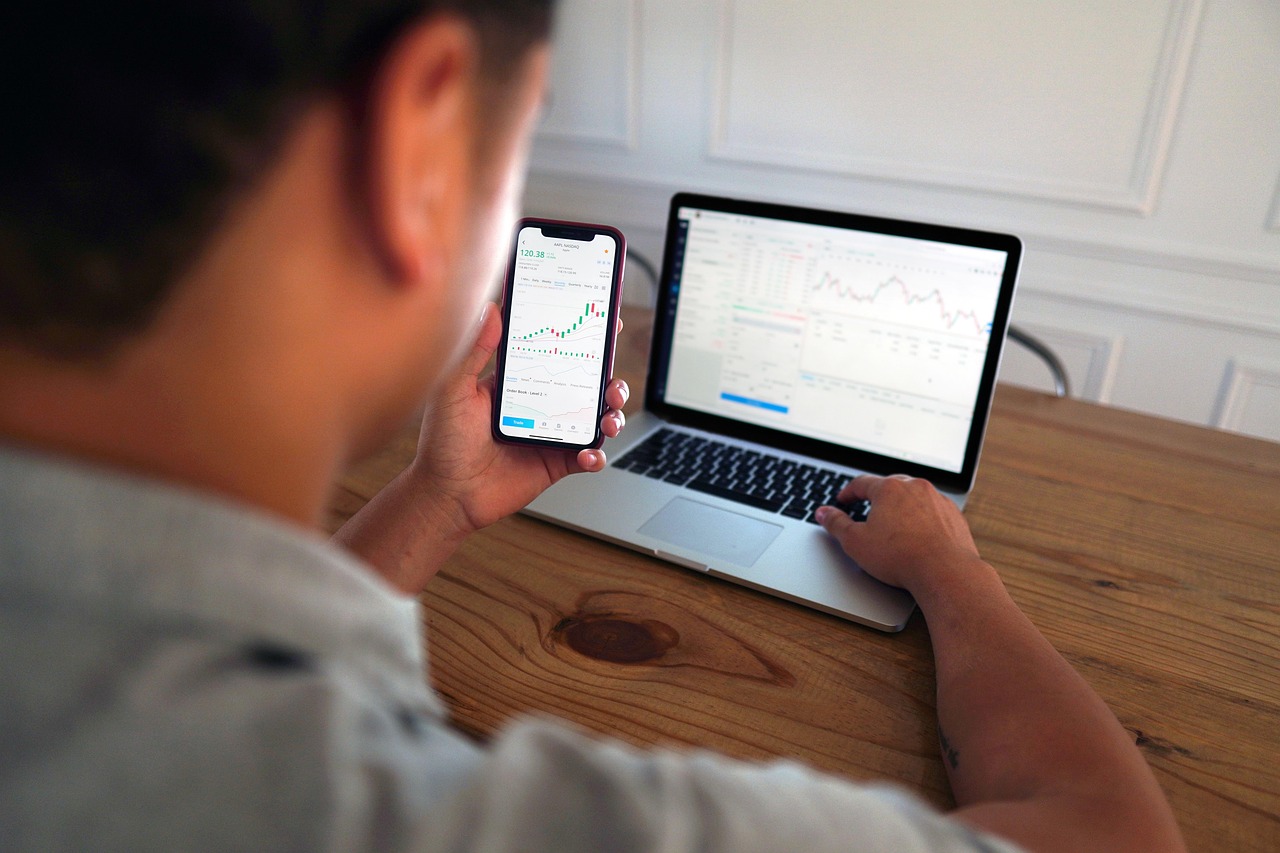
Navigating the complex world of financial markets can feel like trying to sail uncharted waters without a map. The allure of potential profits is strong, but the risks of significant losses are equally formidable. This is where paper trading emerges as an invaluable lighthouse for aspiring traders. Imagine a training ground where you can experiment with trading strategies, understand market dynamics, and build confidence, all without putting a single penny of your hard-earned capital at risk. It’s not just a game; it’s a sophisticated simulation that empowers you to master the art of trading before you ever commit to the real deal, making it an indispensable first step for anyone serious about conquering the financial markets.
What is Paper Trading? The Foundation of Risk-Free Learning
Paper trading, also known as virtual trading or simulated trading, is the practice of buying and selling financial instruments (like stocks, forex, commodities, or cryptocurrencies) using virtual money within a simulated market environment. It’s designed to mimic real-world trading conditions as closely as possible, providing an authentic experience without actual financial exposure. This powerful tool allows beginners to learn the ropes and experienced traders to test new strategies or explore unfamiliar markets in a completely safe space.
The Core Concept: Simulate Before You Speculate
At its heart, paper trading is about learning through doing, but without the consequences of failure. Think of it as a flight simulator for traders. Pilots don’t learn to fly a real plane on their first day; they spend countless hours in simulators. Similarly, paper trading platforms provide a sandbox where you can:
- Place buy and sell orders.
- Monitor market movements in real-time or near real-time.
- Experience price fluctuations, spreads, and order book dynamics.
- Track your portfolio’s performance over time.
All these actions occur with virtual capital, meaning any profits are not real, but more importantly, any losses are not real either.
How Paper Trading Platforms Mimic Reality
Modern paper trading platforms are highly sophisticated, often integrated directly into or offered alongside live brokerage accounts. They replicate key aspects of actual trading:
- Real-time Data: Many platforms provide streaming real-time or slightly delayed market data, ensuring you’re working with current prices.
- Virtual Account Balance: You’re typically given a substantial virtual balance (e.g., $10,000 to $1,000,000) to start, allowing you to simulate various position sizes.
- Order Types: You can practice with various order types, including market orders, limit orders, stop-loss orders, and more, just like in live trading.
- Commissions and Fees: Some advanced simulators even account for virtual commissions and fees, providing a more realistic depiction of trading costs.
This level of detail helps users understand the true impact of trading decisions, including how transaction costs can eat into profits.
A Brief History: From Pen & Paper to Digital Simulators
The concept of paper trading isn’t new. Before digital platforms, aspiring investors literally used pen and paper (hence the name “paper trading”) to manually track hypothetical stock purchases and sales, calculating their theoretical gains and losses. This rudimentary method provided a valuable learning experience, albeit a time-consuming one. Today, robust software and online platforms have revolutionized this practice, offering instant execution, real-time data feeds, and sophisticated analytical tools, making the learning process far more efficient and realistic.
Why Paper Trade? Unlocking Key Benefits for Aspiring Traders
The advantages of engaging in paper trading extend far beyond merely understanding how to place an order. It’s a holistic learning environment that addresses crucial aspects of trading, from strategy development to psychological conditioning.
Master Strategies Without Financial Risk
One of the primary benefits of paper trading is the ability to experiment with different trading strategies without the fear of financial loss. Whether you’re interested in day trading, swing trading, value investing, or technical analysis, you can:
- Test Indicators: Experiment with various technical indicators (moving averages, RSI, MACD) to see how they perform with different assets and timeframes.
- Validate Entry/Exit Rules: Practice your chosen entry and exit points, risk management rules, and position sizing without consequence. For instance, you could test a strategy of buying when the 50-day moving average crosses above the 200-day moving average, and selling when the RSI goes above 70.
- Adapt to Market Conditions: See how your strategies perform in different market environments – bull markets, bear markets, and sideways consolidation.
This iterative process allows you to refine your approach until you find what consistently works for you.
Gain Unrivaled Platform Proficiency
Each trading platform has its own interface, features, and quirks. Paper trading provides a safe space to familiarize yourself with your chosen broker’s platform before you commit real capital. You can:
- Learn Navigation: Understand where to find different asset classes, research tools, and your account statements.
- Practice Order Entry: Become proficient in using various order types (market, limit, stop-loss, OCO) and understand how to modify or cancel orders efficiently. This is crucial in fast-moving markets where speed and accuracy matter.
- Utilize Advanced Features: Explore charting tools, watchlists, news feeds, and other analytical features that your platform offers.
Being comfortable and efficient with your platform reduces execution errors and allows you to focus on your trading decisions.
Develop Crucial Trading Discipline and Emotional Resilience
Trading is as much about psychology as it is about strategy. Emotions like fear and greed can wreak havoc on even the best-laid plans. Paper trading helps you:
- Cultivate Patience: Learn to wait for optimal entry points rather than chasing trades.
- Stick to Your Plan: Practice executing your trading plan without letting emotions dictate your actions. When you’re not risking real money, it’s easier to follow rules.
- Handle Losses: Experience virtual losses and learn to accept them as part of the trading process without panic or revenge trading. This builds resilience for when real capital is on the line.
While paper trading doesn’t fully replicate the emotional intensity of live trading, it’s an excellent first step in developing the mental fortitude required for success.
Explore Diverse Markets and Instruments
Want to see how gold futures behave? Curious about the volatility of tech stocks? Interested in the intricacies of currency pairs? Paper trading lets you explore a wide array of financial instruments across different markets without financial commitment. This broadens your understanding and helps you discover which markets align best with your trading style and risk tolerance.
How to Get Started with Paper Trading: Your First Steps
Embarking on your paper trading journey is surprisingly straightforward. Most major brokerage firms and financial education platforms offer robust simulation tools. Here’s a practical guide to get you started on your risk-free learning path.
Selecting the Right Paper Trading Platform
The first step is choosing a platform that suits your needs. Consider these factors:
- Real-time Data: Ensure the platform provides actual or near real-time market data for accuracy.
- Available Instruments: Does it offer the assets you want to trade (stocks, options, forex, crypto)?
- Features: Look for advanced charting, various order types, and a realistic depiction of commissions.
- User Interface: Is it intuitive and easy to navigate?
- Integration: If you plan to trade live with a specific broker, it’s often best to use their paper trading platform to get familiar with their specific interface.
Popular Platforms include:
- TD Ameritrade’s thinkorswim PaperMoney: Known for its advanced tools and professional-grade features.
- TradeStation Simulator: Offers powerful tools suitable for serious traders.
- Interactive Brokers Paper Trading Account: Excellent for experiencing a wide range of global markets.
- Investing.com / Yahoo Finance: Offer simpler, web-based stock market games.
Setting Up Your Virtual Trading Account
Once you’ve chosen a platform, setting up your account usually involves these steps:
- Registration: Sign up with your email and basic personal information.
- Virtual Capital Allocation: The platform will automatically assign you a virtual starting balance, often ranging from $5,000 to $1,000,000.
- Account Familiarization: Spend some time exploring the platform’s layout, menus, and available tools before placing any trades. Locate the charting tools, order entry forms, and portfolio tracker.
For example, with a TD Ameritrade PaperMoney account, you’d navigate to the ‘Trade’ tab, then select ‘Stocks’ or ‘Options’ to find the order entry panel. Your virtual balance will be clearly displayed, showing how much virtual capital you have to deploy.
Placing Your First Simulated Trade: A Step-by-Step Guide
Let’s walk through a basic stock purchase simulation:
- Research an Asset: Use the platform’s search function to find a stock you’re interested in, e.g., “AAPL” (Apple Inc.).
- Analyze its Chart: Look at historical price data, volume, and any indicators you’re learning about.
- Decide on an Order Type:
- Market Order: To buy/sell immediately at the best available price.
- Limit Order: To buy/sell at a specific price or better. (e.g., “Buy AAPL at $170.00”).
- Stop-Loss Order: To automatically sell if the price drops to a certain level, limiting potential losses.
- Enter Trade Details: Specify the number of shares (e.g., 10 shares), the order type, and the price (for limit/stop orders).
- Review and Confirm: Double-check all details before submitting the order. The platform will typically show a confirmation screen.
- Monitor Your Portfolio: After execution, the trade will appear in your virtual portfolio, and you can track its performance.
Remember to set a virtual stop-loss and take-profit target for every trade you enter, simulating real risk management.
Essential Tools for Effective Simulation
- Watchlists: Create lists of assets you’re interested in tracking.
- Charting Tools: Utilize advanced charts to analyze price action and apply technical indicators.
- News Feeds: Stay updated on market-moving news directly within your platform.
- Virtual Account Statement: Regularly review your virtual profit/loss, remaining capital, and transaction history.
Maximizing Your Paper Trading Experience: Best Practices and Pitfalls to Avoid
Paper trading is more than just playing a game; it’s a serious training exercise. To truly benefit from it, you need to approach it with the right mindset and avoid common traps that can hinder your learning.
Treat Virtual Money as Real Capital
This is perhaps the most critical rule. If you treat your virtual account like play money, you’ll develop bad habits. Mentally commit to viewing your virtual $100,000 as if it were your actual savings. This means:
- Apply Realistic Position Sizing: Don’t buy 1,000 shares of a $500 stock with a $10,000 account. Calculate your position sizes based on your hypothetical real account size and your risk tolerance (e.g., risking no more than 1-2% of your account per trade).
- Respect Stop-Losses: Honor your virtual stop-loss orders. If your strategy dictates exiting a losing trade at a certain point, execute it without hesitation, even if you feel the market “might turn around.”
- Feel the “Pinch”: While you won’t feel real financial pain, try to acknowledge the psychological impact of a virtual loss. This helps build emotional resilience.
Example: If your real trading account would be $10,000, and your strategy allows for a maximum 1% risk per trade ($100), ensure your virtual trades also adhere to this $100 maximum loss per trade, even if your virtual account balance is $100,000.
Maintain a Detailed Trading Journal
A trading journal is an indispensable tool for growth, whether you’re paper trading or live trading. For every simulated trade, record:
- Date and Time: When the trade was placed and closed.
- Asset and Direction: What you traded and whether it was a buy or sell.
- Entry/Exit Price: The exact prices at which you entered and exited.
- Reason for Trade: Why did you take this trade? Which strategy or signal did you follow?
- Expected Outcome: What was your profit target and stop-loss?
- Actual Outcome: Virtual profit or loss.
- Lessons Learned: What did you do well? What could you improve? How did you feel during the trade?
Regularly review your journal to identify patterns, strengths, and weaknesses in your trading approach. This data-driven self-analysis is crucial for continuous improvement.
Define Clear Trading Goals and Strategies
Don’t just randomly click buttons. Before you start paper trading, define:
- Your Goal: Is it to test a specific strategy? To become familiar with a new market? To improve your execution speed?
- Your Strategy: Outline your entry rules, exit rules, risk management parameters, and preferred indicators.
- Your Time Horizon: Are you practicing day trading, swing trading, or long-term investing?
Having clear goals and a well-defined strategy gives your paper trading purpose and helps you measure progress. For instance, a goal might be to achieve a 60% win rate on swing trades using a specific moving average crossover strategy over two months.
Analyze Performance and Adapt
Just like in real trading, performance analysis is key. Don’t just look at your virtual profit or loss. Dig deeper:
- Win Rate: What percentage of your trades are profitable?
- Risk-Reward Ratio: On average, how much do you win when you’re right versus how much you lose when you’re wrong?
- Drawdowns: How much does your virtual portfolio fluctuate?
- Identify Biases: Are you consistently making the same mistakes? Do certain market conditions throw you off?
Use this analysis to refine your strategy, adjust your risk management, and make informed decisions about your readiness for live trading.
Transitioning from Paper to Live Trading: Bridging the Gap
The leap from the simulated world of paper trading to the real world of live trading is a significant one. While paper trading prepares you technically and strategically, the psychological dynamics of risking actual money introduce a new layer of complexity. Here’s how to navigate this crucial transition.
Assessing Your Readiness for Live Markets
Before you deposit real funds, objectively evaluate your performance and confidence in paper trading. Ask yourself:
- Consistent Profitability: Have you been consistently profitable (or at least consistently following your rules) in your paper trading account for a significant period (e.g., 2-3 months)?
- Strategy Validation: Do you have a well-defined, robust trading strategy that you’ve thoroughly tested and refined?
- Emotional Control: Did you consistently adhere to your trading plan and risk management rules, even during virtual losing streaks?
- Platform Mastery: Are you completely comfortable navigating your trading platform and executing orders quickly and accurately?
If you’re still struggling with any of these areas in paper trading, it’s a strong indicator that you need more practice before risking real capital.
The Psychological Jump: Expecting Real Emotions
The biggest difference between paper and live trading is the emotional impact. When real money is on the line, fear, greed, hope, and anxiety can become potent forces. Recognize that:
- Losses Will Hurt: Even small real losses can feel much bigger than large virtual ones. Be prepared for this emotional response.
- Discipline Will Be Challenged: The urge to deviate from your plan, chase profits, or take revenge trades will be much stronger.
- Self-Sabotage is Possible: Many traders find themselves making irrational decisions they never would have made in paper trading.
Acknowledge these potential emotional hurdles. Mental preparedness and adherence to your rules are paramount.
Starting Small: Your First Live Trades
When you do transition, do so gradually. Start with a very small amount of capital – perhaps the minimum required by your broker. The goal here isn’t to get rich quickly; it’s to experience the psychological reality of live trading with minimal financial risk.
- Small Position Sizes: Trade the smallest possible number of shares or contract sizes. If you normally trade 100 shares in paper, start with 10 shares in live.
- Focus on Execution: Your primary goal for the first few weeks or months should be perfect execution of your strategy and disciplined risk management, not profit.
- Increase Gradually: As you gain confidence and prove consistent discipline with small amounts, you can slowly increase your position sizes.
Example: If your virtual account allowed you to risk $200 per trade, start live trading risking only $20 per trade. This allows you to experience the emotional highs and lows without significant financial exposure.
Continuous Learning and Adaptation
The learning doesn’t stop once you go live. The markets are constantly evolving, and so should you. Continue to:
- Journal Everything: Maintain a detailed trading journal for all your live trades, just as you did with paper trading.
- Review and Analyze: Regularly review your live performance, identify areas for improvement, and adapt your strategies.
- Revisit Paper Trading: Don’t hesitate to go back to paper trading to test new ideas or refine existing strategies before deploying them with real money. Many professional traders continually use simulators for this purpose.
The journey from paper to live trading is a continuous loop of learning, practicing, executing, and refining. Embrace it as an ongoing process.
Conclusion
In the dynamic and often unforgiving arena of financial markets, paper trading stands out as an indispensable tool for both novices and seasoned professionals. It offers a unique, risk-free environment to understand market mechanics, test and refine trading strategies, master platform functionalities, and perhaps most importantly, cultivate the psychological discipline crucial for long-term success. By diligently embracing the virtual landscape, treating simulated capital with the respect of real money, and meticulously journaling every decision, aspiring traders can build a robust foundation before committing actual capital.
The transition to live trading requires patience, a gradual approach, and a strong awareness of the emotional factors that come into play when real money is on the line. Yet, with the invaluable lessons learned through comprehensive paper trading, that leap becomes less daunting and significantly more calculated. So, whether you’re just starting your trading journey or looking to perfect your craft, remember that the most successful traders are often those who spend adequate time honing their skills in the simulated world before conquering the real one. Begin your risk-free trading adventure today and equip yourself with the confidence and competence to thrive in the markets.