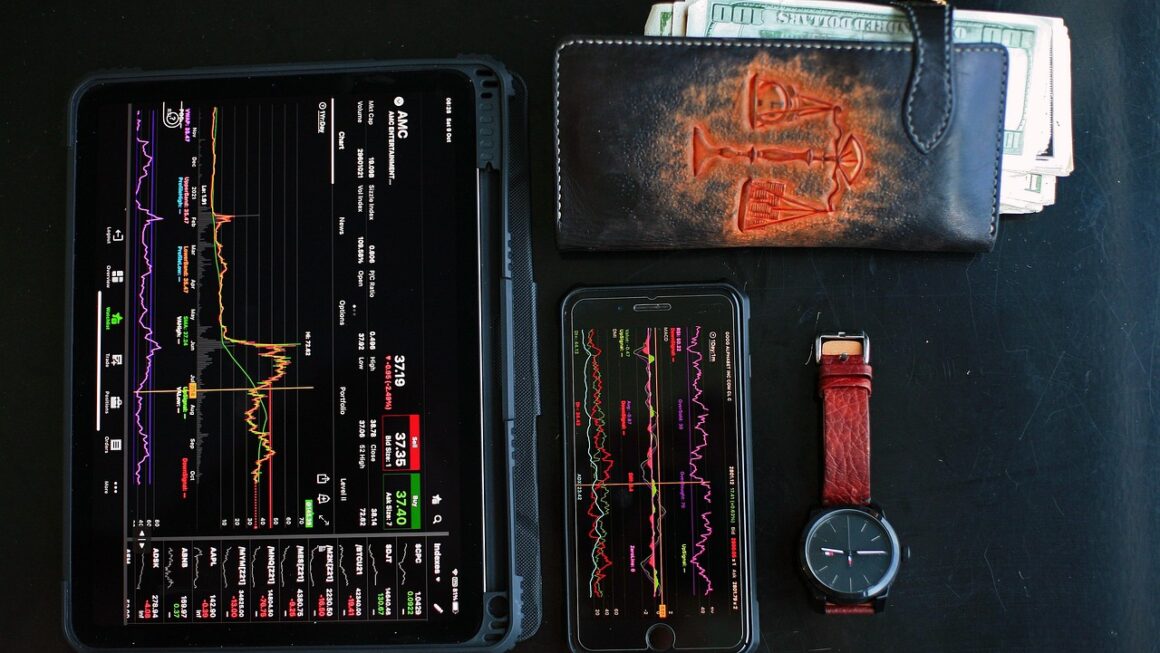
The allure of the financial markets is undeniable, promising significant returns for those who master its intricacies. Yet, for many aspiring traders, the fear of losing hard-earned capital acts as a formidable barrier. Imagine a world where you could hone your trading skills, test complex strategies, and gain invaluable market experience without risking a single penny of real money. This isn’t a fantasy; it’s the powerful reality of paper trading, also known as simulated or virtual trading. Whether you’re a complete novice taking your first steps into the world of investing or an experienced professional looking to refine a new strategy, paper trading offers a critical, risk-free training ground that is indispensable for long-term success in the dynamic financial landscape.
What is Paper Trading? The Ultimate Risk-Free Learning Ground
Paper trading stands as a cornerstone for anyone serious about navigating the financial markets. It’s an essential stepping stone that bridges the gap between theoretical knowledge and practical application, providing a safe space to learn and grow.
Definition and Core Concept
At its heart, paper trading involves simulating real stock market or other financial market transactions using virtual money rather than actual capital. Traders place buy and sell orders, track their portfolios, and experience market fluctuations in real-time, all within a virtual environment. Think of it as a flight simulator for pilots: you learn to fly the plane, understand its controls, and practice emergency procedures without ever leaving the ground. Similarly, a stock market simulator allows you to:
- Execute trades across various asset classes like stocks, forex, commodities, and cryptocurrencies.
- Monitor your virtual portfolio’s performance.
- React to market news and economic events.
- Develop a deep understanding of how market orders work.
The key takeaway? No real money is ever at risk, making it the perfect sandbox for experimentation.
Historical Context and Modern Evolution
The concept of simulated trading isn’t new. Historically, aspiring traders would literally use paper ledgers to record their hypothetical trades, noting entry prices, exit prices, and profit/loss. This manual process, while effective, was slow, prone to errors, and lacked real-time market data. The digital age has revolutionized paper trading, transforming it into sophisticated platforms that offer:
- Real-time market data: Mirroring live market conditions accurately.
- Advanced charting tools: Identical to those used by professional traders.
- A wide range of order types: Allowing practice with market, limit, stop-loss, and other complex orders.
- Analytical features: Performance tracking, risk assessment tools, and detailed trade history.
Today, virtually every major brokerage and many independent platforms offer robust virtual trading environments, making high-quality investment education more accessible than ever before.
Why Paper Trade? Unlocking Essential Benefits
Engaging in paper trading offers a multitude of advantages that are crucial for both nascent and seasoned traders. It’s not just about practicing; it’s about building a robust foundation for sustainable success.
Risk-Free Environment
This is arguably the most significant benefit. The financial markets can be unforgiving, and a single misstep with real capital can be devastating. Paper trading completely removes this threat, allowing you to:
- Learn without financial pressure: The psychological burden of potential losses is a major hurdle for new traders. Virtual trading eliminates this, fostering a calmer learning process.
- Build confidence: Successfully executing trades and seeing virtual profits grow can significantly boost a trader’s self-assurance before transitioning to live trading.
- Explore diverse strategies: You can experiment with aggressive, conservative, short-term, or long-term strategies without worrying about monetary repercussions. For instance, testing a high-frequency trading strategy requires significant practice before it can be applied with real funds.
Strategy Testing and Refinement
A successful trading career hinges on a well-defined and consistently applied strategy. Paper trading provides the perfect laboratory for this:
- Test entry and exit points: Practice identifying optimal times to buy and sell based on technical indicators or fundamental analysis. For example, you might test a strategy that buys when a stock’s RSI dips below 30 and sells when it exceeds 70.
- Evaluate different indicators: Experiment with moving averages, Bollinger Bands, MACD, stochastic oscillators, and more to see which ones best suit your chosen markets and trading style.
- Refine position sizing: Learn how to manage the size of your trades relative to your capital to control risk effectively. If you have $100,000 virtual capital, you can test how trading 100 shares versus 1,000 shares of a $50 stock impacts your portfolio.
- Adapt to market changes: Strategies that work in a bullish market might fail in a bearish one. Paper trading allows you to test your strategies across various market conditions to ensure robustness.
Market Familiarization and Tool Mastery
The learning curve for financial markets can be steep. Paper trading helps flatten it by providing practical exposure to:
- Market mechanics: Understand how supply and demand affect prices, the impact of volume, and how different exchanges operate.
- Order types: Become proficient in using market orders, limit orders, stop-loss orders, take-profit orders, and even more complex ones like OCO (one-cancels-the-other) orders. This mastery prevents costly mistakes when trading with real money.
- Trading platform features: Navigate your chosen platform confidently. Learn to customize charts, set alerts, use screeners, and access research tools. A platform like Thinkorswim (now part of Schwab) offers a highly sophisticated paper trading environment identical to its live trading version, allowing users to master its extensive features before risking capital.
- Asset class specifics: Understand the nuances of different markets, whether it’s the volatility of crypto paper trading, the leverage involved in forex paper trading, or the fundamental drivers of stock paper trading.
Developing Trading Discipline and Psychology
Trading is as much a psychological game as it is an analytical one. Emotions like greed and fear can sabotage even the best strategies. Paper trading helps cultivate crucial mental fortitude:
- Emotional control: Practice sticking to your trading plan even when simulated trades go against you. Learn to avoid impulsive decisions based on temporary market swings.
- Adherence to a trading plan: Discipline is built through repetition. Paper trading allows you to consistently follow your rules regarding entry, exit, and risk management without the added pressure of real losses.
- Patience: Learn to wait for high-probability setups instead of forcing trades.
- Objectivity: Develop the ability to analyze market data without personal biases clouding your judgment.
How to Start Paper Trading Effectively
Embarking on your paper trading journey is straightforward, but doing it effectively requires a structured approach. Here’s how to begin:
Choosing the Right Paper Trading Platform
The foundation of your simulated trading experience is the platform you choose. Look for features that mimic real trading environments as closely as possible:
- Real-time market data: Essential for accurate simulation.
- Asset variety: Ensure the platform supports the asset classes you’re interested in (stocks, forex, crypto, options, etc.).
- User-friendly interface: An intuitive design makes learning easier.
- Advanced tools: Charting, indicators, news feeds, and analytical reports are crucial for comprehensive learning.
- Educational resources: Some platforms offer tutorials, webinars, and articles to support your learning.
Examples of popular paper trading platforms:
- TD Ameritrade / Schwab (Thinkorswim): Excellent for stocks, options, and futures with a highly sophisticated platform.
- Interactive Brokers: Offers a robust demo account with access to global markets and diverse asset classes.
- eToro: Popular for social trading and crypto, with a user-friendly virtual portfolio.
- OANDA: Renowned for forex paper trading with professional-grade tools.
- Binance / Bybit: Offer crypto paper trading for various cryptocurrencies and derivatives.
Setting Up Your Virtual Account
Once you’ve selected a platform, setting up your account is typically quick and easy:
- Registration: Sign up for a demo or practice account. Many platforms offer this for free.
- Initial virtual capital: Most platforms provide a substantial virtual balance (e.g., $50,000 to $1,000,000) to simulate a realistic starting portfolio. Treat this money as if it were real.
- Explore the dashboard: Familiarize yourself with where to find charts, place orders, view your portfolio, and access market news.
- Create a watchlist: Add assets you’re interested in tracking. This helps you focus your learning.
Defining Your Trading Plan (Crucial Step)
Before placing a single virtual trade, create a clear and actionable trading plan. This is vital for transferring good habits to live trading. Your plan should include:
- Your trading goals: What do you aim to achieve? (e.g., consistent 5% monthly virtual profit).
- Risk management rules: How much virtual capital will you risk per trade? (e.g., no more than 1-2% of your virtual account). Where will you set your virtual stop-losses?
- Preferred asset classes and strategies: Are you focusing on stock paper trading, forex paper trading, or crypto paper trading? What specific strategies will you employ (e.g., swing trading, day trading, trend following)?
- Entry and exit criteria: What specific conditions must be met for you to enter or exit a trade?
- Trade journaling: Record every virtual trade, including the reason for entry, exit, profit/loss, and lessons learned. This is invaluable for self-analysis.
Actionable Takeaway: Spend at least a few days observing the market and familiarizing yourself with your chosen platform before placing your first virtual trade. A well-prepared start sets the stage for meaningful learning.
Maximizing Your Paper Trading Experience: Advanced Tips
To truly harness the power of paper trading, you need to approach it with the same seriousness and rigor you would apply to live trading. This commitment will bridge the gap between simulation and real-world success.
Treat It Like Real Money
This is perhaps the most important psychological shift. If you treat your virtual capital like play money, you’ll develop bad habits that will be costly in live trading. To cultivate this mindset:
- Avoid reckless trades: Don’t make absurdly large bets just because it’s not real money. Stick to the position sizing rules you would use with actual capital. If you wouldn’t risk 50% of your real portfolio on a single trade, don’t do it with your virtual account.
- Feel the “virtual” pain and gain: While not real, try to acknowledge the emotional responses. Acknowledge frustration when a trade goes south, and satisfaction when a strategy pays off. This helps prepare you for the emotional rollercoaster of live trading.
- Set realistic profit targets and stop-losses: Practice exiting trades according to your plan, even if it means taking a small virtual loss. This builds discipline.
Consistent Practice and Analysis
Like any skill, trading requires consistent effort and continuous refinement. Don’t just trade; analyze your trades:
- Regular trading sessions: Dedicate specific times each day or week to practice. Consistency reinforces learning.
- Review past trades: Use your trade journal to conduct post-trade analysis. Ask yourself:
- What worked well and why?
- What went wrong and why?
- Could I have managed the trade better (entry, exit, position size)?
- Did I follow my trading plan?
- Adjust your strategy: Based on your analysis, make small, incremental adjustments to your trading plan. For example, if you notice your stop-losses are consistently too tight, causing you to be stopped out prematurely, consider adjusting them based on market volatility.
Utilizing Real Market News and Analysis
Paper trading should not be done in isolation from the real world. Incorporate fundamental and technical analysis just as you would in live trading:
- Follow economic calendars: Understand when major economic reports (e.g., CPI, interest rate decisions) are released and how they might impact your simulated positions.
- Read financial news: Stay updated on company-specific news, industry trends, and geopolitical events that could affect your chosen assets.
- Practice technical analysis: Apply charting patterns, support/resistance levels, and various indicators to make informed trading decisions within your virtual environment.
- Integrate fundamental analysis: If you’re paper trading stocks, practice analyzing company earnings reports, balance sheets, and industry outlooks.
Experimenting with Different Market Conditions
Markets are dynamic and constantly changing. Your strategies need to be adaptable. Use paper trading to experience a range of conditions:
- Bullish markets: Practice riding trends and identifying breakout opportunities.
- Bearish markets: Learn how to short sell (if applicable to your strategy) or identify defensive plays.
- Volatile markets: Understand how to manage risk when prices are swinging wildly, perhaps by reducing position sizes.
- Calm/range-bound markets: Practice strategies designed for sideways movements.
Actionable Takeaway: Aim for at least 3-6 months of consistent virtual profitability and strict adherence to your trading plan before considering a transition to live trading. This timeframe allows you to experience various market cycles and truly internalize good habits.
Common Pitfalls to Avoid in Paper Trading
While paper trading is an incredibly powerful learning tool, it’s not without its potential drawbacks. Being aware of these common pitfalls can help you get the most out of your simulated trading experience.
Not Taking It Seriously Enough
This is the most prevalent pitfall. The “play money” mentality can lead to:
- Reckless trading: Taking excessive risks or making impulsive trades that you would never consider with real capital.
- Ignoring losses: Shrugging off virtual losses because “it’s not real,” which prevents you from learning from mistakes.
- Lack of consistency: Trading sporadically or not adhering to a schedule, hindering the development of discipline.
Consequence: Developing bad habits that will be extremely costly when you transition to live trading.
Ignoring Risk Management
Even though no real money is involved, failing to practice strict risk management is a critical error:
- Over-leveraging: Using excessive virtual leverage, especially in forex or crypto, leading to unrealistic virtual gains or devastating virtual losses.
- Not setting stop-losses: Allowing virtual losses to run indefinitely, which is a recipe for disaster in live trading.
- Improper position sizing: Trading with virtual position sizes that are disproportionately large relative to your virtual capital.
Consequence: You won’t learn how to protect your capital, which is the number one rule in real-world trading.
Lack of a Trading Plan
Entering trades without a clear strategy or defined goals is akin to sailing without a compass:
- Random trades: Buying or selling based on gut feelings, tips, or arbitrary price movements.
- Inconsistent approach: Jumping between different strategies without giving any one enough time to prove itself.
- No objective criteria: Not having defined entry, exit, or risk management rules.
Consequence: You won’t be able to identify what works and what doesn’t, making it impossible to improve your performance.
Premature Transition to Live Trading
Many eager new traders rush into live trading before they are truly ready, often after a short period of virtual success:
- Insufficient practice: Not having enough trading sessions under your belt to experience various market conditions.
- Inconsistent virtual profitability: Moving to live trading after only a few winning weeks, without demonstrating sustained success over several months.
- Overconfidence: Believing that virtual success guarantees real success, underestimating the psychological impact of real money.
Consequence: High probability of losing real capital quickly, leading to discouragement and potentially giving up on trading altogether.
Actionable Takeaway: View paper trading as a serious internship. Track your performance rigorously, learn from every trade, and only consider live trading when you have a proven, consistently profitable strategy and unwavering discipline in your simulated environment.
Conclusion
Paper trading is far more than just a game; it’s an indispensable educational tool and a strategic advantage for anyone serious about mastering the financial markets. From providing a completely risk-free environment to test intricate strategies and understanding market mechanics, to developing crucial trading discipline and psychological resilience, its benefits are profound. Whether you’re exploring the volatility of crypto paper trading, the nuances of forex paper trading, or the fundamentals of stock paper trading, a robust simulated environment is your best classroom.
By treating your virtual capital like real money, diligently practicing, analyzing your trades, and avoiding common pitfalls, you equip yourself with the confidence and skills needed to navigate the complexities of live trading. Don’t underestimate its power; embrace paper trading as a critical phase in your journey. Start today, refine your craft, and build the foundation for a successful and sustainable future in the world of investing.