The financial world often presents a mosaic of complex instruments, but few are as versatile and impactful as futures contracts. Far from being an arcane corner of finance, futures play a pivotal role in everything from setting the price of your gasoline to managing the portfolios of global institutions. At their core, futures are standardized agreements to buy or sell an asset at a predetermined price on a specific future date. This seemingly simple concept underpins a powerful mechanism for risk management, price discovery, and speculative opportunity across diverse markets worldwide. Understanding futures is not just for the professional trader; it’s key to grasping how global markets mitigate risk and anticipate future values.
Understanding Futures Contracts: The Basics
To truly grasp the power of futures, we must first lay a solid foundation of their fundamental structure and purpose. These aren’t abstract concepts but concrete agreements with significant real-world implications.
What Exactly is a Futures Contract?
A futures contract is a legally binding agreement to buy or sell a specified quantity of an underlying asset at a predetermined price on a specific date in the future. What makes them unique is their standardized nature and exchange-traded environment.
- Standardized Agreement: Unlike forward contracts, futures are highly standardized. This means the quantity, quality, and delivery specifications of the underlying asset are uniform across all contracts for a given commodity or financial instrument.
- Underlying Assets: Futures can be based on a vast array of assets, including:
- Commodities: Crude oil, natural gas, gold, silver, corn, soybeans, live cattle.
- Financial Instruments: Stock market indices (e.g., S&P 500), interest rates (e.g., Treasury bonds), currencies (e.g., EUR/USD).
- Cryptocurrencies: Newer markets like Bitcoin and Ethereum futures.
- Key Components: Every contract specifies:
- The underlying asset (e.g., 1,000 barrels of WTI crude oil).
- The quantity of the asset.
- The price at which the transaction will occur.
- The expiration date when the contract matures.
Actionable Takeaway: Futures are not complex derivatives but standardized agreements simplifying future price commitments. Their standardization on exchanges ensures transparency and liquidity, making them accessible and reliable for managing future price risk.
Why Trade Futures? Key Benefits and Participants
The utility of futures contracts extends beyond a simple agreement. They offer distinct advantages for various market participants, driving robust trading volumes and contributing significantly to market efficiency.
Core Benefits of Futures Trading
Futures markets serve two primary functions: hedging and speculation, each offering unique advantages.
- Hedging (Risk Management):
This is arguably the most crucial role of futures. Businesses use futures to lock in future prices for commodities or financial assets, thus reducing exposure to adverse price movements.
- Example 1 (Producer): A farmer expecting to harvest corn in three months can sell corn futures today. This “locks in” a price, protecting them if corn prices fall before harvest.
- Example 2 (Consumer): An airline can buy crude oil futures to secure a price for jet fuel in the future, guarding against a sudden spike in oil prices.
- Speculation:
Traders with a view on future price movements can use futures to profit from those predictions. If they believe prices will rise, they buy (go “long”); if they expect prices to fall, they sell (go “short”).
- Example: A trader anticipates a supply disruption in crude oil, expecting prices to rise. They could buy WTI crude oil futures. If prices increase, they can sell the futures contract at a higher price for a profit.
- Price Discovery:
The continuous trading of futures contracts by a multitude of participants, each with their own information and expectations, leads to highly efficient price discovery. Futures prices often act as a forward-looking indicator for the underlying spot market, reflecting consensus expectations about future supply and demand.
- Leverage:
Futures allow traders to control a large value of an asset with a relatively small amount of capital, known as margin. This magnifies potential returns but also significantly increases risk.
By hedging, businesses gain greater certainty over their future costs or revenues, allowing for better financial planning.
Speculation provides essential liquidity to the market and helps in the process of price discovery.
Key Participants in the Futures Market
The futures market thrives on the interaction of diverse participants, each contributing to its liquidity and efficiency.
- Hedgers: Commercial entities (producers, consumers, financial institutions) seeking to mitigate price risk associated with their core business operations.
- Speculators: Individuals or firms looking to profit from anticipated price movements. They provide critical liquidity to the market.
- Arbitrageurs: Traders who seek to profit from temporary price discrepancies between futures markets and their underlying spot markets, or between different futures contracts.
Actionable Takeaway: Futures serve both commercial risk managers and speculative investors, offering diverse utility. Understanding your purpose in the market (hedging vs. speculating) is crucial for developing an effective strategy.
Types of Futures Contracts
The vast universe of futures contracts can be broadly categorized by the nature of their underlying assets. Each category presents unique opportunities and risk profiles.
Categorization by Underlying Asset
The diversity of assets available for futures trading means there’s a contract for almost every major market.
- Commodity Futures: These are contracts where the underlying asset is a physical commodity.
- Energy Futures: Highly liquid contracts like WTI Crude Oil (CL) and Natural Gas (NG) on exchanges like the NYMEX. These are vital for industries reliant on fuel and power.
- Agricultural Futures: Contracts for products like Corn (ZC), Soybeans (ZS), Wheat (ZW), and Live Cattle (LC) traded on the CME. These are crucial for farmers, food processors, and consumers.
- Metal Futures: Precious metals such as Gold (GC) and Silver (SI), and industrial metals like Copper (HG) traded on COMEX. These often serve as inflation hedges or industrial barometers.
- Financial Futures: These contracts are based on financial instruments rather than physical goods.
- Stock Index Futures: Extremely popular contracts like the E-mini S&P 500 (ES), Nasdaq 100 (NQ), and Dow Jones Industrial Average (YM) futures traded on the CME. These allow traders to speculate on or hedge against the broader market’s performance without buying individual stocks.
- Interest Rate Futures: Contracts like Eurodollar futures or Treasury Bond futures help financial institutions and investors hedge against interest rate fluctuations.
- Currency Futures: Contracts such as EUR/USD, JPY/USD, GBP/USD allow businesses and traders to manage foreign exchange risk or speculate on currency movements.
- Cryptocurrency Futures: A relatively new but rapidly growing segment, offering futures contracts on major digital assets.
- Bitcoin (BTC) and Ethereum (ETH) Futures: Available on exchanges like the CME, these allow institutional and retail investors to gain exposure to crypto price movements without directly holding the underlying cryptocurrency.
Practical Example: A bread manufacturer might buy Wheat futures to lock in the price of their key ingredient for future production cycles.
Practical Example: A fund manager with a large stock portfolio might sell E-mini S&P 500 futures to temporarily hedge their equity exposure during periods of anticipated market downturns, rather than selling individual stocks.
Cash Settlement vs. Physical Delivery
Understanding how a futures contract concludes is vital:
- Cash Settlement: The vast majority of futures contracts, especially financial futures and increasingly many commodity futures, are cash-settled. This means that upon expiration, instead of physically delivering the asset, the difference between the contract price and the market price at expiration is settled in cash. For example, if you bought a futures contract at $100 and it expires at $105, you receive $5 per unit.
- Physical Delivery: Some commodity futures contracts, particularly for agricultural products or crude oil, allow for physical delivery. While the option exists, most retail traders and even many institutions close out their positions before expiration to avoid the complexities of physical delivery.
Actionable Takeaway: Understanding the different types helps align trading strategies with market specificities and prepares you for how contracts are settled upon expiration. Always check the settlement method of the contract you are trading.
The Mechanics of Futures Trading: Margin and Leverage
Futures trading operates on a unique financial mechanism involving margin and leverage, which differentiates it from direct stock trading and significantly impacts risk and reward.
Understanding Margin Requirements
Unlike buying a stock outright, you don’t pay the full value of a futures contract upfront. Instead, you deposit a smaller amount known as margin.
- Initial Margin: This is the amount of money you must deposit and maintain in your brokerage account to open a futures position. It represents a fraction of the contract’s total value, designed to cover potential adverse price movements. For example, an E-mini S&P 500 futures contract might be worth over $200,000, but the initial margin could be around $12,000-$15,000.
- Maintenance Margin: Once a position is open, this is the minimum equity level that must be maintained in your account. It is typically a bit lower than the initial margin.
- Margin Call: If the equity in your account falls below the maintenance margin level due to losses on your open positions, your broker will issue a “margin call.” You’ll be required to deposit additional funds to bring your account back up to the initial margin level, or your position may be liquidated.
Leverage Explained in Futures
Margin is the enabler of leverage in futures trading. Leverage allows traders to control a much larger position with a relatively small amount of capital.
- How it Works: If an E-mini S&P 500 contract is worth $200,000 and the initial margin is $10,000, you are effectively controlling $200,000 worth of market exposure with only $10,000 of your capital. This represents leverage of 20:1.
- Magnified Returns: Small price movements in the underlying asset can lead to significant percentage gains or losses on your invested margin. For instance, a 1% move in the S&P 500 index could translate to a 20% gain or loss on the $10,000 margin.
Mark-to-Market: Daily Settlement
Futures accounts are “marked-to-market” daily. This means that at the end of each trading day, all open positions are revalued to the current market price, and profits or losses are credited or debited to the trader’s account. This daily settlement ensures that financial obligations are met regularly, reducing the risk of default.
- Profits & Losses: If your position generated a profit for the day, that profit is added to your account equity. If it incurred a loss, the loss is deducted.
Risks Associated with Leverage
While leverage can amplify profits, it also significantly amplifies losses. A small adverse price movement can quickly erode your capital, and it’s possible to lose more than your initial margin deposit.
- Example: If you use 20:1 leverage and the underlying asset moves against your position by just 5%, you could lose 100% of your initial margin.
Actionable Takeaway: Leverage is a double-edged sword; use it wisely with a robust risk management plan. Always understand the margin requirements for the contracts you trade and never risk more capital than you can comfortably afford to lose.
Strategies and Considerations for Futures Traders
Successful futures trading is more than just understanding the mechanics; it requires a disciplined approach, a well-defined strategy, and an unwavering commitment to risk management.
Developing a Trading Plan
Before entering any futures trade, a comprehensive plan is essential.
- Define Goals and Risk Tolerance: What do you aim to achieve? How much are you willing to lose on any single trade or overall? Be realistic about your financial capacity and emotional resilience.
- Time Horizon: Are you a day trader, swing trader, or position trader? Your time horizon will dictate the types of analysis and contracts you use.
- Market Selection: Focus on markets you understand and have thoroughly researched. Don’t try to trade every market.
Risk Management Essentials
Given the leverage involved, robust risk management is paramount in futures trading.
- Stop-Loss Orders: Always use stop-loss orders to limit potential losses on a trade. This is a pre-determined price level at which you will exit a losing position.
- Position Sizing: Never over-leverage. Determine the appropriate contract size based on your account equity and risk tolerance. A common rule is to risk no more than 1-2% of your total trading capital on any single trade.
- Diversification: While futures are specialized, if you trade multiple contracts, consider diversifying across different asset classes (e.g., not just energy futures, but perhaps some financial futures too).
- Risk-Reward Ratio: Only take trades where the potential profit significantly outweighs the potential loss (e.g., a 2:1 or 3:1 risk-reward ratio).
Market Analysis Techniques
Traders employ various methods to forecast price movements.
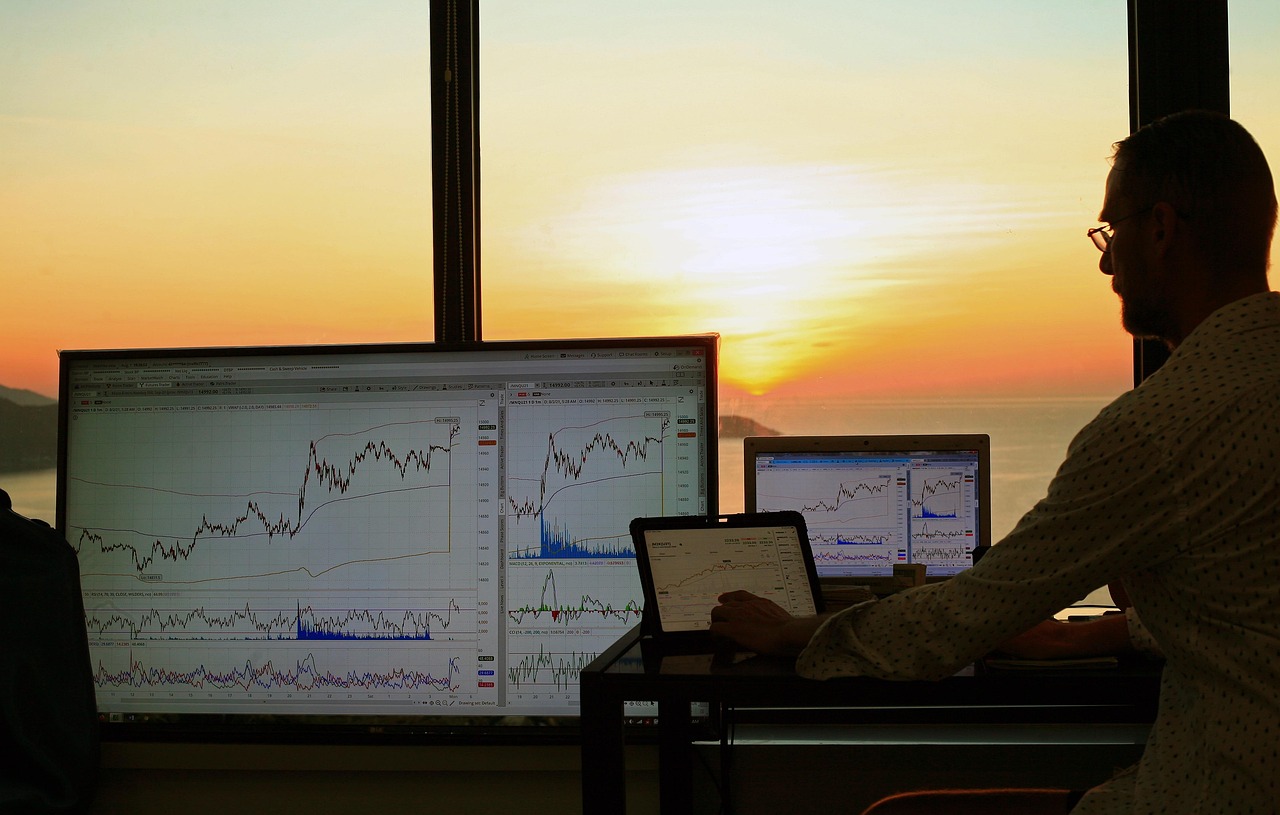
- Technical Analysis: Involves studying historical price charts and volume data to identify patterns and predict future price movements.
- Indicators: Moving Averages, Relative Strength Index (RSI), MACD.
- Chart Patterns: Head and Shoulders, Double Tops/Bottoms, Triangles.
- Fundamental Analysis: Focuses on the underlying supply and demand factors influencing an asset’s price.
- Commodities: Weather patterns for agricultural futures, geopolitical events for oil, inventory reports (e.g., EIA Crude Oil Inventories).
- Financial Futures: Economic data (interest rate decisions, CPI, unemployment reports), corporate earnings.
- Sentiment Analysis: Gauging the overall mood of the market through news, social media, and other sources.
Understanding Market Cycles and Volatility
Futures markets can be highly volatile, and prices can move rapidly. Understanding market cycles (bull vs. bear markets) and the factors that drive volatility (news events, economic announcements) is crucial.
- Example: Geopolitical tensions can send crude oil futures prices soaring or plummeting within minutes.
Regulatory Oversight
Futures markets are heavily regulated to ensure fairness, transparency, and prevent manipulation. In the US, the Commodity Futures Trading Commission (CFTC) oversees futures and options markets, while exchanges like the CME Group also have their own regulatory bodies.
Actionable Takeaway: Successful futures trading demands discipline, a well-defined strategy, and rigorous risk management. Continuous learning and adapting to market conditions are also key for long-term success.
Conclusion
Futures contracts are far more than just financial derivatives; they are indispensable tools that underpin global commerce and investment. From enabling farmers to secure crop prices and airlines to hedge fuel costs, to offering sophisticated investors powerful avenues for speculation and portfolio management, their impact is profound. We’ve explored their foundational structure, diverse types, the critical role of margin and leverage, and the strategic considerations for engaging in these dynamic markets.
While the allure of leverage and potential for significant returns is strong, it’s paramount to approach futures trading with a clear understanding of the inherent risks. Education, a disciplined trading plan, and unwavering risk management are not just recommendations but essential pillars for anyone venturing into this exciting financial landscape. By understanding futures, you gain a powerful insight into how markets price future expectations and manage uncertainty, empowering you to make more informed financial decisions.