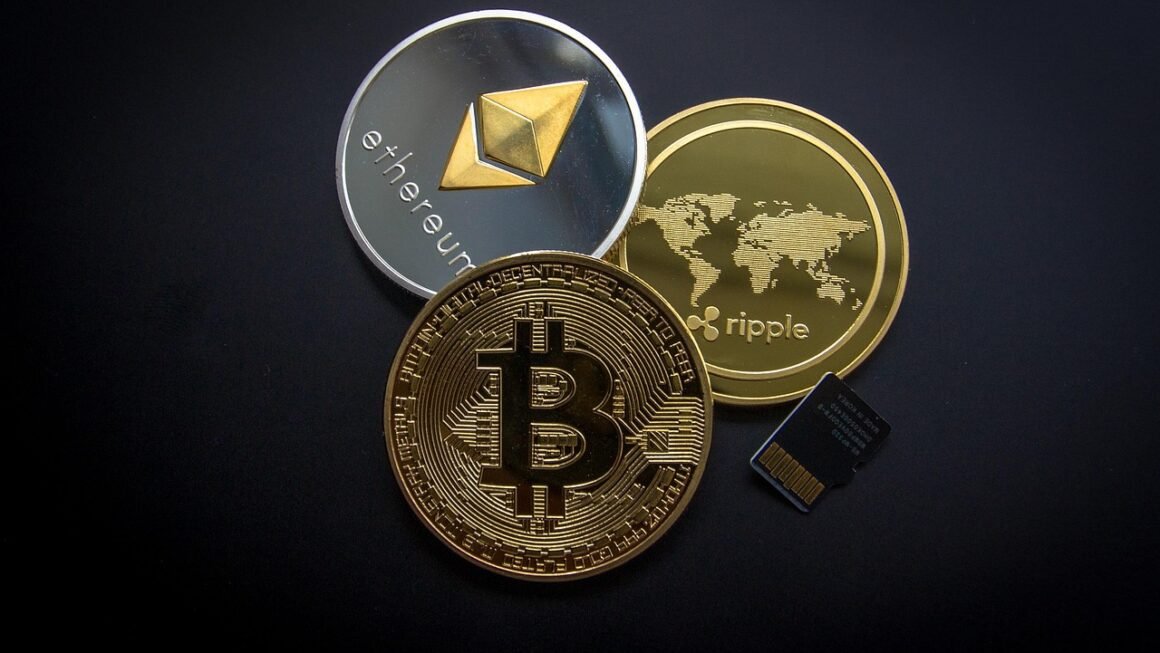
In the vast, interconnected world of digital assets and online security, there’s one fundamental element that holds the key to your digital identity and ownership: the private key. Often shrouded in technical jargon, this seemingly abstract string of characters is, in essence, the ultimate proof of your control over cryptocurrencies, NFTs, and even your digital identity. Understanding what a private key is, how it works, and most importantly, how to secure it, isn’t just about technical knowledge—it’s about safeguarding your financial future and digital sovereignty. Let’s demystify this critical component and equip you with the insights needed to navigate the digital landscape securely.
What Exactly Is a Private Key? The Digital Signature of Ownership
At its core, a private key is a secret, randomly generated alphanumeric string that grants you cryptographic access to your digital assets. Think of it as the master password that unlocks your funds or verifies your identity on a blockchain network. Without it, you cannot authorize transactions, prove ownership, or manage your digital holdings. Its immense power makes it the single most crucial piece of information in the realm of decentralized finance and blockchain technology.
The Foundational Element of Digital Assets
Every cryptocurrency address, every digital wallet, is fundamentally tied to a unique private key. This key is the mathematical origin of your public key and, subsequently, your public address. The beauty of this system lies in asymmetric cryptography:
- Private Key: Your secret. Used to create digital signatures for transactions, proving you are the owner.
- Public Key: Derived mathematically from your private key. Used by others to verify your digital signatures.
- Public Address: A hashed version of your public key, typically shorter and easier to share. This is what you give to others to receive funds.
The relationship is one-way: it’s easy to generate a public key from a private key, but mathematically impossible to reverse the process and deduce the private key from the public key or address within any practical timeframe. This mathematical security is what underpins the entire system.
Analogy: Your Digital Skeleton Key
Imagine a private key as a unique, one-of-a-kind skeleton key. This key can open a specific digital safe (your wallet address) containing your digital assets. When you want to move assets from that safe, you use your private key to “sign” a transaction, much like using your signature to authorize a bank transfer. Everyone can see the safe (your public address) and verify that a transaction was signed by the correct key, but only you possess the actual key itself.
Actionable Takeaway: Recognize the private key as the ultimate authority over your digital wealth. Its security is directly proportional to the security of your assets.
The Cryptographic Engine: How Private Keys Work
The magic behind private keys lies in sophisticated cryptographic algorithms that ensure both security and functionality. Understanding this underlying mechanism helps reinforce why vigilance in private key management is paramount.
Elliptic Curve Digital Signature Algorithm (ECDSA)
Most modern blockchain networks, including Bitcoin and Ethereum, leverage the Elliptic Curve Digital Signature Algorithm (ECDSA) to generate private and public keys and to sign transactions. Here’s a simplified breakdown:
- Key Generation: A private key is a randomly chosen 256-bit number. This number is then used in a complex mathematical operation on an elliptic curve to derive a corresponding public key.
- Address Derivation: The public key is then hashed to create your public address, making it shorter and suitable for sharing.
- Transaction Signing: When you initiate a transaction (e.g., sending 1 BTC), your wallet uses your private key to mathematically combine the transaction details with your private key to produce a unique digital signature. This signature proves that the transaction was authorized by the owner of the private key, without ever revealing the private key itself.
- Verification: Anyone on the network can use your public key to verify that the digital signature is valid and corresponds to the transaction, confirming its authenticity.
The beauty of ECDSA is that it allows for robust security with smaller key sizes compared to other cryptographic methods, making it efficient for blockchain applications.
Practical Example: Authorizing a Cryptocurrency Transfer
Let’s say you want to send 0.5 ETH from your wallet to a friend. Here’s how your private key is involved:
- You open your wallet application and initiate the transfer, specifying the amount and your friend’s public address.
- Your wallet software takes the transaction details (sender, receiver, amount, gas fee) and, using your private key, performs a cryptographic calculation to create a digital signature.
- This signed transaction is then broadcast to the Ethereum network.
- Miners and nodes on the network use your public key (which is publicly associated with your sending address) to verify that the signature is valid and that you genuinely authorized the transaction.
- If valid, the transaction is processed and eventually added to the blockchain.
Crucial Detail: At no point is your private key directly transmitted across the network. Only the derived digital signature is broadcast, maintaining your key’s secrecy.
Actionable Takeaway: Appreciate that private keys are not just static identifiers but active cryptographic tools that enable secure, verifiable interactions on a blockchain. Their mathematical basis makes them incredibly powerful but also singularly critical for security.
Types and Formats of Private Keys: Beyond the Raw String
While the underlying private key is always a 256-bit number, it appears in various formats to enhance usability, portability, and security for users. Understanding these different representations is key to effective private key management.
Raw Private Key (Hexadecimal Format)
The most basic form is a hexadecimal string, usually 64 characters long (representing 256 bits). For example:
e9876543210abcdef1234567890abcdef1234567890abcdef1234567890abcde
This format is direct but cumbersome and prone to transcription errors.
Wallet Import Format (WIF)
To make Bitcoin private keys easier to handle and less prone to errors, the Wallet Import Format (WIF) was introduced. WIF uses Base58Check encoding, which includes a checksum to detect typos. It’s longer than the raw hex key and typically starts with a ‘5’ (for uncompressed keys) or ‘K’/’L’ (for compressed keys).
Example WIF key: 5Km2Rz1C9FpD2wK7Xq3Y4Z5V6B7N8M9L0J1I2H3G4F5E6D7C8B9A0S1D2F3G4H5J6K7L8P9O0I
Many wallets accept WIF for importing private keys.
Mnemonic Phrases (Seed Phrases / Recovery Phrases)
Perhaps the most user-friendly format, a mnemonic phrase (often called a seed phrase or recovery phrase) is a sequence of 12, 18, or 24 common English words. These words, conforming to standards like BIP-39, can be used to deterministically generate an entire hierarchy of private and public keys for multiple cryptocurrencies and addresses.
Example seed phrase: "abstract abandon album ability amazing annual another banana beach beyond bingo bless"
- Hierarchical Deterministic (HD) Wallets: Mnemonic phrases are particularly useful for HD wallets, where a single seed phrase can recover hundreds or thousands of different private keys and addresses. This simplifies backup significantly.
- Advantage: Much easier to write down and back up than a long string of characters.
- Disadvantage: If compromised, all assets derived from that seed are at risk.
Keystore Files (JSON)
Commonly used in Ethereum, keystore files are encrypted JSON files that contain your private key along with other wallet metadata. They are typically protected by a strong password, which acts as a second layer of security.
Example: {"address": "0x...", "id": "...", "version": 3, "crypto": {"cipher": "aes-128-ctr", ...}}
To use funds from a keystore file, you need both the file itself and the password.
Hardware Wallet Seeds
When you set up a hardware wallet (like Ledger or Trezor), it generates a seed phrase. Crucially, the private keys themselves are generated and stored inside the hardware device and never leave it. The seed phrase is your backup to recover access to your funds if the device is lost or damaged, allowing you to restore your wallet on a new device.
Actionable Takeaway: Understand the different formats and their implications. While mnemonic phrases are convenient for backup, always treat them with the same security reverence as a raw private key, as they grant access to the same assets.
The Golden Rule: Protecting Your Private Key
The security of your private key is paramount. Its loss or compromise can lead to the irreversible loss of your digital assets. This section outlines critical threats and best practices for safeguarding this vital piece of information.
Why Security is Non-Negotiable
- Irreversible Loss: Unlike traditional banking, there’s no “forgot password” option. Lose your private key, and your assets are gone forever. No bank, no government, no central authority can help you recover them.
- Irrevocable Theft: If someone gains unauthorized access to your private key, they can sign transactions and drain your wallet. These transactions are irreversible on the blockchain.
- Sole Responsibility: In decentralized systems, you are your own bank. This freedom comes with the absolute responsibility of securing your private keys.
Common Threats to Private Key Security
- Phishing Scams: Malicious websites or emails tricking you into revealing your private key or seed phrase.
- Malware and Viruses: Keyloggers or clipboard hijackers that capture your private key as you type or copy it.
- Physical Theft: Losing a device containing unencrypted private keys or written backups.
- Social Engineering: Tricking you into voluntarily giving up your private key details.
- Insecure Storage: Storing unencrypted private keys on cloud services, public computers, or easily accessible digital files.
Best Practices for Protecting Your Private Key
Employing a multi-layered security approach is essential:
- Cold Storage is King for Significant Holdings:
- Hardware Wallets: The industry standard for cold storage. Private keys are generated and stored securely on the device and never exposed to the internet. Your seed phrase is used for recovery only.
- Paper Wallets: A private key and public address printed on paper. While secure offline, they are susceptible to physical damage (fire, water) and difficult to use securely for frequent transactions.
- Metal Wallets: Engraving or stamping your seed phrase onto metal to protect against fire and water.
- Never Share Your Private Key or Seed Phrase: This is the golden rule. No legitimate service, exchange, or individual will ever ask for your private key or seed phrase. Anyone who does is attempting to steal your assets.
- Secure Backup Strategy for Seed Phrases:
- Write down your seed phrase accurately, double-checking every word.
- Store multiple copies in different, geographically separated, secure locations (e.g., a safe deposit box, a fireproof home safe).
- Do not store digital copies on connected devices or cloud services unless heavily encrypted and password-protected (and even then, extreme caution is advised).
- Consider splitting your seed phrase into multiple parts stored separately for enhanced security against single points of failure.
- Strong Passwords and Two-Factor Authentication (2FA): For any software wallets, exchange accounts, or digital files containing encrypted keys, use unique, complex passwords and always enable 2FA.
- Regular Security Audits: Periodically review your security setup. Are your backups still secure? Is your software updated? Are you aware of the latest phishing tactics?
Actionable Takeaway: Prioritize cold storage for long-term holdings. Never share your seed phrase. Implement a robust, multi-location backup strategy for your seed phrase. Your diligence is the strongest firewall for your digital assets.
Beyond Crypto: Private Keys in a Broader Digital Landscape
While often associated with cryptocurrencies, the concept and application of private keys extend far beyond the blockchain world, playing a crucial role in securing various aspects of our digital lives.
SSL/TLS Certificates for Website Security
When you visit a website with “https://” in its URL and see a padlock icon, you’re interacting with a system secured by SSL/TLS certificates. These certificates rely on private and public keys:
- A website server has an SSL certificate containing its public key, signed by a Certificate Authority (CA).
- The server also holds a corresponding private key, which it keeps secret.
- This private key is used to establish a secure, encrypted connection with your browser, ensuring that all data exchanged remains confidential and untampered.
Example: When you log into your online banking, your browser uses the bank’s public key to encrypt your login details, and the bank’s server uses its private key to decrypt them. This ensures your information is protected from eavesdropping.
SSH Keys for Secure Remote Access
SSH (Secure Shell) is a cryptographic network protocol used to securely access remote computers and servers. Instead of relying solely on passwords, SSH often uses key pairs (private and public keys) for authentication.
- You generate an SSH key pair on your local machine. Your private key stays on your computer.
- You upload your public key to the server you wish to access.
- When you connect, the server challenges your local machine, which uses its private key to prove its identity without sending the private key over the network.
Benefit: SSH keys are generally more secure than passwords, especially against brute-force attacks, and can automate logins without manual password entry.
PGP/GPG for Email Encryption and Digital Signing
Pretty Good Privacy (PGP) and its open-source equivalent, GNU Privacy Guard (GPG), use asymmetric cryptography for encrypting and digitally signing emails and files. This ensures privacy and verifies the sender’s identity.
- You have a PGP key pair: a private key (known only to you) and a public key (which you share with others).
- To send an encrypted email, you use the recipient’s public key to encrypt the message. Only their private key can decrypt it.
- To digitally sign an email, you use your private key to create a signature. Recipients can use your public key to verify that the message indeed came from you and hasn’t been tampered with.
Impact: PGP/GPG enables secure communication and verifiable digital identity, crucial for journalists, activists, and anyone requiring strong privacy.
The Future of Decentralized Digital Identity
The principles of private keys are central to emerging concepts of decentralized identity (DID). Instead of relying on centralized entities (like governments or social media companies) to verify your identity, DIDs allow individuals to own and control their personal data using cryptographic proofs based on private keys. This promises greater privacy, security, and user control over personal information.
Actionable Takeaway: Recognize that the security principles governing private keys in crypto are foundational across many aspects of digital security. By mastering private key management, you’re enhancing your security posture across the digital spectrum.
Conclusion
The private key stands as the bedrock of digital ownership and security in our increasingly digital world. From unlocking your cryptocurrency wealth to securing your online communications and establishing trust on the internet, its role is indispensable. While its technical nature can seem daunting, understanding its core function – as your unique, secret authority over digital assets and identity – is crucial for anyone engaging with modern digital technologies.
The power and responsibility associated with a private key cannot be overstated. It represents the ultimate control, making you the sole guardian of your digital sovereignty. By internalizing the best practices for private key protection – embracing cold storage, employing robust backup strategies, and maintaining unwavering vigilance against threats – you not only safeguard your investments but also empower yourself in the decentralized future. Remember: your private key is your absolute trust anchor in the digital realm. Protect it as you would your most valuable physical possessions, for in the digital world, it is precisely that.