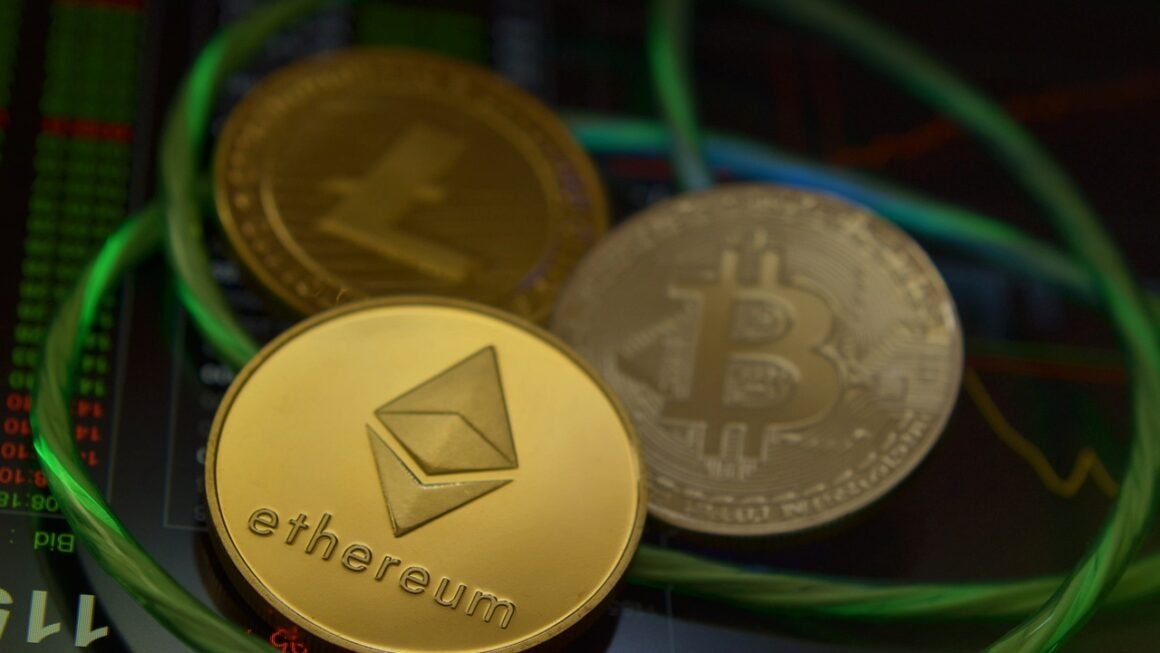
In a world increasingly driven by digital innovation, the way we form agreements and execute transactions is undergoing a profound transformation. Beyond traditional paper contracts and the need for costly intermediaries, a new paradigm is emerging: smart contracts. These revolutionary digital agreements are poised to redefine trust, efficiency, and transparency across virtually every industry, from finance to real estate and supply chain management. If you’ve ever imagined a contract that enforces itself, without human intervention or the potential for dispute, then you’re ready to dive into the fascinating realm of smart contracts.
What Exactly Are Smart Contracts?
At its core, a smart contract is a self-executing agreement with the terms of the agreement directly written into lines of code. It lives on a blockchain network, making it immutable and transparent. Unlike traditional contracts that rely on legal systems for enforcement, smart contracts automatically execute when predetermined conditions are met, eliminating the need for intermediaries.
Beyond Traditional Contracts: A Paradigm Shift
Think of traditional contracts as legal documents that require lawyers, banks, or notaries to interpret, verify, and enforce. They are often paper-based, slow, and prone to human error or manipulation. Smart contracts, however, fundamentally change this dynamic:
- Digital Nature: Entirely coded and stored on a blockchain.
- Automated Execution: Self-executing based on predefined conditions.
- Trustless: Reduces reliance on third parties, shifting trust to the code itself.
The “If-Then” Logic: Programmatic Agreements
The operational backbone of a smart contract is simple “if-then” logic. For instance, “IF X happens, THEN Y action is automatically performed.” This logic is embedded in the code, and once the conditions are met, the contract executes without external interference. A classic analogy is a vending machine: if you insert the correct amount of money (condition X) and select an item, the machine dispenses the item (action Y).
Key Characteristics of Smart Contracts
Understanding these traits is crucial to grasping their power and potential:
- Immutability: Once a smart contract is deployed on a blockchain, its code cannot be altered. This ensures integrity and prevents tampering.
- Transparency: All participants in the network can view the contract’s code and its execution history. While transactions are public, identities can remain pseudonymous.
- Autonomy: Smart contracts are self-executing and self-enforcing, reducing the need for intermediaries and their associated costs or potential for bias.
- Security: Protected by the cryptographic security of the blockchain network, making them highly resistant to hacking.
- Efficiency: Automate processes that would otherwise require manual intervention, speeding up transactions and reducing delays.
How Smart Contracts Work: The Technical Underpinnings
To fully appreciate smart contracts, it’s essential to understand the technical environment that enables them. They aren’t just standalone pieces of code; they are intricate parts of a larger blockchain ecosystem.
Blockchain as the Foundation
Smart contracts derive their power from the underlying blockchain technology. Blockchains provide a decentralized, distributed, and immutable ledger where these contracts reside. When a smart contract is created, it’s deployed to the blockchain, becoming an integral part of the network’s state. This distributed nature ensures:
- Decentralization: No single entity controls the contract, preventing censorship or shutdown.
- Replication: Every node on the network holds a copy of the contract and its state, ensuring resilience.
- Consensus: Network participants must agree on the validity of transactions and contract executions.
Code and Execution: Solidity and Gas Fees
Smart contracts are typically written in specialized programming languages. For the Ethereum blockchain, the most popular language is Solidity. Once coded, the contract is compiled into bytecode and deployed to the blockchain. When the conditions are met, the contract’s functions are executed by the network’s nodes, a process that typically requires a small fee (known as “gas” on Ethereum) to incentivize miners/validators for their computational effort.
Actionable Takeaway: Developers looking to build smart contracts should familiarize themselves with languages like Solidity, Vyper (for Ethereum), or Rust (for Solana/Polkadot) and understand the concept of gas fees for deploying and interacting with contracts.
Oracles: Connecting Real-World Data to Smart Contracts
While smart contracts are powerful, they are deterministic and cannot directly access information outside their native blockchain environment. This is where oracles come in. Oracles are third-party services that provide smart contracts with external information, such as:
- Market prices (e.g., the price of ETH/USD).
- Weather data (e.g., if it rained for crop insurance).
- Real-world events (e.g., flight delays for travel insurance).
- IoT sensor data (e.g., temperature in a supply chain).
Without reliable oracles, many real-world applications of smart contracts would be impossible. Leading oracle networks like Chainlink provide decentralized and secure data feeds to smart contracts.
The Unlocking Potential: Benefits of Smart Contracts
The adoption of smart contracts is accelerating because they offer significant advantages over traditional agreement methods, fostering an environment of trust, efficiency, and cost-effectiveness.
Enhanced Security & Trust
Smart contracts bring a new level of security and trust to digital interactions:
- Cryptographic Security: Each transaction and contract deployment is secured by advanced cryptography, making them extremely difficult to hack or alter.
- Immutable Records: Once executed and recorded on the blockchain, the terms and outcomes are permanently stored and cannot be changed, providing an unalterable audit trail.
- Trustless Environment: Parties no longer need to trust each other or an intermediary. They only need to trust the code and the underlying blockchain protocol.
Increased Efficiency & Speed
Automation is a core benefit, translating into significant time savings:
- Automated Execution: Contracts execute automatically when conditions are met, eliminating manual processing and potential delays.
- Reduced Bureaucracy: Streamlines complex workflows and cuts down on paperwork, approvals, and back-and-forth communication.
- Instant Settlements: In financial applications, settlements can occur almost instantly once conditions are met, rather than days.
Cost Reduction
By removing traditional bottlenecks, smart contracts can dramatically lower operational costs:
- Elimination of Intermediaries: No need for lawyers, banks, escrow agents, or notaries for basic contract enforcement.
- Lower Transaction Fees: While there are gas fees, they can be significantly less than traditional banking fees or legal costs for many types of transactions.
- Reduced Fraud: The secure and transparent nature minimizes the risk and cost associated with fraud and disputes.
Actionable Takeaway: Businesses can potentially reduce legal and administrative costs by 20-30% on certain types of agreements by integrating smart contract solutions, allowing resources to be reallocated to innovation and growth.
Transparency & Immutability
The public nature of blockchain offers unparalleled transparency:
- Verifiable Records: All contract code and execution history are publicly viewable on the blockchain. This allows for easy auditing and verification.
- Reduced Disputes: With terms and outcomes unequivocally recorded, the grounds for disputes are significantly minimized.
Real-World Applications & Use Cases
Smart contracts are no longer a theoretical concept; they are actively reshaping industries, creating new business models, and solving long-standing problems. Here are some compelling real-world applications:
Decentralized Finance (DeFi)
DeFi is arguably the biggest proving ground for smart contracts. They power nearly every aspect of the decentralized financial ecosystem:
- Lending and Borrowing: Platforms like Aave and Compound use smart contracts to automate collateral management, interest rate calculations, and loan disbursements without banks.
- Decentralized Exchanges (DEXs): Uniswap and SushiSwap use smart contracts to facilitate peer-to-peer token trading and automated market making.
- Stablecoins: Algorithmic stablecoins utilize smart contracts to maintain their peg to fiat currencies by dynamically adjusting supply.
- Insurance: Parametric insurance policies can automatically pay out claims based on verifiable external data (e.g., flight delays, crop yield failures).
Practical Example: A user can deposit Ether (ETH) into a smart contract on Aave and instantly receive a loan in a stablecoin, with the contract managing the collateral and liquidation risks automatically based on predefined rules.
Supply Chain Management
Smart contracts offer unprecedented transparency and traceability in supply chains:
- Product Authenticity: Track goods from origin to consumer, verifying authenticity and preventing counterfeiting.
- Automated Payments: Release payments to suppliers automatically once goods are received and verified by IoT sensors.
- Inventory Management: Streamline inventory tracking and automatically reorder supplies when thresholds are met.
Practical Example: A shipment of organic produce can have its temperature and humidity monitored by IoT sensors, which feed data to a smart contract. If conditions fall outside acceptable ranges, the contract could automatically trigger an alert, adjust payment terms, or even reroute the shipment.
Real Estate
The real estate sector, known for its slow, paper-heavy processes, stands to benefit immensely:
- Property Transfer: Automate the transfer of property ownership once all conditions (e.g., payment, legal checks) are met.
- Escrow Services: Smart contracts can act as neutral third-party escrows, holding funds until all terms of a sale are fulfilled.
- Rental Agreements: Automate rent payments, security deposit releases, and maintenance requests.
Practical Example: A buyer places funds into a smart contract as an escrow for a property purchase. Once the land registry updates the title to the buyer’s name (verified by an oracle), the smart contract automatically releases the funds to the seller, streamlining the closing process.
Healthcare
Enhancing data security and sharing while maintaining privacy:
- Secure Patient Records: Control access to medical records, allowing patients to grant permissions to specific providers for specific durations.
- Prescription Management: Automate prescription refills and ensure authenticity.
- Clinical Trials: Manage and verify data collection, consent, and payments for participants in clinical research.
Voting Systems
Improving the integrity and transparency of elections:
- Tamper-Proof Records: Every vote is immutably recorded on the blockchain.
- Transparency: Voters can verify that their vote was counted correctly without revealing their identity.
- Increased Trust: Reduces the risk of fraud and increases public confidence in election results.
Challenges and Future Outlook
While smart contracts offer revolutionary potential, their widespread adoption faces several hurdles. Understanding these challenges is key to anticipating their future trajectory.
Legal & Regulatory Hurdles
The digital nature of smart contracts often clashes with existing legal frameworks:
- Jurisdiction: Determining which country’s laws apply to a global, decentralized smart contract can be complex.
- Enforcement: How do traditional courts enforce a self-executing, immutable contract? Are smart contracts legally binding in all jurisdictions?
- Identity: The pseudonymous nature of blockchain transactions can complicate identity verification for legal compliance (KYC/AML).
Actionable Takeaway: Businesses implementing smart contracts should consult legal experts to navigate the evolving regulatory landscape and ensure compliance within their operational regions.
Scalability Issues
Many popular blockchains (like Ethereum) struggle with transaction throughput, which can limit smart contract execution speed and increase costs during peak usage:
- Transaction Speed: Current speeds can be too slow for high-frequency or mission-critical applications.
- High Gas Fees: Network congestion can lead to exorbitantly high transaction fees, making micro-transactions impractical.
Solutions like Layer 2 scaling (e.g., Optimism, Arbitrum) and new consensus mechanisms (e.g., Ethereum 2.0’s Proof-of-Stake) are actively being developed to address these issues.
Security Vulnerabilities
While blockchain itself is secure, the code of smart contracts can contain bugs or vulnerabilities:
- Coding Errors: Flaws in the Solidity code can lead to exploits, as seen in past high-profile hacks (e.g., The DAO hack).
- Oracle Attacks: If the oracle feeding external data to a smart contract is compromised, the contract could execute based on false information.
- Reentrancy Attacks: A specific type of vulnerability where an external contract can repeatedly call back into the vulnerable contract before the first execution is complete.
Actionable Takeaway: Rigorous auditing by security experts and extensive testing are paramount before deploying any smart contract to a public blockchain. Consider bug bounty programs to incentivize white-hat hackers to find vulnerabilities.
The Road Ahead: A Glimpse into the Future
Despite the challenges, the future of smart contracts is incredibly promising:
- Interoperability: Developing ways for smart contracts on different blockchains to communicate and interact seamlessly.
- Standardization: Establishing industry-wide standards for smart contract development, security, and legal recognition.
- Enhanced Privacy: Integrating zero-knowledge proofs and other privacy-preserving technologies to allow for confidential transactions on public blockchains.
- Quantum Resistance: Researching cryptographic methods that can withstand potential threats from quantum computing.
Conclusion
Smart contracts represent a monumental leap forward in how we envision and execute agreements. By embedding trust and automation directly into code on an immutable blockchain, they promise a future of enhanced security, unparalleled efficiency, and reduced costs across an expansive array of industries. From revolutionizing finance with DeFi to streamlining supply chains, securing healthcare data, and even transforming democratic processes, their transformative power is just beginning to unfold.
While challenges in scalability, regulation, and security remain, the ongoing innovation and dedicated efforts of developers and policymakers are steadily paving the way for their widespread adoption. Embracing smart contracts means embracing a future where agreements are not just legally binding, but cryptographically enforced, ushering in an era of true digital trust and unparalleled operational agility.