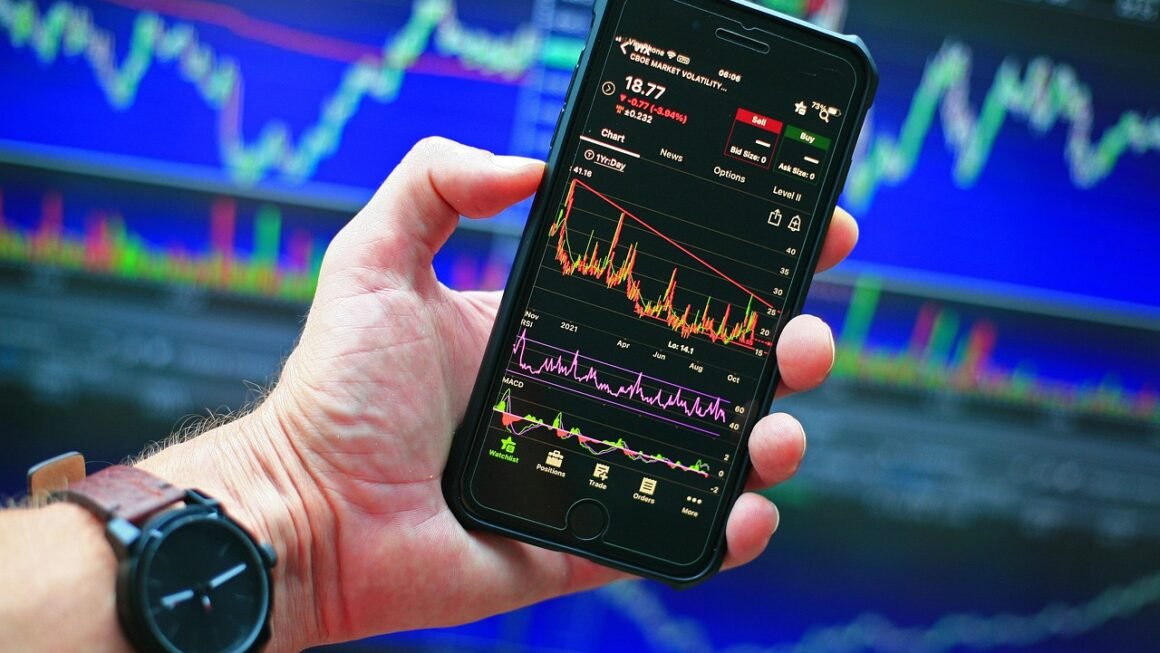
In the dynamic and often unpredictable world of financial markets, the quest for a consistently profitable trading strategy is akin to searching for a hidden treasure. Many aspiring traders jump into live markets with untested ideas, often leading to costly lessons. However, savvy investors and professional traders understand that before risking a single dollar, a rigorous process of validation is indispensable. This crucial first step, known as backtesting, serves as the bedrock for informed decision-making, transforming speculative hunches into data-driven strategies ready for the real world. It’s not just a technical exercise; it’s an essential journey into the past to safeguard your future.
What is Backtesting? The Foundation of Strategy Validation
Backtesting is the process of applying a trading strategy to historical market data to assess its viability and profitability. Essentially, you’re simulating how your strategy would have performed if you had traded it in the past, allowing you to evaluate its strengths and weaknesses without risking real capital. It’s an analytical tool that brings scientific rigor to the art of trading.
The Core Definition
At its heart, backtesting involves:
- Taking a defined set of trading rules (entry signals, exit signals, stop-loss, take-profit).
- Applying these rules systematically to a historical dataset (e.g., stock prices, forex rates, commodity futures).
- Recording the hypothetical trades and calculating the resulting profit or loss.
This process provides a quantifiable measure of a strategy’s historical performance, helping you understand its potential effectiveness in various market conditions.
Why Backtesting is Indispensable
The importance of backtesting cannot be overstated, particularly in today’s complex financial landscape.
- Risk Mitigation: It allows traders to identify flaws and inefficiencies in a strategy before deploying real money, thus significantly reducing financial risk.
- Strategy Validation: It provides empirical evidence of a strategy’s historical performance, building confidence and trust in its underlying logic.
- Performance Benchmarking: You can compare your strategy’s performance against market benchmarks or other strategies, identifying superior approaches.
- Objective Decision-Making: By relying on data, backtesting helps remove emotional biases often associated with live trading, promoting a more disciplined approach.
Without a robust backtest, any trading strategy is merely a hypothesis, a gamble waiting to unfold.
The Core Components of an Effective Backtest
A successful backtest isn’t just about pressing a button; it relies on the quality of its inputs and the thoroughness of its evaluation. Understanding these core components is vital for generating reliable results.
High-Quality Historical Data
The accuracy and depth of your historical data are paramount.
- Data Cleanliness: Ensure the data is free from errors, gaps, and anomalies. Clean data prevents erroneous trade signals and distorted results.
- Breadth and Depth: Use enough historical data to cover various market cycles (bull, bear, sideways) and significant events. A few months of data is rarely sufficient.
- Resolution: Choose the appropriate data frequency (e.g., tick data for high-frequency trading, 1-minute for day trading, daily/weekly for swing or position trading).
- Adjustments: Data should be adjusted for corporate actions like stock splits, dividends, and mergers to reflect accurate historical pricing.
Practical Tip: Always source your data from reputable providers to ensure integrity. Discrepancies in historical data can drastically alter backtest outcomes.
Clearly Defined Trading Strategy Rules
Your strategy must be unambiguous and quantifiable.
- Entry Rules: Precise conditions that trigger a buy or sell order (e.g., “Buy when the 10-period SMA crosses above the 30-period SMA and RSI is below 30”).
- Exit Rules: Clear conditions for closing a position (e.g., “Sell when price closes below the 20-period EMA” or “Take profit at a 2% gain”).
- Stop-Loss Rules: Predefined levels to limit potential losses (e.g., “Close position if price falls 1% below entry”).
- Position Sizing: Rules dictating how much capital to allocate to each trade (e.g., “Risk no more than 1% of total capital per trade”).
- Timeframes and Instruments: Specify the asset(s) and the timeframe(s) the strategy applies to.
The more specific and algorithmic your rules are, the easier and more reliable your backtest will be.
Robust Backtesting Engine or Software
Various platforms and tools are available, each with its strengths.
- Ready-made Platforms: MetaTrader 4/5, TradingView, QuantConnect, AmiBroker, NinjaTrader offer built-in backtesting functionalities.
- Programming Languages: Python (with libraries like backtrader, Zipline) or R (with libraries like quantmod, blotter) allow for highly customized and complex strategy development and testing.
Choose a tool that matches your technical proficiency and the complexity of your strategy. Ensure the engine accurately simulates market conditions, including order execution, commissions, and slippage.
Key Performance Metrics for Evaluation
Once a backtest is run, a deluge of data is generated. Interpreting this data through key metrics is crucial.
- Net Profit/Loss: The total profit or loss generated by the strategy over the backtesting period.
- Maximum Drawdown: The largest peak-to-trough decline in the equity curve, representing the maximum loss experienced from a previous high. Lower drawdown indicates better risk management.
- Profit Factor: Gross profit divided by gross loss. A value above 1 indicates profitability; a higher value (e.g., 1.5-2.0+) suggests a more robust strategy.
- Win Rate: The percentage of winning trades out of total trades. While important, a high win rate alone doesn’t guarantee profitability if losing trades are significantly larger.
- Average Win/Loss: The average profit from winning trades versus the average loss from losing trades.
- Sharpe Ratio: Measures risk-adjusted return. A higher Sharpe Ratio (typically above 1.0) indicates better returns for the level of risk taken.
- Sortino Ratio: Similar to Sharpe Ratio but focuses only on downside deviation (bad volatility), giving a clearer picture of risk for conservative investors.
- Expectancy: The average amount you can expect to win or lose per trade, calculated as:
(Win Rate Avg Win) - (Loss Rate Avg Loss). A positive expectancy is essential.
Actionable Takeaway: Don’t just look at net profit. A comprehensive review of all these metrics provides a holistic view of a strategy’s potential and its inherent risks. Aim for a balanced profile rather than optimizing for just one metric.
The Step-by-Step Backtesting Process
A systematic approach to backtesting ensures thoroughness and helps avoid common pitfalls. Follow these steps to conduct a reliable backtest.
1. Define Your Strategy Precisely
Before any coding or data analysis, clearly articulate every aspect of your trading strategy.
- What specific market conditions trigger an entry?
- How will you manage open positions (stop-loss, take-profit)?
- What are your exit criteria, both for winning and losing trades?
- How much capital will you allocate per trade, and what is your overall risk tolerance?
Example: “Buy ABC stock when its 14-period RSI crosses above 70 on the daily chart, AND the 50-day moving average is above the 200-day moving average. Place a stop-loss at 1.5% below entry and a take-profit at 3% above entry. Risk 1% of total account capital per trade.”
2. Acquire and Prepare High-Quality Data
Source historical data for the chosen asset(s) and timeframe(s).
- Download Data: Obtain data from reputable financial data providers.
- Clean Data: Remove any duplicate entries, correct obvious errors, and fill small gaps if necessary.
- Adjust Data: Ensure stock splits, dividends, and other corporate actions are accounted for to prevent price distortions.
Data preparation can be time-consuming but is non-negotiable for accurate results.
3. Implement the Strategy in a Backtesting Environment
Translate your defined rules into code or the specific language of your backtesting platform.
- If using Python or R, write scripts that simulate the execution of your strategy trade by trade.
- If using platforms like MetaTrader, use their built-in strategy tester and write your Expert Advisor (EA) using MQL.
Ensure your implementation strictly adheres to the rules without any look-ahead bias (using future information that wouldn’t have been available at the time).
4. Run the Backtest and Analyze the Results
Execute the backtest over the selected historical period. Once completed, review the comprehensive performance report.
- Review Equity Curve: Visually inspect the equity curve. A smooth, upward-sloping curve is ideal. Volatile or saw-tooth curves might indicate excessive risk or inconsistency.
- Evaluate Metrics: Scrutinize all the key performance metrics discussed earlier (Net Profit, Max Drawdown, Sharpe Ratio, Profit Factor, etc.).
Actionable Takeaway: A backtest should be run over a sufficiently long period (e.g., 5-10 years) and include diverse market conditions to assess robustness.
5. Iterate, Refine, and Validate (Out-of-Sample Testing)
The first backtest is rarely the final one.
- Parameter Optimization: If results are suboptimal, adjust strategy parameters (e.g., moving average periods, RSI thresholds) within reasonable bounds and re-test.
- Rule Adjustment: If fundamental flaws are identified, modify your strategy rules and repeat the process.
- Out-of-Sample Testing: After optimizing on one historical period (in-sample data), critically test the optimized strategy on a completely different, previously unseen historical period (out-of-sample data). This is crucial for avoiding overfitting. If the strategy performs well on both, it has a higher likelihood of performing well in the future.
This iterative cycle of testing and refinement is key to developing a robust and adaptable strategy.
Common Pitfalls and How to Avoid Them
While powerful, backtesting is not without its traps. Awareness and proactive measures are essential to ensure your results are genuinely reliable.
Overfitting (Curve Fitting)
What it is: Tuning a strategy’s parameters so precisely to a specific historical dataset that it performs exceptionally well on that data but fails miserably on new, unseen data. It’s like tailoring a suit perfectly for one person, only for it to fit no one else.
How to Avoid:
- Out-of-Sample Testing: As mentioned, always reserve a portion of your historical data that was NOT used for strategy development or optimization. Test your final strategy on this unseen data.
- Simplicity: Simpler strategies with fewer parameters are generally less prone to overfitting.
- Robustness Testing: Test your strategy with slightly varied parameters. If performance drops off sharply with small changes, it might be overfit.
Survivorship Bias
What it is: Using historical data that only includes currently existing assets, thereby ignoring assets that have been delisted, gone bankrupt, or merged. This creates an artificially optimistic view, as the data set only includes “survivors.”
How to Avoid:
- Comprehensive Databases: Use historical data sources that include delisted securities. Many professional data providers offer this.
- Index Backtesting: If you’re backtesting a strategy on an index, understand that the index itself has survivorship bias, as components are regularly replaced.
Look-Ahead Bias
What it is: Using information in your backtest that would not have been available at the exact moment a trade decision was made. For example, using a stock’s closing price for an entry signal that would have occurred mid-day, or using earnings data before it was publicly released.
How to Avoid:
- Strict Time Alignment: Ensure that all data points and indicators are processed chronologically, using only information available up to that specific point in time.
- Careful Coding: Pay meticulous attention to how your code accesses historical data to prevent unintentional use of future information.
Ignoring Transaction Costs and Slippage
What it is: Overlooking or underestimating the real-world impact of commissions, spreads, and slippage (the difference between the expected price of a trade and the price at which the trade is actually executed). This can turn a seemingly profitable backtest into a losing live strategy.
How to Avoid:
- Realistic Modeling: Incorporate realistic commission rates, average bid-ask spreads, and estimated slippage into your backtesting engine.
- High-Frequency Strategies: These strategies are particularly vulnerable to transaction costs and require very precise modeling.
Data Snooping Bias
What it is: The error of repeatedly testing different strategies or parameters on the same dataset until one appears profitable, without acknowledging that its success might be purely coincidental due to chance.
How to Avoid:
- Formulate Hypotheses First: Define your strategy idea based on sound market logic before you start testing.
- Multiple Datasets: Test similar strategies across different instruments or timeframes to see if the underlying logic holds.
- Systematic Approach: Avoid endless “trial and error.” Use a structured optimization process and stick to your out-of-sample validation.
Actionable Takeaway: Be honest with yourself. If a backtest seems “too good to be true,” it often is. Skepticism is a trader’s best friend in the backtesting phase.
Benefits of Robust Backtesting
Beyond simply avoiding losses, a thorough backtesting process offers numerous strategic advantages that empower traders to approach markets with greater confidence and precision.
Quantifiable Risk Management
Backtesting provides concrete data on potential drawdowns, win/loss ratios, and maximum losing streaks. This allows you to:
- Set Realistic Expectations: Understand the inherent risks and typical volatility of your strategy.
- Determine Appropriate Capital Allocation: Based on historical drawdowns, you can better size your positions and overall capital commitment.
- Develop Contingency Plans: Knowing the strategy’s weaknesses allows you to prepare for adverse market conditions.
Enhanced Confidence and Discipline
Trading can be emotionally taxing. A well-backtested strategy provides a solid foundation.
- Trust in Your System: Knowing your strategy has performed well historically helps you stick to your rules during periods of market uncertainty or minor drawdowns.
- Reduce Emotional Decisions: Data-driven decisions replace reactive, fear- or greed-driven impulses.
Strategy Optimization and Adaptation
Backtesting is an iterative process that leads to continuous improvement.
- Parameter Fine-Tuning: Identify optimal parameters (e.g., indicator settings) that maximize returns while minimizing risk.
- Adaptability: By testing against different market conditions, you can adapt or modify your strategy to perform better across various regimes.
- Scalability: Understand how your strategy might perform with larger capital or across multiple assets.
Objective Performance Benchmarking
You can compare your strategy’s performance against relevant benchmarks.
- Alpha Generation: Determine if your strategy genuinely generates alpha (returns above a market benchmark) or simply tracks the market.
- Comparative Analysis: Evaluate multiple strategies against each other to identify the most promising ones for deployment.
Actionable Takeaway: Think of backtesting as building a bridge. You wouldn’t trust a bridge that hasn’t been engineered and stress-tested. Your trading strategy deserves the same rigorous evaluation.
Conclusion
In the high-stakes arena of financial trading, backtesting stands as an indispensable tool, transforming speculative ventures into informed, data-driven decisions. It allows traders to journey through market history, not merely as observers, but as active participants, rigorously testing the hypotheses that underpin their strategies. By meticulously analyzing historical performance, managing critical pitfalls like overfitting and survivorship bias, and refining strategies based on robust metrics, traders can significantly mitigate risk and build confidence.
While backtesting provides no guarantees of future performance – markets are ever-evolving and inherently uncertain – it offers the closest approximation to a crystal ball that traders can access. It empowers you to understand the probable behavior of your strategy under various conditions, quantify its risks, and optimize its potential. Embracing backtesting is not just a best practice; it is a fundamental pillar for anyone serious about achieving sustained success in the complex and rewarding world of financial markets. Invest your time in thorough backtesting, and you invest wisely in the future of your trading endeavors.