In an increasingly interconnected yet paradoxically centralized world, a powerful paradigm shift is gaining momentum: decentralization. This concept, often associated with cutting-edge technologies like blockchain and cryptocurrencies, is far more fundamental, representing a philosophical and architectural approach to distributing power, resources, and decision-making across a network rather than concentrating them in a single entity. From enhancing security and privacy to fostering unprecedented levels of transparency and resilience, decentralization is reshaping industries, empowering individuals, and forging a path towards more equitable and robust digital ecosystems. Understanding its core tenets, applications, and challenges is no longer optional; it’s essential for navigating the future of technology and society.
Understanding Decentralization: Core Concepts and Its Ascendance
At its heart, decentralization is about eliminating single points of failure and control. Instead of relying on a central authority, data, decisions, and operations are distributed across multiple participants in a network. This fundamental shift from hierarchical structures to peer-to-peer models is driving innovation across various sectors.
What is Decentralization?
Decentralization refers to the process by which the activities of an organization, particularly those concerning planning and decision-making, are distributed or delegated away from a central, authoritative location or group. In contrast to a centralized system where a single entity holds ultimate control (like a government, a bank, or a corporation), a decentralized system spreads power and responsibility among its numerous participants.
- No Single Point of Control: Decisions are made by consensus or predefined rules across the network, not dictated by one party.
- Distributed Network: Data and processes are spread across many nodes, making the system more robust against attacks or failures.
- Peer-to-Peer Interaction: Participants interact directly with each other without the need for an intermediary.
Think of it as the internet itself: no single company or government owns it, yet it functions globally due to a decentralized network of servers and protocols.
Why Does Decentralization Matter Now More Than Ever?
The imperative for decentralization has grown significantly due to increasing concerns over data breaches, censorship, algorithmic bias, and the immense power wielded by large tech monopolies. Its benefits are compelling:
- Enhanced Security: Without a central point to attack, decentralized systems are inherently more resistant to hacks and data manipulation. If one part fails, the rest of the network can continue operating.
- Increased Transparency: Operations and data can be auditable by all participants (as in public blockchains), fostering trust and accountability.
- Greater Resilience: A decentralized network can withstand outages or attacks on individual components much better than a centralized one.
- Censorship Resistance: It’s significantly harder for any single entity to suppress information or control access within a decentralized system.
- User Autonomy & Data Ownership: Individuals regain control over their own data and digital identities, moving away from models where platforms own user information.
Actionable Takeaway: Consider the centralized services you rely on daily. How would a decentralized alternative improve their security, transparency, or your control over your own data?
The Pillars of Decentralization: Technologies and Principles
The modern wave of decentralization is largely powered by breakthrough technologies that enable trustless, peer-to-peer interactions at scale. These technologies form the bedrock of new decentralized applications and systems.
Blockchain Technology: The Foundation
At the forefront of the decentralization movement is blockchain technology. A blockchain is a distributed, immutable ledger that records transactions across a network of computers. Each “block” of transactions is linked to the previous one using cryptographic hashes, forming a secure chain.
- Distributed Ledger Technology (DLT): Copies of the ledger are maintained by all participating nodes, ensuring data integrity and availability.
- Immutability: Once a transaction is recorded on a blockchain, it is nearly impossible to alter or delete, creating a trustworthy and verifiable history.
- Consensus Mechanisms: Networks use protocols like Proof of Work (PoW) or Proof of Stake (PoS) to agree on the validity of new transactions, eliminating the need for a central authority.
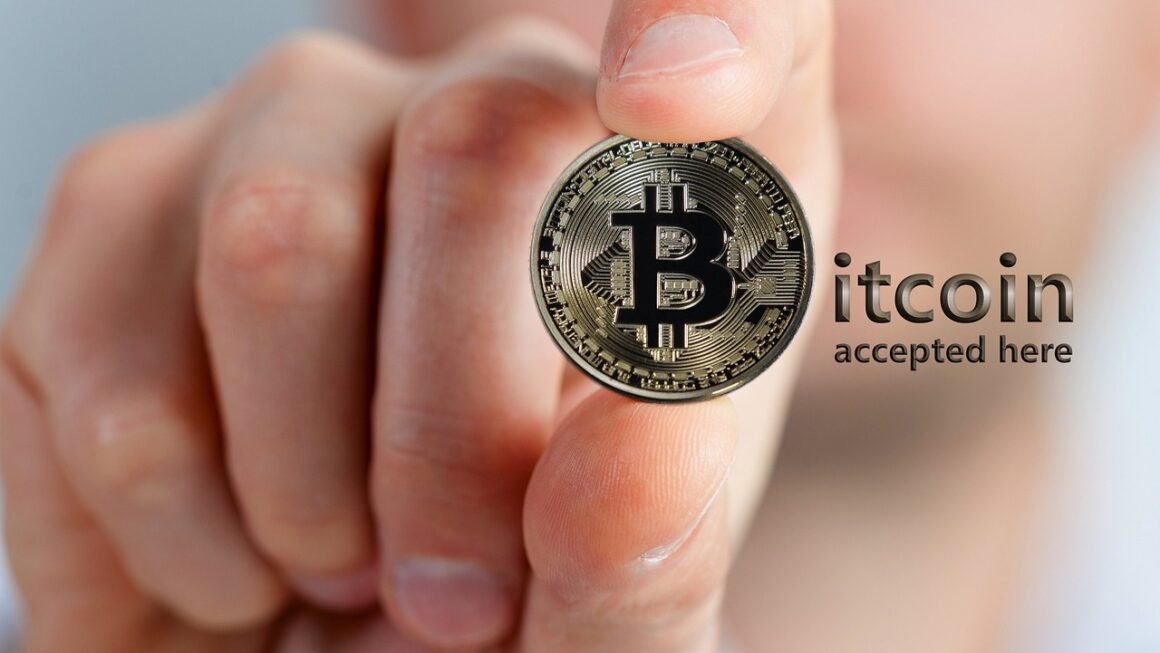
Example: Bitcoin, the first and most well-known cryptocurrency, operates on a blockchain. It allows peer-to-peer digital cash transactions without requiring a bank or financial intermediary, making it a truly decentralized monetary system.
Cryptocurrencies and DeFi: Financial Autonomy
Cryptocurrencies are digital assets designed to work as a medium of exchange using strong cryptography to secure financial transactions, control the creation of additional units, and verify the transfer of assets. They are inherently decentralized, operating outside traditional financial institutions.
- Decentralized Finance (DeFi): DeFi leverages blockchain technology, primarily Ethereum, to recreate traditional financial services in a decentralized, permissionless, and transparent manner. This includes lending, borrowing, trading, and insurance.
- Programmable Money: Smart contracts, self-executing agreements coded onto the blockchain, automate financial processes, removing intermediaries and reducing costs.
Example: Platforms like Uniswap allow users to trade cryptocurrencies directly from their wallets without a central exchange, while Aave enables decentralized lending and borrowing pools where interest rates are determined by supply and demand rather than a bank.
Decentralized Autonomous Organizations (DAOs): Governance Redefined
DAOs are organizations represented by rules encoded as a transparent computer program, controlled by the organization’s members, and not influenced by a central government. They are often described as internet-native organizations collectively owned and managed by their members.
- Transparent Decision-Making: All proposals and voting results are recorded on the blockchain, visible to everyone.
- Token-Based Governance: Members typically hold governance tokens, granting them voting rights proportionate to their holdings, enabling collective decision-making on treasury management, protocol upgrades, and more.
- Community Ownership: Instead of shareholders, a community of token holders governs the project, aligning incentives.
Example: MakerDAO is a prominent DAO that governs the Maker Protocol, which issues and manages the Dai stablecoin. Token holders vote on critical parameters like stability fees and collateral types, demonstrating a truly decentralized approach to monetary policy.
Actionable Takeaway: Explore a DeFi protocol (like Compound or Aave) or research a DAO to understand how collective, transparent governance operates in practice.
Decentralization Beyond Finance: Real-World Applications
While finance and governance are early adopters, the principles of decentralization are now extending into a myriad of other sectors, promising revolutionary changes in how we manage data, supply chains, and even social interactions.
Decentralized Identifiers (DIDs) and Data Ownership
Traditional digital identity relies on centralized authorities (governments, corporations) to issue and verify credentials. Decentralized Identifiers (DIDs) aim to give individuals sovereign control over their digital identity and personal data.
- Self-Sovereign Identity (SSI): Users generate and own their identifiers, storing verifiable credentials (e.g., degree certificates, health records) in a secure, privacy-preserving manner.
- Enhanced Privacy: Individuals can selectively reveal minimal necessary information to third parties, rather than sharing entire profiles.
- Reduced Fraud: Verifiable credentials stored on a blockchain are highly resistant to tampering.
Practical Example: Imagine applying for a loan where you can cryptographically prove your income and credit score without revealing your full financial history to the lender, or showing proof of age at a bar without sharing your date of birth or full name.
Supply Chain Management and Logistics
Global supply chains are notoriously complex, opaque, and susceptible to fraud. Decentralization offers a powerful solution by providing a transparent and immutable record of goods as they move from origin to consumer.
- End-to-End Traceability: Every stage of a product’s journey (manufacturing, shipping, customs, delivery) can be recorded on a blockchain, accessible to authorized parties.
- Fraud Prevention: Immutable records make it harder to introduce counterfeit goods or manipulate quality control data.
- Increased Efficiency: Automated smart contracts can trigger payments or release goods upon verifiable delivery or quality checks, reducing delays and paperwork.
Practical Example: IBM Food Trust uses blockchain to trace food products from farm to plate. If there’s a contamination outbreak, the source can be identified in seconds, not days, saving lives and reducing economic loss.
Content Distribution and Social Media
Centralized social media platforms often face criticism for censorship, opaque moderation policies, and unfair monetization models for creators. Decentralized alternatives are emerging.
- Censorship Resistance: Content stored on decentralized networks is harder for any single entity to remove or block.
- Fairer Creator Economy: Blockchain-based platforms can enable direct, transparent monetization models, allowing creators to retain a larger share of revenue or even receive micropayments directly from consumers.
- User Data Control: Users can own and control their social graphs and content, migrating between platforms without losing their identity or data.
Practical Example: Platforms like Mastodon (a decentralized social network) offer a federated approach where different servers (instances) are run independently but can communicate, allowing for community-driven moderation. Emerging Web3 social protocols like Lens Protocol aim to give users full ownership of their social graph and content.
Actionable Takeaway: Consider how a decentralized approach could solve a trust or transparency issue in your own industry or personal digital life.
Navigating the Hurdles and Charting the Future
Despite its immense promise, decentralization is not without its challenges. Understanding these obstacles is crucial for fostering sustainable growth and widespread adoption.
Navigating the Hurdles: Scalability, Regulation, and User Experience
The journey towards a fully decentralized world faces significant technical, regulatory, and user-centric challenges:
- Scalability: Many decentralized networks, particularly public blockchains, struggle with transaction throughput and speed compared to their centralized counterparts. Solutions like Layer 2 scaling (e.g., Optimism, Arbitrum) and sharding are actively being developed.
- Regulatory Uncertainty: Governments and regulators worldwide are grappling with how to classify and oversee decentralized technologies, leading to a patchwork of often conflicting rules that can stifle innovation or expose users to risk.
- User Experience (UX): Decentralized applications (dApps) often have a steeper learning curve. Managing private keys, understanding gas fees, and navigating complex interfaces can be daunting for average users.
- Security Risks (User Error): While the underlying technology is secure, self-custody of assets means users are solely responsible for their security. Loss of private keys or falling victim to phishing scams can lead to irreversible losses.
The Road Ahead: Innovation and Adoption
Despite these challenges, the momentum behind decentralization is undeniable. Continuous innovation is addressing many of these hurdles:
- Technological Advancements: Research into new consensus mechanisms, privacy-enhancing technologies (e.g., zero-knowledge proofs), and interoperability solutions is progressing rapidly.
- Growing Institutional Interest: Major corporations, financial institutions, and even governments are exploring private blockchains and experimenting with decentralized solutions for enterprise use cases. The global blockchain market size, valued at $11.16 billion in 2022, is projected to reach $469.49 billion by 2030, according to Grand View Research.
- Education and Accessibility: Efforts are underway to simplify dApp interfaces, provide better educational resources, and integrate decentralized features into more familiar platforms, lowering the barrier to entry for mainstream users.
- The Rise of Web3: Decentralization is a core tenet of Web3, the vision for the next generation of the internet, which aims to give users more control over their data and digital experiences, fostering a more open and equitable digital landscape.
Actionable Takeaway: Stay informed about the latest developments in scaling solutions and user-friendly interfaces. Practice secure digital hygiene if you engage with decentralized applications.
Conclusion
Decentralization is more than just a technological trend; it’s a profound rethinking of how power, information, and value flow in our digital world. By distributing control, fostering transparency, and enhancing security, it offers a compelling alternative to the centralized models that have dominated for decades. From revolutionizing finance and enabling self-sovereign identity to transforming supply chains and reshaping social interactions, the potential impact of decentralized systems is vast and far-reaching.
While challenges in scalability, regulation, and user experience remain, the rapid pace of innovation suggests that these obstacles are surmountable. As we move towards a more interconnected and digitally empowered future, understanding and embracing the principles of decentralization will be crucial for building systems that are more resilient, equitable, and ultimately, more aligned with the interests of all participants. The journey to a truly decentralized world is just beginning, and its promise to empower individuals and foster open, trustless collaboration makes it one of the most exciting and important frontiers of our time.