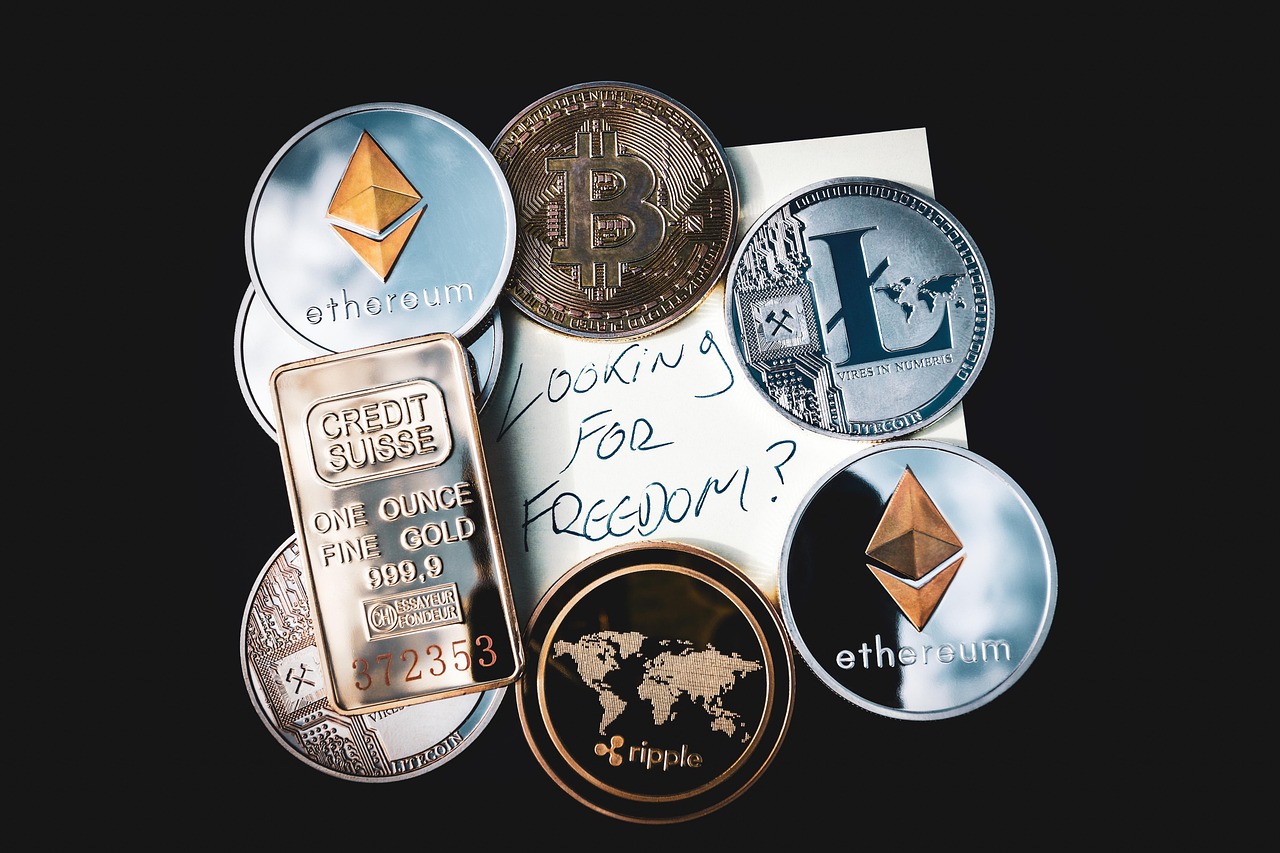
In the rapidly expanding universe of Web3, we’re witnessing an incredible proliferation of specialized blockchains, each designed with unique strengths and ecosystems. From the smart contract powerhouse Ethereum to the lightning-fast Solana, the highly scalable Avalanche, or the interoperability-focused Polkadot and Cosmos – the digital landscape is vibrant but often siloed. Imagine an internet where different websites couldn’t talk to each other, or emails couldn’t cross between providers. That’s precisely the challenge facing our burgeoning multi-chain world. The solution? Cross-chain messaging. This revolutionary technology is the connective tissue, enabling disparate blockchains to communicate, share data, and transfer assets seamlessly, paving the way for a truly unified and powerful decentralized future.
The Interoperability Imperative: Why Cross-Chain Messaging Matters
The blockchain ecosystem, while innovative, has historically operated in a series of isolated islands. Each chain has its own rules, consensus mechanisms, and native tokens, making direct interaction difficult. This fragmentation limits the potential of decentralized applications (dApps) and locks liquidity within specific networks, hindering the broader adoption of Web3.
The Fragmented Blockchain Landscape
- Diverse Ecosystems: Blockchains like Ethereum, Binance Smart Chain (BSC), Polygon, Arbitrum, Optimism, Avalanche, Fantom, Solana, and Polkadot all cater to different needs and use cases, attracting distinct developer and user communities.
- Liquidity Silos: Capital and assets are often confined to a single chain, preventing users from leveraging opportunities or accessing specific services on other networks without cumbersome processes.
- Limited Application Scope: A dApp built on one blockchain can only interact with assets and users on that specific chain, restricting its reach and functionality. This leads to a suboptimal user experience and reduced market efficiency.
The Need for Seamless Communication
Cross-chain messaging isn’t just a technical curiosity; it’s a fundamental requirement for the growth and maturation of Web3. It enables a future where assets, data, and arbitrary messages can flow freely, unlocking unprecedented possibilities.
- Enhanced User Experience: Users shouldn’t have to worry about which blockchain their assets are on. Cross-chain solutions allow for a smoother, more intuitive interaction with dApps, abstracting away underlying network complexities.
- Expanded DeFi Opportunities: Imagine seamlessly swapping tokens across different chains, accessing lending protocols on one chain with collateral from another, or participating in yield farming strategies that leverage liquidity from multiple networks. Cross-chain messaging makes global DeFi a reality.
- More Robust dApps: Developers can build dApps that harness the unique strengths of various blockchains – perhaps using Solana for high-speed transactions, Ethereum for security, and a privacy-focused chain for sensitive data, all within a single application.
- Increased Capital Efficiency: By breaking down liquidity silos, cross-chain messaging ensures that capital can be deployed wherever it’s most needed or most productive, leading to a more efficient global decentralized economy.
Actionable Takeaway: As a user, understanding cross-chain messaging empowers you to explore a wider array of DeFi and Web3 opportunities. As a developer, embracing cross-chain solutions vastly expands your dApp’s potential reach and functionality.
How Cross-Chain Messaging Works: Core Mechanisms
At its heart, cross-chain messaging involves mechanisms to verify events on one blockchain and securely relay information or assets to another. This is a complex challenge given the independent nature of each chain.
Bridging Protocols: The Foundation
The most common approach to cross-chain asset transfer and message passing involves “bridges.” A blockchain bridge is essentially a connection that allows assets and data to flow between two otherwise incompatible blockchains.
- Lock-and-Mint/Burn-and-Mint:
- Lock-and-Mint: The most prevalent model. When you want to move an asset (e.g., ETH) from Chain A to Chain B, your ETH is locked on Chain A, and an equivalent “wrapped” token (e.g., wETH) is minted on Chain B. When you want to move back, the wETH is burned on Chain B, and your original ETH is unlocked on Chain A.
- Burn-and-Mint: Less common for public chains, more for native cross-chain designs. Native tokens are burned on the source chain and minted on the destination chain.
- Types of Bridges:
- Centralized Bridges: Rely on a trusted third party (custodian) to hold assets and facilitate transfers. Prone to single points of failure and censorship risks.
- Federated Bridges: Rely on a committee of trusted validators to approve and process transactions. More decentralized than centralized, but still requires trust in the committee.
- Decentralized (Trustless) Bridges: Utilize smart contracts and cryptographic proofs to enable transfers without relying on any single entity or small group. These are the ideal but most complex to build and secure. Examples include optimistic or ZK-rollups-based bridges.
Message Passing Architectures
Beyond simple asset transfer, robust cross-chain messaging protocols allow for arbitrary data and smart contract calls to be executed across chains. Key components include:
- Relayers: Off-chain entities that monitor events on a source chain and relay the relevant information (messages, transaction proofs) to a destination chain. They don’t verify the messages themselves but simply transport them.
- Light Clients/Validators: The destination chain needs a way to verify that a message or event truly occurred on the source chain. Light clients on the destination chain can verify the state of the source chain by checking block headers and cryptographic proofs, without downloading the entire source chain’s history.
- State Proofs: Cryptographic proofs (e.g., Merkle proofs) are used to demonstrate that a specific piece of data or state change occurred on a source chain, which can then be verified by a smart contract on the destination chain.
- Atomic Swaps: A method for exchanging cryptocurrencies directly between two different blockchains without the need for a centralized intermediary, often using a hash time-locked contract (HTLC) to ensure either both sides complete the transaction or neither does.
Practical Example: Swapping Tokens Across Chains
Let’s say you want to move 1 ETH from Ethereum to Polygon to pay lower gas fees for a DeFi transaction:
- You initiate a transaction on Ethereum, sending 1 ETH to a specific bridge smart contract.
- The bridge smart contract locks your 1 ETH.
- Off-chain relayers (or validators, depending on the bridge design) detect this locking event on Ethereum.
- These relayers then send a message to the Polygon network, along with a cryptographic proof that your ETH was indeed locked on Ethereum.
- A smart contract on Polygon verifies this proof.
- Once verified, the Polygon smart contract mints 1 wETH (Wrapped ETH) to your address on Polygon.
- You now have 1 wETH on Polygon, which you can use for transactions, and your original 1 ETH remains locked on Ethereum, acting as collateral.
Actionable Takeaway: When using a bridge, always understand its underlying security model. Trustless bridges offer superior security but might be more complex. Opt for well-audited and reputable bridges to minimize risks.
Key Challenges and Innovations in Cross-Chain Messaging
Despite its immense potential, cross-chain messaging is one of the most technically challenging and high-stakes areas in Web3 development. Several hurdles must be overcome for widespread, secure adoption.
Security Risks and Vulnerabilities
The very nature of bridging assets between independent chains introduces new attack vectors. Blockchain bridges have unfortunately been the target of some of the largest hacks in crypto history, amounting to billions of dollars in losses.
- Single Points of Failure: Centralized and federated bridges can be vulnerable if the custodian or a majority of validators are compromised.
- Smart Contract Bugs: Flaws in the complex smart contracts governing a bridge can be exploited, leading to asset draining.
- Oracle Manipulation: Bridges often rely on oracles to relay information between chains. If an oracle is compromised, it can feed malicious data, leading to incorrect asset minting or unlocking.
- Validation Trust Assumptions: Trustless bridges still rely on the security of their validation mechanisms (e.g., whether light clients are secure, or fraud proofs are robust).
Scalability and Latency
Moving assets and messages across chains can be slow and expensive, especially when interacting with busy Layer 1 networks like Ethereum.
- Transaction Costs (Gas Fees): Interacting with bridge smart contracts can incur significant gas fees on both the source and destination chains.
- Confirmation Times: The time it takes for a transaction to be finalized on one chain and then verified on another can lead to delays, impacting user experience.
- Network Congestion: High traffic on a source or destination chain can slow down bridge operations.
User Experience Complexity
Despite efforts to simplify, current cross-chain processes can still be daunting for average users.
- Multiple Steps: Users often need to interact with several interfaces, approve multiple transactions, and understand different token standards.
- Potential for Errors: Sending tokens to the wrong address or network can lead to irreversible loss.
- Fragmented Information: It can be challenging to track the status of a cross-chain transfer across different block explorers.
Emerging Solutions and Future Trends
The industry is actively innovating to address these challenges, pushing towards more secure, scalable, and user-friendly cross-chain solutions.
- Zero-Knowledge (ZK) Proofs: ZK-bridges use cryptographic proofs to enable trustless verification of state changes on a source chain without revealing the full transaction details. This can offer superior security and efficiency.
- Optimistic Rollups for Cross-Chain: Concepts like optimistic bridges leverage optimistic rollups’ fraud-proof mechanisms to secure cross-chain communication, allowing faster transfers but with a challenge period.
- Shared Security Models: Projects like Polkadot’s parachains (connected via XCMP – Cross-Chain Message Passing) and Cosmos’s IBC (Inter-Blockchain Communication protocol) are designed from the ground up for native interoperability, sharing a common security layer.
- Intent-Based Architectures: Moving away from explicit instructions to defining user “intents” (e.g., “I want to swap X for Y regardless of the chain”). This abstract away complexity and allows solvers to find the most efficient cross-chain path.
- General Message Passing (GMP): Protocols like Axelar and LayerZero aim to provide general messaging services between arbitrary chains, allowing dApps to send not just tokens but any data or smart contract calls across networks.
Actionable Takeaway: Stay informed about the latest security practices and choose bridges that leverage advanced cryptographic techniques like ZK-proofs for maximum assurance. Always double-check addresses and network selections before confirming cross-chain transactions.
Real-World Applications and Impact on Web3
Cross-chain messaging is not merely a theoretical concept; it’s actively shaping the landscape of Web3, enabling new applications and expanding existing ones.
Decentralized Finance (DeFi) Expansion
DeFi is arguably the biggest beneficiary of cross-chain capabilities, unlocking massive liquidity and new financial primitives.
- Cross-Chain Swaps and DEXs: Users can swap tokens directly between different blockchains, accessing deeper liquidity pools and better rates across the entire multi-chain ecosystem.
- Global Lending and Borrowing: Collateral locked on one chain can be used to borrow assets on another, vastly expanding the reach of decentralized lending protocols.
- Yield Aggregation: Strategies can automatically seek the highest yields across various chains, optimizing returns for users.
- Stablecoin Arbitrage: Efficient cross-chain messaging allows for faster and more effective arbitrage opportunities for stablecoins, helping to maintain their pegs across different networks.
Gaming and NFTs
The burgeoning GameFi and NFT sectors are increasingly leveraging cross-chain capabilities to enhance user experience and asset utility.
- NFT Portability: Users can move their NFTs from a high-gas chain (like Ethereum) to a lower-gas chain (like Polygon or Immutable X) for cheaper trading, gaming interactions, or new utility, without losing ownership provenance.
- Multi-Chain Gaming Assets: Game developers can issue in-game assets on one chain and allow players to use or trade them on another, optimizing for speed, cost, or specific game features.
- Shared Gaming Experiences: Games can integrate assets or functionalities from different chains, creating more dynamic and interconnected virtual worlds.
Enterprise and Supply Chain
Beyond consumer-facing applications, cross-chain messaging holds significant promise for enterprise adoption of blockchain technology.
- Interlinking Private and Public Blockchains: Enterprises can maintain sensitive data on private, permissioned blockchains while selectively sharing verified information or proofs to public chains for transparency and auditability.
- Supply Chain Verification: Track goods across complex supply chains where different partners might use different blockchain networks, ensuring data integrity from source to consumer.
- Cross-Organizational Data Sharing: Facilitate secure and auditable data exchange between disparate organizations, each operating their own distributed ledger technology (DLT) networks.
Enhanced User Experience
Ultimately, cross-chain messaging aims to create a more cohesive and user-friendly Web3 experience, abstracting away the underlying complexity of multiple chains.
- Seamless DApp Interaction: Users won’t need to manually bridge assets; dApps can internally handle cross-chain operations, making the entire experience feel like interacting with a single, unified network.
- Unified Wallets: Future wallet solutions will likely provide a unified view of assets across all chains, with integrated cross-chain transfer capabilities.
Actionable Takeaway: Look for dApps and platforms that actively integrate cross-chain functionality. This indicates a forward-thinking approach to user experience and access to broader Web3 opportunities. For businesses, consider how cross-chain messaging can integrate your existing systems with public blockchain benefits without compromising privacy.
Conclusion
The journey from isolated blockchain networks to a truly interconnected Web3 ecosystem is being paved by advancements in cross-chain messaging. While challenges around security, scalability, and user experience persist, the relentless innovation in this space is addressing these hurdles head-on. Protocols are evolving, leveraging everything from ZK-proofs and optimistic rollups to native interoperability designs like IBC and XCMP. The impact is profound: unlocking global liquidity for DeFi, enabling dynamic multi-chain gaming and NFTs, and fostering enterprise adoption by linking disparate DLTs. Cross-chain messaging is not just a technological feat; it’s the fundamental enabler for a more unified, efficient, and accessible decentralized internet, promising a future where the full potential of Web3 can be realized without borders.