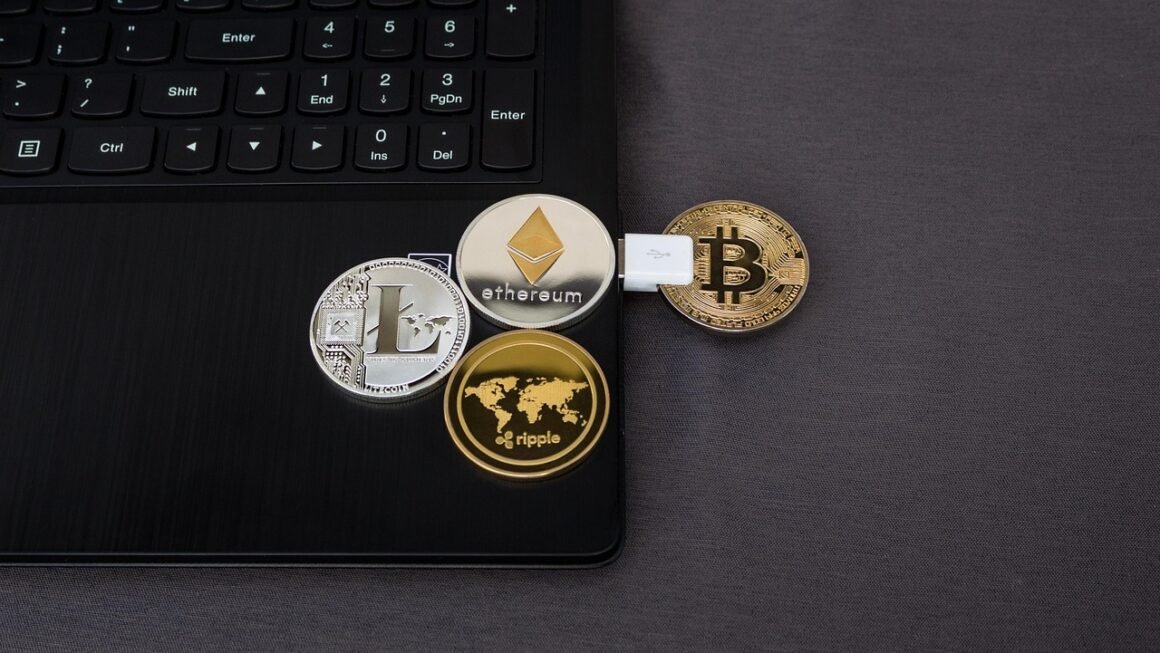
In an increasingly digital world, where financial transactions, legal agreements, and personal data flow constantly across networks, trust and security are paramount. Every click, every transfer, every digital interaction hinges on an invisible yet critical process: transaction signing. Far more than just an electronic scribble, transaction signing is the cryptographic handshake that verifies identity, confirms intent, and safeguards the integrity of data. From your daily online banking activities to the cutting-edge realm of cryptocurrency, understanding this fundamental mechanism is no longer just for tech enthusiasts – it’s essential for anyone navigating the modern digital landscape.
Understanding Transaction Signing: The Digital Handshake
At its core, transaction signing is the digital equivalent of a physical signature, but with vastly superior levels of security and verifiability. It’s a cryptographic process designed to prove that a specific party authorized a transaction or document and that the content has not been altered since it was signed. This mechanism is foundational to building trust in environments where physical presence is impossible.
What is Transaction Signing?
Transaction signing refers to the act of cryptographically associating a digital signature with a piece of data (the transaction). This signature is generated using a unique private key held by the signer. When the signature is verified using the corresponding public key, it confirms two crucial aspects:
- Authentication: Proves the identity of the signer.
- Integrity: Guarantees that the data has not been tampered with since it was signed.
Think of it as sealing an envelope with a unique wax stamp that only you possess, and anyone can check the authenticity of the stamp without needing your personal stamp.
The Core Principles: Cryptography at Play
The power of transaction signing stems from asymmetric cryptography, also known as public-key cryptography. This system relies on a pair of mathematically linked keys:
- Private Key: Kept secret by the owner, used to create the digital signature.
- Public Key: Can be freely distributed, used by anyone to verify the digital signature.
When you “sign” a transaction, you’re not encrypting the entire transaction. Instead, you’re creating a unique digital fingerprint (a hash) of the transaction and then encrypting that fingerprint with your private key. This encrypted fingerprint is your digital signature.
Why is it Indispensable in the Digital Age?
The reliance on transaction signing has skyrocketed due to several factors:
- Enhanced Security: Protects against fraud, tampering, and unauthorized access.
- Non-Repudiation: Prevents a signer from later denying that they signed a transaction. Once signed and verified, the proof is undeniable.
- Trust and Compliance: Forms the backbone of secure communication, financial systems, and legal frameworks, meeting regulatory requirements across industries.
- Efficiency: Enables fast, secure, and verifiable transactions globally without geographical limitations.
Actionable Takeaway: Understand that every time you authorize an online payment or confirm a sensitive action, you are relying on sophisticated transaction signing protocols to protect your assets and data. Always verify the security indicators (like HTTPS) in your browser.
Types and Applications of Transaction Signing
Transaction signing is not a one-size-fits-all solution; its implementation varies significantly depending on the context. However, the underlying cryptographic principles remain consistent, providing a universal layer of trust across diverse digital ecosystems.
Financial Transactions: Banking on Security
In the realm of finance, transaction signing is the bedrock of trust. From interbank transfers to online retail purchases, digital signatures ensure that your money moves securely and only with your explicit authorization.
- Online Banking: When you initiate a bank transfer, sign into your account, or approve a payment, banks often use robust signing mechanisms, sometimes augmented by multi-factor authentication (MFA) with one-time passwords (OTPs) generated by your bank’s app or a hardware token.
- Credit Card Processing: While you might physically sign a receipt, the digital authorization sent from the point-of-sale (POS) terminal to the bank is a digitally signed transaction, ensuring the merchant’s legitimacy and the transaction’s integrity.
- Real-world Example: Imagine approving a high-value transfer via your banking app. The app generates a cryptographic signature using a key securely stored on your device, which is then sent to the bank for verification, ensuring that you, and not an impostor, initiated the transfer.
Blockchain and Cryptocurrency: Immutable Proof
Blockchain technology, particularly in cryptocurrencies like Bitcoin and Ethereum, has brought transaction signing into the mainstream consciousness. Here, it’s not just about security; it’s about the very architecture of the system.
- Cryptocurrency Transfers: Every cryptocurrency transaction requires the sender’s private key to sign the transaction. This signature proves ownership of the funds and authorizes their transfer to another address. Without a valid signature, the transaction will be rejected by the network.
- Smart Contracts: On platforms like Ethereum, interactions with smart contracts (self-executing agreements) also involve transaction signing to initiate functions, transfer tokens, or update contract states.
- Real-world Example: When you send Bitcoin from your wallet, your wallet software takes the transaction details (sender, receiver, amount) and signs them with your private key. This signed transaction is broadcast to the network, verified by nodes, and then added to the immutable blockchain ledger.
Enterprise and Legal Documents: Ensuring Authenticity
Beyond finance, transaction signing is revolutionizing how businesses and legal entities handle agreements, contracts, and sensitive data.
- Electronic Signatures (e-Signatures): While not always involving complex cryptography, many advanced e-signature solutions leverage digital signatures for legally binding documents, ensuring non-repudiation and compliance with regulations like eIDAS (Europe) or ESIGN Act (USA).
- Software Updates: Software developers digitally sign their software updates to assure users that the files haven’t been tampered with by malicious actors and originate from a trusted source.
- Real-world Example: A lawyer sends a critical contract to a client via a secure digital platform. The client reviews and “signs” the document using a certified digital signature service. This signature is cryptographically linked to the client’s identity, providing irrefutable proof of their agreement and the document’s authenticity.
Actionable Takeaway: Be aware of the specific signing methods used in different applications. For high-value transactions or sensitive documents, always prioritize platforms that leverage strong cryptographic digital signatures for superior security and legal validity.
The Mechanics of a Secure Signature: A Deeper Dive
Understanding the “how” behind transaction signing reveals its inherent strength. It’s a sophisticated dance between unique keys, mathematical algorithms, and digital certificates, all working in concert to establish trust.
Private Keys and Public Keys: Your Digital Identity
As mentioned, the core of asymmetric cryptography lies in the key pair.
- Private Key: This is a secret number, usually a long string of random characters. It acts as your unique identifier and authorization token. Its security is paramount; if compromised, your digital identity and assets could be at risk.
- Public Key: Derived mathematically from your private key, this can be freely shared. It’s used to verify signatures created by your private key. Anyone with your public key can verify that a signature came from you, but they cannot recreate your private key or sign transactions on your behalf.
Hashing: The Fingerprint of Your Transaction
Before signing, the transaction data itself undergoes a process called hashing.
- Hashing Algorithm: A mathematical function (e.g., SHA-256) takes any input data (your transaction details) and produces a fixed-size string of characters called a “hash” or “message digest.”
- Uniqueness and Irreversibility: Even a tiny change in the input data results in a completely different hash. It’s also practically impossible to reverse-engineer the original data from the hash. This makes the hash a unique “fingerprint” of your transaction.
The Signing Process: A Step-by-Step Breakdown
- Transaction Data Preparation: The transaction details (e.g., sender, receiver, amount) are formatted and prepared.
- Hashing: This data is fed into a hashing algorithm, generating a unique message digest (the transaction’s fingerprint).
- Signing with Private Key: The sender’s private key is used to “encrypt” this message digest, creating the digital signature.
- Attachment: The digital signature is attached to the original (unhashed) transaction data.
- Broadcasting/Sending: The signed transaction (data + signature) is sent to the recipient or network.
The Verification Process: Ensuring Authenticity
- Separation: The recipient separates the transaction data from the digital signature.
- Re-hashing: The recipient independently hashes the received transaction data using the exact same hashing algorithm.
- Decryption with Public Key: The recipient uses the sender’s publicly available public key to “decrypt” the received digital signature, revealing the original message digest that the sender signed.
- Comparison: The recipient compares the newly generated hash (from step 2) with the decrypted hash (from step 3).
- Verification: If the two hashes match, the signature is valid, confirming the sender’s identity and the data’s integrity. If they don’t match, either the signature is invalid (wrong private key used) or the data has been tampered with.
The Role of Digital Certificates: For enhanced trust in public key infrastructure (PKI), digital certificates bind a public key to an identity (person, organization, server) and are issued by trusted third parties called Certificate Authorities (CAs). These certificates provide an extra layer of verification, assuring users that a public key truly belongs to the entity it claims to represent.
Actionable Takeaway: Understand that the security of your transactions fundamentally relies on the secrecy of your private key and the integrity of the hashing and verification processes. Never share your private key or seed phrase.
Benefits and Challenges of Transaction Signing
While transaction signing offers monumental advantages in digital security, its implementation and maintenance come with their own set of complexities and evolving threats.
Unlocking Key Benefits
The widespread adoption of transaction signing is driven by its compelling benefits:
- Unparalleled Security: Cryptographic signatures are extremely difficult to forge, offering a high level of protection against fraud and unauthorized access.
- Data Integrity Assurance: Any alteration to the signed data, even a single character, will invalidate the signature, immediately alerting users to potential tampering.
- Strong Non-Repudiation: Once a transaction is validly signed and verified, the signer cannot credibly deny having performed the action, which is crucial for legal and financial accountability.
- Global Reach and Efficiency: Enables secure and legally binding transactions to occur instantly across geographical boundaries without physical presence.
- Regulatory Compliance: Many industry standards and governmental regulations (e.g., HIPAA, GDPR, eIDAS) mandate the use of digital signatures for data protection and audit trails.
- Reduced Costs: Eliminates the need for physical documents, postage, and manual processing, leading to significant operational savings.
Statistic: The global digital signature market size was valued at USD 5.7 billion in 2023 and is projected to grow significantly, underscoring its increasing adoption and importance across industries.
Navigating the Challenges
Despite its advantages, implementing and managing transaction signing systems presents several challenges:
- Private Key Management: The most significant challenge. Losing a private key means losing access to assets or the ability to prove identity. If a private key is stolen, an attacker can impersonate the owner.
- User Experience (UX): Overly complex signing processes can deter users. Balancing security with ease of use is a continuous challenge.
- Evolving Threats: As technology advances, so do the methods of attack. Staying ahead of sophisticated phishing attempts, malware, and potential quantum computing threats is a constant battle.
- Interoperability: Different cryptographic standards and platforms can sometimes lead to compatibility issues, particularly across international borders or diverse enterprise systems.
- Legal and Regulatory Hurdles: While digital signatures are widely recognized, the specific legal weight and acceptance can vary by jurisdiction and type of signature.
Best Practices for Robust Transaction Security
To maximize the benefits and mitigate the challenges, consider these best practices:
- Secure Private Keys: Use hardware security modules (HSMs), secure enclaves, or reputable hardware wallets for storing private keys. Never store them unencrypted on easily accessible devices.
- Implement Multi-Factor Authentication (MFA): Add extra layers of security beyond just a private key signature, such as biometrics, hardware tokens, or one-time codes.
- Educate Users: Train individuals on recognizing phishing attempts, safeguarding credentials, and understanding the importance of their digital signatures.
- Regular Audits and Updates: Regularly audit security protocols and cryptographic implementations. Keep software and hardware updated to protect against known vulnerabilities.
- Choose Reputable Providers: Select certified digital signature service providers and blockchain platforms with proven security records and transparent practices.
Actionable Takeaway: Prioritize the secure management of your private keys and always enable MFA wherever possible. For businesses, invest in robust key management solutions and continuous security training for your team.
The Future of Transaction Signing: Emerging Trends
The landscape of transaction signing is far from static. Innovation is constantly pushing the boundaries, promising even more secure, convenient, and intelligent ways to authenticate and authorize digital actions.
Beyond Passwords: Multi-Factor Authentication (MFA)
While often used in conjunction with transaction signing, MFA itself is evolving. The future will see more seamless and integrated MFA experiences that further strengthen the signing process without adding significant friction for the user.
- Contextual MFA: Systems that adapt authentication requirements based on risk factors like location, device, time of day, and transaction value.
- Adaptive Security: Continuously evaluating user behavior to detect anomalies and trigger additional authentication steps only when necessary.
- Real-world Example: A low-value payment might only require a biometric scan, while a high-value international transfer might demand a biometric scan, a hardware token confirmation, and a geo-location check.
Biometric Signatures: You Are the Key
Biometrics offers an intuitive and highly secure method for transaction signing, leveraging unique physical or behavioral characteristics.
- Fingerprint and Facial Recognition: Already common on smartphones, these are increasingly being integrated into payment systems and secure access points for authorizing transactions.
- Behavioral Biometrics: Analyzing unique patterns in typing rhythm, mouse movements, or how a user holds their device can add another passive layer of authentication during a signing process.
- Advantages: Enhanced user convenience, reduced reliance on memorized passwords/pins, and high security due to the uniqueness of biological traits.
Quantum-Resistant Cryptography: Preparing for Tomorrow
The advent of quantum computers poses a theoretical threat to current cryptographic algorithms, including those underpinning transaction signing. Research and development are actively pursuing “post-quantum cryptography.”
- New Algorithms: Developing new mathematical problems that even powerful quantum computers cannot solve efficiently, ensuring future security.
- Proactive Measures: Governments and major corporations are already investing in transitioning to quantum-resistant standards to future-proof their digital infrastructure.
Decentralized Identity and Self-Sovereign Signing
Emerging from the principles of blockchain, decentralized identity (DID) aims to give individuals complete control over their digital identities and how they sign transactions.
- User-Centric Control: Instead of relying on centralized authorities to verify identity, users manage their own verifiable credentials and cryptographic keys.
- Verifiable Credentials: Digital attestations (e.g., a university degree, a government ID) that are cryptographically signed by the issuer and stored by the user, who can then selectively present them to verifiers.
- Impact on Signing: This model would allow for highly secure, privacy-preserving transaction signing where individuals have granular control over what information they disclose and to whom.
Actionable Takeaway: Stay informed about these evolving technologies. For individuals, familiarize yourself with biometric authentication options on your devices. For businesses, begin exploring strategies for quantum readiness and the potential of decentralized identity to enhance user trust and data privacy.
Conclusion
Transaction signing is more than just a technical formality; it is the silent guardian of our digital interactions, the cryptographic trust mechanism that underpins everything from online banking to the burgeoning world of blockchain. We’ve explored its fundamental principles, diverse applications across finance, blockchain, and enterprise, and the intricate mechanics that make it so robust. While challenges like key management and evolving threats persist, continuous innovation in areas like MFA, biometrics, and quantum-resistant cryptography promises an even more secure and user-friendly future.
As our lives become increasingly intertwined with the digital realm, understanding and appreciating the power of transaction signing empowers us all – individuals and organizations alike – to demand and implement the highest standards of security. By embracing best practices and staying abreast of emerging trends, we can collectively build a more trustworthy, efficient, and resilient digital future.