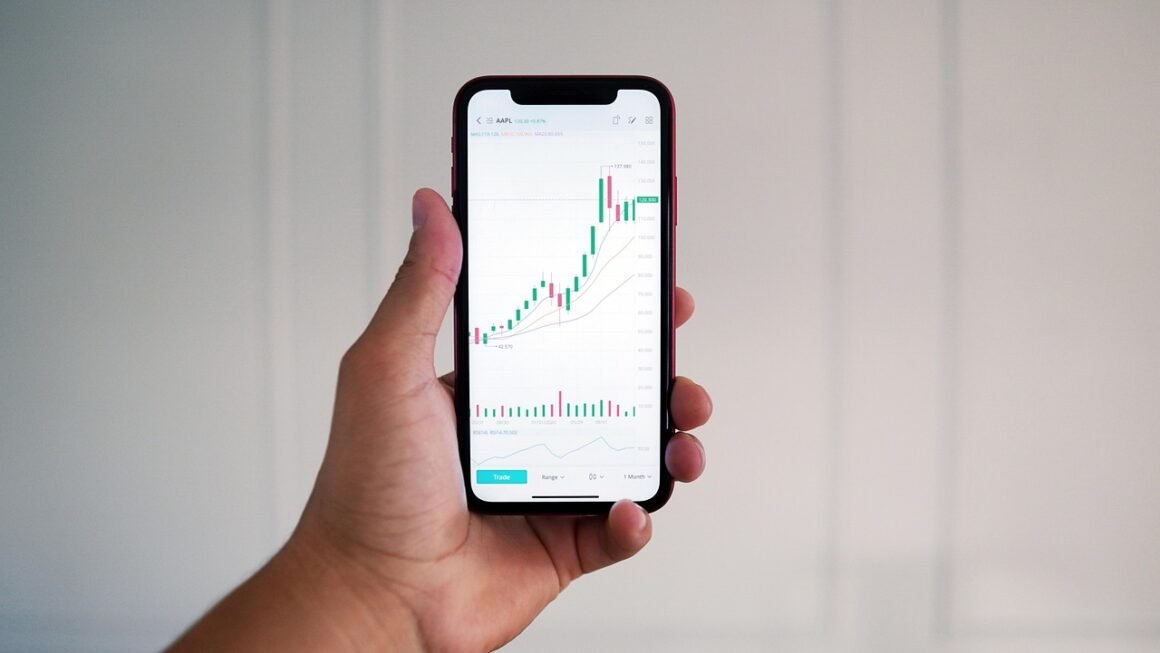
In the dynamic world of financial markets, the quest for a reliable and profitable trading strategy is perpetual. While many traders strive to predict the next market move, a powerful and historically proven approach focuses instead on reacting to what the market is already doing: trend following. Imagine harnessing the sheer power of long-term market movements, riding the wave of major uptrends and navigating the currents of downtrends. This is the essence of trend following – a disciplined, systematic methodology that seeks to capture significant portions of market trends, offering a compelling alternative to speculative short-term trading.
What is Trend Following? The Core Philosophy
Trend following is a trading strategy that attempts to capitalize on long-term market trends by going long when prices are rising and short when prices are falling. It’s not about predicting market turns; it’s about identifying and reacting to sustained price movements. A true trend follower believes that markets, driven by human psychology and fundamental forces, often move in discernible directions for extended periods, and their goal is simply to participate in these movements.
Defining Trend Following
At its heart, trend following is a reactive, not predictive, strategy. It doesn’t aim to buy at the absolute bottom or sell at the absolute top. Instead, it enters a trade once a trend has been established and exits when the trend shows signs of reversal. This approach relies heavily on a systematic, rules-based methodology, often minimizing discretionary decisions.
- Systematic Approach: Trades are executed based on predefined rules, reducing emotional bias.
- Reactionary Nature: Focuses on reacting to current market conditions rather than forecasting future events.
- Focus on Price Action: Primary signals are derived from price movements and their derivatives (e.g., moving averages).
The “Big Picture” Mindset
Trend followers operate with a broad perspective, largely ignoring daily market noise in favor of the bigger picture. They understand that minor fluctuations are part of any trend and do not derail their strategy. Their success hinges on capturing the major, sustained moves that can span months or even years. For instance, a commodity super-cycle or a multi-year bull market in a specific equity index offers ample opportunity for a trend follower.
Actionable Takeaway: Cultivate patience and a long-term perspective. Recognize that small daily losses are often necessary expenses for capturing large, infrequent gains.
Key Principles of Trend Following
Several fundamental tenets guide the trend following philosophy:
- Cut Losses Short: Losing trades are closed quickly when the market moves against the position.
- Let Profits Run: Winning trades are held as long as the trend persists, allowing for significant gains.
- Trade All Markets: Diversification across various asset classes (stocks, bonds, commodities, forex) reduces correlation risk.
- Position Sizing: Rigorous risk management ensures that no single trade can significantly impair capital.
- No Forecasting: The system does not attempt to predict future prices but rather follows what the market is doing.
The Mechanics of Trend Following: How it Works
Implementing a trend following strategy involves a clear set of rules for identifying trends, entering trades, managing risk, and exiting positions. While specific systems vary, the underlying mechanics share common ground.
Identifying Trends: Tools and Indicators
Trend followers employ various technical analysis tools to identify and confirm trends. These indicators help to filter out noise and focus on sustained price direction:
- Moving Averages (MAs):
- Crossover Systems: A common strategy involves buying when a shorter-term MA (e.g., 50-day) crosses above a longer-term MA (e.g., 200-day), signaling an uptrend. The reverse indicates a downtrend.
- Price Crossing MA: Entering long when the price crosses above a significant MA (e.g., 200-day MA) and short when it crosses below.
- Donchian Channels: These channels plot the highest high and lowest low over a specific period (e.g., 20 days). A breakout above the upper channel signals a potential long entry, while a break below the lower channel signals a short entry.
- Average Directional Index (ADX): This indicator measures the strength of a trend. A rising ADX above a certain threshold (e.g., 25) suggests a strong trend is in place, helping to filter out sideways markets.
Practical Example: A simple trend following system might generate a buy signal for Apple stock (AAPL) when its 50-day moving average crosses above its 200-day moving average, and the ADX is above 30, indicating a strong prevailing uptrend.
Entry and Exit Signals
Precise entry and exit rules are crucial for systematic trend following:
- Entry:
- Typically initiated after a clear trend signal is generated (e.g., MA crossover, price breakout).
- Confirmation by other indicators or price action (e.g., higher highs and higher lows for an uptrend).
- Exit:
- Trailing Stops: The most common exit strategy, where the stop-loss order is adjusted upwards as the price rises (for long positions) or downwards as it falls (for short positions). This allows profits to run while protecting against significant reversals.
- Opposite MA Crossover: Exiting a long position when the shorter-term MA crosses below the longer-term MA.
- Channel Breakouts: Exiting a long position if the price breaks below the lower Donchian Channel, or a short position if it breaks above the upper channel.
Actionable Takeaway: Define your entry and, more importantly, your exit rules BEFORE entering any trade. Use robust trailing stops, perhaps based on a multiple of the Average True Range (ATR), to protect capital and maximize profits.
Risk Management and Position Sizing
Perhaps the most critical component of successful trend following is stringent risk management and disciplined position sizing. This ensures longevity, especially during inevitable periods of drawdowns.
- Fixed Percentage Risk: Limit the capital risked on any single trade to a small percentage of your total trading capital (e.g., 0.5% to 2%).
- Position Size Calculation: Determine the number of units (shares, contracts) to trade based on your risk per trade and the distance to your initial stop-loss.
Position Size = (Account Capital * Risk %) / (Entry Price - Stop Loss Price) - Maximum Drawdown Limits: Establish a maximum acceptable drawdown for your overall portfolio and reduce exposure or cease trading temporarily if approached.
Practical Example: If you have a $100,000 account and risk 1% per trade ($1,000), and your stop loss is $2 below your entry price, you would buy 500 shares ($1,000 / $2 = 500 shares). This ensures that even if the trade hits your stop, you only lose 1% of your capital.
Why Trend Following Endures: Benefits and Advantages
Trend following has stood the test of time, producing some of the most consistent and spectacular returns in financial history. Its enduring appeal stems from several key advantages that align well with market realities.
Capitalizing on Market Inefficiencies
Markets are not always perfectly efficient. Human psychology – fear, greed, and herd mentality – often leads to prices overshooting their fundamental values, creating prolonged trends. Trend followers don’t need to understand the “why” behind the trend; they only need to identify and ride it. This ability to exploit behavioral biases makes it a robust strategy.
- Psychological Lag: Markets often underreact to new information initially, then overreact, creating momentum.
- Crowd Behavior: Large trends are often fueled by widespread participation and continued buying/selling pressure.
Simplicity and Objectivity
Unlike strategies requiring complex fundamental analysis or constant news monitoring, trend following systems can be relatively straightforward. Their rules-based nature significantly reduces emotional interference, a common pitfall for many traders.
- Rules-Based: Decisions are made mechanically based on predefined criteria, eliminating guesswork.
- Reduced Emotional Bias: Automation or strict adherence to rules minimizes fear, greed, and impulsive actions.
- Scalability: Systems can be applied across numerous markets and expanded as capital grows.
Diversification Across Markets
One of the most powerful aspects of trend following is its inherent ability to diversify across a wide array of uncorrelated markets. Trend followers typically trade futures contracts covering equities, fixed income, currencies, and commodities. When one market is in a choppy phase, another might be strongly trending, allowing the strategy to potentially generate returns regardless of the specific economic climate.
Practical Example: A diversified trend following portfolio might simultaneously hold long positions in crude oil and the S&P 500 futures, short positions in the Japanese Yen, and long positions in U.S. Treasury bonds. This spreads risk and increases the probability of capturing trends somewhere in the global financial landscape.
Potential for Asymmetric Returns
Trend following is characterized by many small losses and a few large wins. While the win rate might be below 50%, the size of the winning trades significantly outweighs the losing ones, leading to positive expectancy. This “let your winners run” philosophy is central to generating substantial profits.
Actionable Takeaway: Embrace the idea of frequent small losses as the cost of doing business. Focus on proper risk management to keep these losses minimal, allowing your infrequent, large wins to drive overall profitability. Trust the statistics of your system over individual trade outcomes.
The Challenges and How to Overcome Them
While powerful, trend following is not without its challenges. Understanding and preparing for these hurdles is crucial for long-term success and maintaining discipline.
Whipsaws and Sideways Markets
Challenge: Trend following strategies notoriously struggle in choppy, sideways, or range-bound markets. During these periods, indicators can generate false signals, leading to multiple small losses (whipsaws) as the system attempts to capture a non-existent trend. This can lead to frustrating drawdowns.
Overcoming:
- Trend Filters: Employ additional indicators like ADX (Average Directional Index) to gauge trend strength. Only take trades when the ADX is above a certain threshold (e.g., 25 or 30).
- Wider Stops: Adjusting stop-loss orders to be slightly wider can help reduce being stopped out prematurely during minor price fluctuations.
- Diversification: Trading a broad portfolio of uncorrelated assets helps ensure that even if some markets are choppy, others might be trending.
- Acceptance: Understand that drawdowns and periods of underperformance are an inherent part of the strategy.
Psychological Demands
Challenge: Enduring long periods of small losses can be emotionally taxing. It takes immense discipline to stick to a system when it’s experiencing a drawdown and resist the urge to abandon it or deviate from its rules. The temptation to “tinker” with a system during losing streaks is strong.
Overcoming:
- Rigorous Backtesting: Thoroughly backtest your system to understand its historical performance, including maximum drawdowns and win/loss ratios. This builds conviction.
- Process Over Outcome: Focus on executing your system flawlessly rather than fixating on individual trade outcomes.
- Realistic Expectations: Understand that trend following is not a get-rich-quick scheme. It requires patience and the ability to ride out tough periods.
- Mindfulness and Discipline: Develop mental resilience through practices that reinforce discipline and emotional control.
Capital Requirements and Drawdowns
Challenge: To effectively diversify across many markets and weather inevitable drawdowns, trend following often requires a substantial amount of capital. Significant drawdowns (e.g., 20-50% from peak equity) are not uncommon in the history of successful trend followers.
Overcoming:
- Start Small: Begin with a smaller capital allocation to gain experience and confidence, gradually increasing it as your proficiency and comfort with drawdowns grow.
- Meticulous Risk Management: Adhering strictly to position sizing rules (e.g., 0.5-1% risk per trade) is paramount to survive drawdowns.
- Realistic Expectations: Do not over-leverage or expect consistent, smooth equity curves. Embrace volatility as part of the journey.
The Myth of Prediction
Challenge: The human tendency to predict market direction often conflicts with the reactive nature of trend following. Trying to anticipate the end of a trend or the start of a new one can lead to premature exits or entries, undermining the system’s edge.
Overcoming:
- Adhere to Rules: Stick rigidly to your predefined entry and exit signals, regardless of personal opinion or external noise.
- Embrace Uncertainty: Recognize that no one can consistently predict the future. Your edge comes from reacting systematically.
Actionable Takeaway: Prepare mentally and financially for drawdowns. Understand that they are a normal and necessary component of trend following. Your system’s edge reveals itself over many trades, not just one.
Conclusion
Trend following is a robust, systematic trading strategy that has demonstrated its effectiveness across diverse financial markets and economic cycles. By focusing on capturing significant, long-term price movements rather than predicting them, trend followers leverage the inherent momentum and behavioral aspects of the market. While it demands discipline, patience, and a strong understanding of risk management, the potential for asymmetric returns and broad diversification makes it an incredibly powerful approach for those seeking a professional and objective method to engage with the financial markets. Embrace the philosophy, master the mechanics, and steel yourself for the psychological challenges, and you may find that riding the waves of market trends can be a highly rewarding journey.