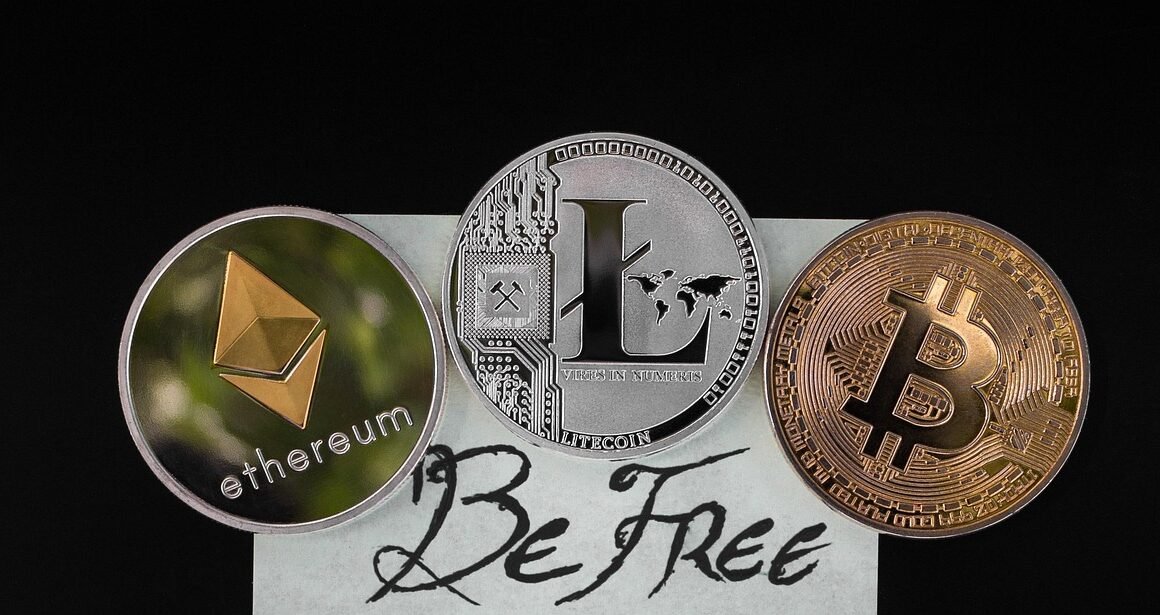
In the vast, intricate universe of digital innovation, one name consistently shines as a beacon of revolutionary potential: Ethereum. More than just a cryptocurrency, Ethereum stands as a programmable blockchain platform, an open-source marvel that has fundamentally reshaped our understanding of what the internet can be. It’s the foundational layer for a new digital economy, powering everything from decentralized finance to digital art and beyond. If you’ve heard buzzwords like “Web3,” “dApps,” or “NFTs,” you’ve been glimpsing the sprawling ecosystem that Ethereum has enabled. This deep dive will unravel the complexities of Ethereum, exploring its core technologies, profound impact, and exciting future.
What is Ethereum? Unpacking the Blockchain Giant
At its heart, Ethereum is a decentralized, open-source blockchain with smart contract functionality. While often associated with its native cryptocurrency, Ether (ETH), Ethereum’s true power lies in its ability to host and execute decentralized applications. It’s a global computer, run by a network of nodes, designed to be resistant to censorship and fraud.
Beyond Just a Coin: The Ethereum Network
Think of Ethereum not just as a digital currency, but as a digital infrastructure. It’s a platform upon which developers can build and deploy virtually any decentralized application. This distinction is crucial for understanding its expansive potential.
- Global Infrastructure: Ethereum provides a foundational layer for a new internet, enabling applications to run without central servers.
- Ether (ETH): The native cryptocurrency of the Ethereum network, used to pay for transaction fees (gas) and as a store of value. It fuels the network’s operations.
- Decentralized Nature: No single entity controls Ethereum; it’s maintained by a global network of participants, ensuring resilience and transparency.
Actionable Takeaway: Understand that investing in ETH is not just buying a coin; it’s investing in the underlying technology that powers a significant portion of the decentralized web.
Smart Contracts: The Core Innovation
The true genius of Ethereum lies in its introduction of smart contracts. These are self-executing contracts with the terms of the agreement directly written into lines of code. They run exactly as programmed without any possibility of downtime, censorship, fraud, or third-party interference.
- Automated Agreements: Smart contracts automatically execute actions when predefined conditions are met.
- Trustless Transactions: Eliminates the need for intermediaries (like lawyers or banks) by enforcing agreements programmatically.
- Programmable Logic: Developers can code complex logic into smart contracts, enabling sophisticated applications.
Practical Example: Imagine buying a house. With a smart contract, the funds could be automatically released to the seller only when the property title is digitally transferred to the buyer’s wallet, eliminating the need for escrow services and speeding up the process.
How Ethereum Differs from Bitcoin
While both are groundbreaking blockchain technologies, Ethereum and Bitcoin serve different primary purposes.
- Bitcoin: Primarily designed as a decentralized digital currency (peer-to-peer electronic cash system). Its scripting language is limited, focusing mainly on value transfer.
- Ethereum: A programmable blockchain, a platform for building decentralized applications using its Turing-complete programming language (Solidity). While ETH is a currency, it’s also “gas” for computations on the network.
Actionable Takeaway: Bitcoin is digital gold; Ethereum is digital oil, powering the decentralized economy.
The Power of Decentralization: Ethereum’s Impact on Web3
Ethereum’s ability to host smart contracts unleashed a wave of innovation, birthing the “Web3” era – a decentralized internet built on blockchain technology. This new paradigm promises greater user control, transparency, and censorship resistance.
Decentralized Applications (dApps)
dApps are applications that run on a decentralized network, like Ethereum, rather than a centralized server. They operate on smart contracts, ensuring transparency and immutability.
- Censorship Resistant: No single entity can shut down a dApp once deployed.
- Open Source: Many dApps have publicly auditable code, fostering trust.
- User Control: Users often have direct control over their data and assets.
Practical Example: Brave browser uses a dApp model for its Basic Attention Token (BAT), rewarding users for viewing ads and creators for content, bypassing traditional ad intermediaries.
Decentralized Finance (DeFi) Revolution
DeFi is a global, open-source financial system built on public blockchains like Ethereum. It aims to recreate traditional financial services in a decentralized, transparent, and permissionless manner.
- Lending & Borrowing: Platforms like Aave or Compound allow users to lend crypto and earn interest, or borrow against their assets without traditional banks.
- Decentralized Exchanges (DEXs): Uniswap and SushiSwap enable direct peer-to-peer trading of cryptocurrencies without a centralized intermediary.
- Stablecoins: Digital currencies pegged to stable assets like the USD (e.g., DAI), vital for reducing volatility in the DeFi ecosystem.
Actionable Takeaway: Explore DeFi platforms to earn passive income on your crypto assets or access financial services without traditional barriers.
Non-Fungible Tokens (NFTs) and Digital Ownership
NFTs are unique digital assets representing ownership of a specific item or piece of content, recorded on a blockchain. Ethereum is the dominant blockchain for NFTs, providing the infrastructure for digital scarcity and verifiable ownership.
- Unique Digital Assets: Each NFT has unique identifying information, making it one-of-a-kind.
- Verifiable Ownership: The blockchain ledger publicly confirms who owns an NFT.
- New Creator Economy: NFTs empower artists, musicians, and content creators to directly monetize their work and connect with fans.
Practical Example: A digital artist can mint a unique piece of artwork as an NFT on Ethereum. When sold, the blockchain records the transfer of ownership, and the artist can even program royalties into the smart contract, receiving a percentage of future resales.
Ethereum’s Ecosystem: Real-World Use Cases
Beyond DeFi and NFTs, Ethereum’s versatile smart contract capabilities are being leveraged across a myriad of industries, proving its utility as a foundational technology for a new digital age.
Gaming and Metaverse
Ethereum is a core component of the emerging metaverse, enabling true digital ownership and economy within virtual worlds.
- In-Game Assets: Players can own unique in-game items (weapons, skins, land) as NFTs, which they can trade or sell.
- Decentralized Worlds: Platforms like Decentraland and The Sandbox allow users to buy, build on, and monetize virtual land and experiences.
- Play-to-Earn Models: Games where players earn cryptocurrency or NFTs through gameplay, creating new economic opportunities.
Practical Example: In a game like Axie Infinity, players breed, battle, and trade digital creatures (Axies) that are NFTs, earning cryptocurrency (SLP) that can be exchanged for fiat money.
Supply Chain Management
The transparency and immutability of blockchain make Ethereum an ideal candidate for enhancing supply chain integrity.
- Provenance Tracking: Track goods from origin to consumer, ensuring authenticity and ethical sourcing.
- Increased Transparency: All participants in the supply chain can view the same, immutable record.
- Reduced Fraud: Makes it difficult to introduce counterfeit products or manipulate records.
Actionable Takeaway: Businesses can leverage Ethereum-based solutions to build more transparent and accountable supply chains, improving consumer trust and operational efficiency.
Digital Identity and Governance
Ethereum offers solutions for self-sovereign identity and decentralized autonomous organizations (DAOs), fundamentally changing how we manage identity and make collective decisions.
- Self-Sovereign Identity: Users control their own digital identity and data, deciding who to share it with.
- Decentralized Autonomous Organizations (DAOs): Organizations run by code and governed by token holders, enabling collective decision-making and resource management without central authority.
Practical Example: An Ethereum-based digital identity could allow you to prove your age to an online service without revealing your exact birthdate or other personal information, enhancing privacy.
Scaling Ethereum: The Path to Greater Efficiency
While powerful, Ethereum’s original design (Proof-of-Work) faced challenges with scalability, leading to high transaction fees and slower processing times during peak usage. The community has been diligently working on significant upgrades to address these issues.
The Merge and Proof-of-Stake (PoS)
The most significant upgrade in Ethereum’s history was “The Merge” in September 2022, transitioning the network from a Proof-of-Work (PoW) consensus mechanism to Proof-of-Stake (PoS).
- Energy Efficiency: Reduced Ethereum’s energy consumption by ~99.95%, making it significantly more environmentally friendly.
- Improved Security: PoS mechanisms are theoretically more resilient to certain types of attacks.
- Foundation for Future Scaling: The Merge paved the way for further scaling solutions.
Actionable Takeaway: The transition to PoS reinforces Ethereum’s commitment to sustainability and sets the stage for exponential growth in transaction capacity.
Sharding and Layer 2 Solutions (Rollups)
To further enhance scalability, Ethereum is implementing a multi-pronged approach.
- Sharding: This future upgrade will split the Ethereum blockchain into multiple “shards,” allowing parallel processing of transactions, significantly increasing throughput.
- Layer 2 Solutions (Rollups): These are separate blockchains that operate on top of the main Ethereum chain (Layer 1). They process transactions off-chain and then “rollup” batches of these transactions into a single transaction on Layer 1, drastically reducing costs and increasing speed.
- Optimistic Rollups: (e.g., Optimism, Arbitrum) Assume transactions are valid by default and only run computation if a challenge is made.
- ZK-Rollups: (e.g., zkSync, StarkNet) Use “zero-knowledge proofs” to instantly verify the validity of off-chain transactions.
Practical Example: If you’re struggling with high gas fees on Ethereum, using a Layer 2 solution like Arbitrum or Optimism for DeFi transactions or NFT minting can significantly reduce costs and speed up confirmations, providing a much smoother user experience.
Benefits of Ethereum’s Scaling Upgrades
These scaling efforts are crucial for Ethereum to achieve mainstream adoption and fulfill its vision as a global decentralized computing platform.
- Lower Transaction Fees: Makes the network more accessible and affordable for everyday users.
- Faster Transaction Speeds: Reduces waiting times for confirmations.
- Increased Throughput: Allows the network to handle vastly more transactions per second.
- Enhanced User Experience: Overall, a smoother, more efficient, and more enjoyable experience for dApp users.
Actionable Takeaway: As Ethereum scales, expect an explosion of new applications and wider accessibility for individuals and businesses.
The Future of Ethereum: Innovations and Challenges
Ethereum’s journey is far from over. It’s a constantly evolving project, driven by a vibrant community and a clear vision for a decentralized future, but it also faces significant hurdles.
Continuous Development and Community
Ethereum boasts one of the largest and most active developer communities in the blockchain space. This ensures continuous innovation, security audits, and adaptation to new challenges.
- EIPs (Ethereum Improvement Proposals): The mechanism for proposing and implementing changes to the network.
- Open Source Ethos: Fosters collaboration and transparency in development.
- Global Developer Base: Attracts top talent from around the world dedicated to building the decentralized web.
Actionable Takeaway: Stay informed about major Ethereum upgrades and community discussions to understand the platform’s direction.
Navigating Regulatory Landscapes
As Ethereum’s influence grows, so does scrutiny from global regulators. Defining its status (currency, commodity, security) and establishing appropriate frameworks are ongoing challenges.
- Clarity on Classification: Different jurisdictions may classify ETH or other tokens differently, creating legal complexities.
- Consumer Protection: Regulators aim to protect users from fraud and market manipulation, potentially impacting how DeFi protocols operate.
- Innovation vs. Regulation: Balancing the need for innovation with the imperative for consumer safety and financial stability.
Actionable Takeaway: Be aware that regulatory changes can impact the crypto market; staying informed helps you make better investment and usage decisions.
Ethereum’s Long-Term Vision for Web3
Ethereum aims to be the bedrock of Web3, enabling a digital world where individuals have greater control and freedom. Its vision extends to a fully decentralized, globally accessible, and permissionless internet.
- Internet of Value: Facilitating direct, trustless transfer of digital assets and value.
- Digital Public Goods: Funding and coordinating public goods through decentralized mechanisms.
- Global Digital Economy: Powering an open, programmable economy accessible to everyone.
Practical Example: Imagine a world where your online identity, financial accounts, and digital assets are all interconnected on an Ethereum-based blockchain, giving you ultimate control and portability across different platforms without needing multiple logins or centralized intermediaries.
Conclusion
Ethereum is far more than just a cryptocurrency; it is a foundational technology that has catalyzed a global movement towards decentralization. From pioneering smart contracts and fueling the DeFi revolution to enabling digital ownership through NFTs and powering the burgeoning metaverse, its impact on the digital landscape is profound and ever-expanding. While challenges like scalability and regulatory uncertainty persist, Ethereum’s dedicated community, continuous innovation, and strategic upgrades are positioning it for a future where it remains a central pillar of Web3. As we move towards a more open, transparent, and user-controlled internet, Ethereum stands ready to be the engine driving this transformative journey. Its potential to reshape industries, empower individuals, and redefine digital interaction makes it an indispensable topic for anyone interested in the future of technology and finance.