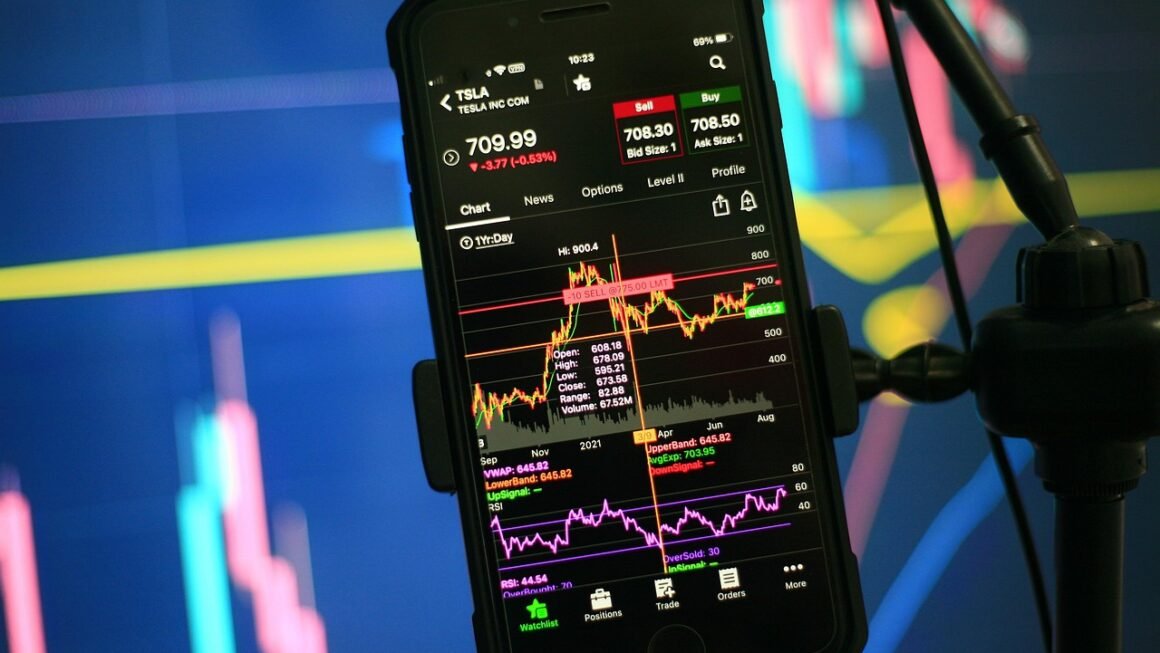
In the dynamic world of financial markets, understanding how prices are formed and trades are executed is paramount. Whether you’re navigating the complexities of the stock market, diving into cryptocurrency trading, or exploring commodities, one tool stands as the beating heart of price discovery: the order book. Far more than just a list of numbers, an order book is a real-time, intricate ledger that reveals the collective intentions of buyers and sellers, offering invaluable insights into market sentiment, liquidity, and potential future price movements. Mastering its interpretation can transform a casual observer into a strategic participant, equipping you with the knowledge to make more informed trading decisions.
Understanding the Fundamentals of an Order Book
At its core, an order book is a comprehensive electronic record that displays all active buy and sell orders for a particular asset, organized by price level. It provides a transparent, live snapshot of supply and demand dynamics, illustrating who wants to buy or sell, at what price, and in what quantity. This real-time data is crucial for traders looking to gauge market interest and potential price action.
Bid and Ask Prices Explained
The order book is fundamentally divided into two main sections: bids and asks. Understanding these components is the first step to deciphering its language.
- Bids: These represent orders from buyers willing to purchase an asset at a specific price. The highest bid price is typically displayed at the top of the bid side, indicating the maximum price buyers are currently willing to pay.
- Asks (or Offers): These represent orders from sellers willing to sell an asset at a specific price. The lowest ask price is displayed at the top of the ask side, indicating the minimum price sellers are currently willing to accept.
- The Bid-Ask Spread: The difference between the highest bid and the lowest ask is known as the bid-ask spread. This spread is a direct indicator of liquidity and transaction costs. A tight spread (small difference) suggests high liquidity and efficient markets, while a wide spread implies lower liquidity and potentially higher costs for immediate trades.
Example: If the highest bid for ABC Stock is $100.00 and the lowest ask is $100.05, the bid-ask spread is $0.05. A buyer placing a market order would pay $100.05, and a seller placing a market order would receive $100.00.
Market Depth and Liquidity
Beyond just the best bid and ask, the order book extends to show multiple price levels, revealing the market depth. Market depth illustrates the total volume of buy and sell orders at various price points, providing a clearer picture of demand and supply beyond the immediate best prices.
- Market Depth: This refers to the number of shares or contracts available for trade at each price level on both the bid and ask sides. A “deep” order book indicates substantial volume at many price levels, suggesting strong interest and typically higher liquidity.
- Liquidity: A highly liquid market is one where assets can be bought or sold quickly without significantly impacting the price. A deep order book is generally a sign of good liquidity, as there are many buyers and sellers at various price points, making it easier to enter or exit positions. Conversely, a “thin” order book, with few orders at each price level, indicates low liquidity, which can lead to greater price volatility and slippage.
Actionable Takeaway: Always check the market depth. Trading in thin markets can lead to significant price discrepancies between your intended execution price and the actual executed price (slippage), especially with larger orders.
Types of Orders in the Order Book
Traders interact with the order book using various order types, each designed for specific objectives. Understanding these types is crucial for both placing your own trades and interpreting the intentions behind the orders you see.
Limit Orders
Limit orders are requests to buy or sell a security at a specific price or better. They are fundamental to how the order book is populated and offer traders precise control over their execution prices.
- How they work: A buy limit order will only execute at your specified limit price or lower. A sell limit order will only execute at your specified limit price or higher. If the market doesn’t reach your specified price, the order remains in the order book, adding to its depth, until it’s filled, canceled, or expires.
- Benefits:
- Price Control: Ensures you get the price you want (or better).
- Cost-Effective: Often, placing a limit order means you are adding liquidity to the market, qualifying you as a “maker,” which can result in lower trading fees or even rebates on some platforms.
- Strategy: Ideal for setting entries at desired support levels or exits at resistance levels.
Example: You want to buy 10 shares of XYZ Stock but only if the price drops to $50.00. You place a buy limit order at $50.00. This order will sit on the bid side of the order book. If the price reaches $50.00 or lower, your order will be filled.
Market Orders
Market orders are requests to buy or sell a security immediately at the best available current price. They prioritize speed of execution over specific price control.
- How they work: When you place a market order, it immediately consumes the best available opposing limit orders in the order book. A buy market order will fill at the lowest available ask price(s), and a sell market order will fill at the highest available bid price(s).
- Drawbacks:
- Price Slippage: In fast-moving or illiquid markets, the execution price can be significantly different from the price you saw just moments before placing the order. This is especially true for large market orders that might “walk up” or “walk down” multiple price levels in the order book.
- Higher Fees: Market orders are considered “taker” orders as they remove liquidity from the order book, often incurring higher trading fees.
Example: You urgently need to sell 50 shares of XYZ Stock. You place a sell market order. Your order will be filled against the highest available bid orders in the order book, potentially at varying prices if your order quantity is large.
Actionable Takeaway: Use limit orders whenever price control is critical, especially for large positions or in illiquid markets. Reserve market orders for when immediate execution is paramount and minor price fluctuations are acceptable.
The Order Book’s Role in Price Discovery and Market Dynamics
The order book is not just a ledger; it’s a dynamic battleground where supply and demand constantly vie for dominance, ultimately shaping the asset’s price. Its structure offers profound insights into market psychology and future price trajectories.
Identifying Support and Resistance Levels
One of the most powerful applications of order book analysis is identifying potential support and resistance levels before they even manifest on a price chart. Large clusters of buy or sell limit orders at specific price points often act as invisible barriers.
- Support: A large volume of buy limit orders clustered at a particular price level indicates strong buying interest. If the price falls to this level, these orders can absorb selling pressure, potentially preventing further declines and acting as a support level.
- Resistance: Conversely, a significant concentration of sell limit orders at a certain price suggests strong selling interest. As the price approaches this level, these orders can absorb buying pressure, potentially halting upward movement and acting as a resistance level.
Practical Example: If you observe a massive wall of 10,000 shares on the bid side for Stock A at $25.00, while the current price is $25.10, this could indicate a strong psychological or fundamental support level. Traders will often watch if this “wall” holds when the price approaches it.
Gauging Market Sentiment
The imbalance between the bid and ask sides of the order book can provide clues about overall market sentiment.
- Bullish Sentiment: If the bid side of the order book has significantly more volume than the ask side, particularly at higher price levels, it might suggest stronger buying interest and a potential upward price bias.
- Bearish Sentiment: Conversely, if the ask side dominates with much larger quantities, it could signal greater selling pressure and a potential downward price bias.
- Balance: A relatively balanced order book suggests equilibrium between buyers and sellers, often leading to sideways price action or ranging.
Actionable Takeaway: Pay attention to changes in order book imbalances. A sudden increase in bids might signal institutional accumulation, while a surge in asks could precede a sell-off. However, be wary of “spoofing” (false orders intended to mislead).
Understanding Liquidity and Volatility
The overall depth and spread of the order book directly correlate with an asset’s liquidity and potential volatility.
- Thin Order Books = High Volatility: In markets with low liquidity (thin order books), even small market orders can clear out multiple price levels, leading to rapid and significant price swings. This offers opportunities but also carries higher risk due to potential slippage.
- Deep Order Books = Stability: Markets with high liquidity (deep order books) tend to be more stable. Large orders can be absorbed without drastically moving the price, making it easier for large players to enter and exit positions without causing significant market disruptions.
Relevant Data: Cryptocurrencies and small-cap stocks often exhibit thinner order books compared to major forex pairs or large-cap equities, explaining their higher volatility.
Practical Applications and Advanced Insights for Traders
For professional traders, the order book is a sophisticated analytical tool, offering granular insights that go beyond simple price charts. Advanced techniques involve interpreting order flow and understanding the impact of high-frequency trading.
Analyzing Order Flow
Order flow trading is a strategy that involves analyzing the sequence and size of orders as they hit the order book, providing real-time insights into market momentum and participants’ intentions.
- Depth of Market (DOM) / Ladder Trading: Many professional platforms offer a DOM interface, which is an enhanced, vertical representation of the order book. It allows traders to quickly visualize bids, asks, and execute trades directly from specific price levels. Traders can see how quickly bids and asks are being filled or pulled, offering a direct view into the aggression of buyers and sellers.
- Identifying Absorption: When a large sell order is consistently met by equally large buy orders without moving the price down, it indicates “absorption” by strong buyers. This can be a sign of underlying strength and a potential reversal.
- Spotting Iceberg Orders: These are large orders that are intentionally broken down into smaller visible orders, with the rest remaining hidden. While the visible part is displayed on the order book, the true size of the order is concealed until parts of it are filled. Recognizing these can be crucial, as they represent significant institutional interest.
Actionable Tip: Practice reading the DOM for a short period without trading to train your eyes on how quickly orders are filled, replenished, or pulled. Look for unusual large orders appearing or disappearing.
Impact of High-Frequency Trading (HFT)
High-Frequency Trading (HFT) firms utilize powerful computers and complex algorithms to execute a massive number of orders at extremely high speeds. Their activity profoundly influences the order book.
- Liquidity Provision: HFTs often act as market makers, placing and canceling thousands of limit orders within milliseconds, constantly adjusting to market conditions. This adds tremendous liquidity to the order book.
- Flash Orders and Latency: HFT strategies exploit tiny price discrepancies and latency advantages. While beneficial for overall market efficiency, their speed can make it challenging for retail traders to react to order book changes effectively.
- Order Book Flickering: The rapid placement and cancellation of orders by HFT algorithms can cause the order book to “flicker,” making it hard to interpret genuine market interest from algorithmic noise.
Limitations of Order Book Analysis
While powerful, order book analysis is not foolproof and comes with its own set of limitations:
- Spoofing and Layering: Malicious actors can place large, non-bonafide orders on one side of the book with no intention of executing them, only to cancel them just before they are filled. This creates a false impression of demand or supply to manipulate price.
- Hidden Orders (Iceberg Orders): As mentioned, these orders mask their true size, making the perceived market depth inaccurate.
- Data Latency: Even with modern technology, there can be a slight delay (latency) between real-time market events and when they appear on your screen, especially for retail traders. HFTs often have a significant advantage in this regard.
- Out-of-Book Trades: Large institutional trades might occur “off-exchange” or via dark pools, which are not reflected in the public order book, further limiting its completeness.
Actionable Takeaway: Always use order book analysis in conjunction with other tools like technical analysis (chart patterns, indicators) and fundamental analysis. No single tool provides the complete picture.
Conclusion
The order book stands as an indispensable tool for any serious participant in the financial markets. It offers a raw, unfiltered view into the immediate supply and demand dynamics, guiding price discovery and illuminating market sentiment. By understanding its fundamental components—bids, asks, market depth—and the implications of various order types, traders can gain a significant edge. While challenges like spoofing and HFT activity require a nuanced approach, the order book remains a powerful lens through which to observe and react to the ever-changing intentions of market participants. Integrate its insights with your broader trading strategy, and you’ll unlock a deeper understanding of market mechanics, leading to more confident and potentially more profitable trading decisions.